Posted live from deepest Hertfordshire The worst thing about a 2 day residential corporate conference is having to spend the night in a standard boxy hotel bedroom. The bed's a foot too short and the and the sheets are too tight. The air conditioning is uncontrollable and the curtains are worryingly transparent. There are only two coathangers in the wardrobe, the light switch is just too far away from the bed, and the walls transmit every single sound from the room nextdoor. The only nourishment is provided by three pre-packed bourbon biscuits, all the milk squirts out of UHT cartons and the tiny kettle takes five minutes to boil. The shower is either ice cold or scalding hot, while the selection of luxury toiletries in the bathroom contains moisturiser and a sewing kit but nothing of any practical use. The only reading material in the room consists of a Gideon Bible and the laundry list, while the only (free) connection to the outside world comes via a small five channel TV and some malfunctioning teletext. Thank heavens for mobile phones. [5pm update: Damn, looks like my emailed blogpost got slightly truncated. It seems you just can't rely on mobile phones after all...]
diamond geezer is three years old today. Who'd have thought? I never expected things to turn out like this when I started writing one quiet Sunday afternoon back in 2002. Nobody looks very far into the future when they write their first post, do they? The virgin blogger just kicks things off by writing something brief and sketchy that they think nobody will ever read, and then sits back and waits to be proved wrong. And hey, sometimes it works.
To celebrate, here's my look at how blogs evolve (with apologies to William Shakespeare)...
1) Infant (mewling and puking in the nurse's arms) Typical post: "So this is my first post. Hello world. I'm not quite sure why I decided to start a blog, but everybody else is doing it so I thought I'd have a go. Erm, what shall I write about?"
2) School-boy (shining morning face, creeping like a snail) Typical post: "I had cornflakes for breakfast today. I am so hungover this morning. And didn't it rain a lot on the way to the office? Then Cally emailed me this really funny quiz - which Harry Potter character are you? I'm Ron who are you? Now I'm going to grab a coffee and then maybe get down to some work. I hope my boss here at Redford Officeware (hi Jonathan!) doesn't catch me blogging during work time!!"
3) Lover (sighing like a furnace, with a woeful ballad) Typical post: "Isn't blogging great? I love writing about my street and my childhood and my cat and my hypochondria. Look at all these photos of Nigels' barbecue I took at the weekend. Isn't his dog cute? But I wonder if my comments are working, because I never seem to get any. Well, apart from that comment from my boss Jonathan telling me to get back to work before I was sacked. Hey, you'll never guess what hilarious Google searches I found in my referrer log today..."
4) Soldier (jealous in honour, sudden and quick in quarrel) Typical post: "Now I've got an audience, I'm determined to tell you all my opinions on world affairs. Every single one of them, in enormous depth, because my opinions are important and they're obviously correct. Which is why I couldn't believe the bullshit I just read on BluePatriot's blog. Does he not realise that Hurricane Katrina is a joint neocon/liberal conspiracy, and that President Bush is merely the figurehead? Wise up."
5) Justice (full of wise saws and modern instances) Typical post: "Hi to you if you've just arrived here from Slashdot or the BBC news page. That was a very incisive post I wrote there, wasn't it? I'm so cutting edge these days. Everybody was saying that to me down at the blogmeet the other day, so it must be true. I've had to boost my bandwidth to cope with the extra traffic though, so please click on my Google blogads on your way out. And please vote for me in the BestBlogEver Awards 2005. Have you linked to my site yet, by the way?"
6) Lean and slipper'd (pipes and whistles in his sound) Typical post: "Sorry it's been such a long time since my last post. I don't seem to have so much time for blogging these days, not since I met and married Chris, adopted those ten Albanian refugees and started my Open University PhD. Plus, you know, I really haven't anything new left to say any more."
7) Second childishness (mere oblivion, sans teeth) Typical post: "So this is my last post. It's been a hard decision, but I'm totally blogged out and I need to reclaim my social life. And my garden needs me. And I'm really not coming back after a couple of weeks, honest, not even if you write me fifty really positive ego-massaging comments..."
250000: Some time this morning, probably somewhere between eleven o'clock and noon, diamond geezer is due to receive its quarter-of-a-millionth visitor. Which is rather splendid timing. Quarter of a million people may sound a lot, but it's really only the equivalent of the population of Wolverhampton each clicking on my blog just once during the last three years. At this rate I should match Belfast by Christmas, Bristol by next September, Birmingham by 2010 and London in forty years time. Not that I'm complaining, you understand. Today's double milestone gives me another good excuse to update my regular 'league table' of top linking blogs, ordered by volume of visitors clicking here from there. Also included are the 'highest climbers' since my last update back in May. Thank you all for linking. Go on, go click on a few and return the favour...
Those are the full results for the last three years, but I thought it might also be illuminating to analyse just the hundred thousand visitors I've had since the start of 2005. Which provides the following, rather different, Top 20: [ 1234567891011121314151617181920 ] My additional thanks, therefore, to the six new faces appearing in this more current list. And thank you all for clicking, because I wouldn't have had quarter of a million visitors without you.
I was halfway through writing a really good post about breakfast cereals last week when I was suddenly forced to stop. I was trawling search engines for some meaty and nostalgic links about breakfast cereals (like this one, this one and thisone) when Google threw up a post that I'd already written on the same subject, here on this blog last year. I'd even used exactly the same theme - there are two kinds of breakfast cereal and neither of them are what they used to be. Damn, I'd already said that.
Yesterday I bought doughnuts for everyone at work to 'celebrate' (if that's the right word) our first anniversary of not working down Piccadilly any more. They were sugar-laden Krispy Kreme doughnuts (don't worry, I got them cheap), and the assembled hordes jumped in and wolfed them down like they were some kind of over-addictive Class A drug. Ooh, I thought, here's a contemporary cultural phenomenon I can blog about tomorrow. But no, because you probably remember I covered doughnuts in some depth a couple of months ago. Damn, I'd already said that.
Except there is still plenty more to say, thankfully. There's always something new to observe, and something original to contribute. The same things happen all the time, but in different ways, so there's always another fresh angle from which to approach potentially stale events. It's how the news manages to fill hours of airtime and acres of newsprint every day, and how married couples find something new to talk about each evening. That's why there's still lots more to be said on the subject of doughnuts, plenty more comments to be made about wheelie suitcases, and a heck of a lot more vitriol to be directed against my neighbours. But, to be honest, I suspect I could have got away with reposting that piece about breakfast cereals and not one of you would have noticed. Blogs are designed to give prominence only to the very latest posts, while older posts (however good) are quickly relegated to the oblivion of overlooked archives. Just like I said back in September 2003. Damn.
The DG 'countries' quiz: Let's try something with an element of skill for a change. How many countries can you name that start and end with the same letter of the alphabet? (And, er, are there any that don't start with... well, you'll find out...)
Update: So far you've come up with...
Albania
Algeria
American Samoa
Andorra
Angola
Antigua and Barbuda
Armenia
Argentina
Aruba
Australia
Austria
Central African Republic
Czech Republic
Deutschland
Eire
Nippon
Seychelles
Solomon Islands
St Kitts Nevis
St Vincent & the Grenadines
Tibet
The DG 'spot the difference' quiz: It's time to find out who's won a fantastic prize in my 'spot the difference' quiz. Did you enter? You can't win unless you enter, can you? Did you spot the difference between these two photographs? Did you guess correctly? I mean, come on, the difference is pretty bloody obvious isn't it? It's almost as if this wasn't a quiz at all, isn't it? Not a game of skill in any way. Just a game of chance. A lottery where you think you have a good chance of winning but actually everyone's thinking the same thing so your chance of winning is actually rather tiny. And there can only be two winners. One of those is me, because you're all mugs. If you'd all sent in £1.50 like I asked then I'd be more than £40 richer by now. Just for posting a stupid photo of a cat in a hat. That's how it works on the television anyway. But there has to be another winner, one of you, otherwise those trading standards people will be down on me like a ton of bricks. So I've picked a winner*, at random. Honestly, purely at random. Check your email inbox. Could it be you*?
* Winner wins £40 next time I see them, or a gratuitous weblink, whichever is the cheaper. * Non-winners should content themselves with a visit to the Nohands Gallery.
eBay was ten years old yesterday. The site was initially called Auction Web and was worth nothing, and has since grown to become a fifty billion dollar global business. I must confess that I really don't see the attraction of eBay, but that's because it combines two of my greatest dislikes - shopping and sending packages by post. Why accumulate more stuff if you have enough, and why spend your time trekking round to the sorting office if your letterbox is too small. eBay is like a giant online car boot sale, selling stuff nobody wants to people who don't need it. But I do know several eBayaddicts who seem to spend all their time checking up on the progress of their latest sale, sneaking in at the last minute to poach a top bargain and popping down to the post office with oversized jiffy bags. So there must be something in it.
So I thought today would be the ideal moment to set up my own online trading portal - dgBay. Not only will I surely make my fortune, but I can clear out some of the rubbish in my spare room at the same time. Perfect. I'm starting off with five carefully selected items and inviting you to make a bid, if you're interested and/or gullible enough. [Terms and conditions available on request]
Coronation EditionRadio Times • it's meant to be that faded yellow colour, honest • includes ads for Aertex, Silver Shred & HP sauce [1953 - original cost 3d] Bids: Auction ends: 1d 9h 53m
The Race Into Spaceteacards album • complete filled-in album containing all 50 cards • a genuine Brooke Bond tea giveaway [1971 - original cost 5p, plus lots of tea] Bids: Auction ends: 10957d 0h 0m
Two black fluffy dice • with plastic sucker for easy adhesion • looks especially chavvy in a Ford Fiesta [1999 - unwanted leaving present] Bids: Auction ends: <1m
Queen's Golden Jubilee firework • as found in Green Park after firework display • ideal keepsake for any ardent royalist [2002 - casing only, slightly charred] Bids: Auction ends: 20h 02m
Three Creme Eggs • mmmm, lovely chocolate (not in shops) • available as a trio or singly [2005 - original cost 89p for three] Bids: Auction ends: 111d 17h 00m
For some reason September is always one of the busiest months for special events in the capital. This year the Mayor and his tourist chiefs have gathered them all together under one big umbrella and are promoting them as September in London. Some will be great, some will be good ways to pass the time and some will be underwhelming over-sponsored rubbish. See if you can work out which might be worth attending.
• Sunday 4th: The Tour of Britain comes to London for the final stage of this round Britain cycle race. After all the thrilling scenery of Scotland and Northern England, today the competitors have to put up with circling Whitehall 45 times. • Sunday 4th: Regent Street's been paved with grass today as it pretends to be an English country garden for the Regent Street Festival. There'll be farmers market stalls selling rural(ish) produce, but also a lot of posh shops hoping you'll go home laden with designer carrier bags instead of chutney. • Tuesday 6th:Texas (that's the middle of the road pop group) will be playing a special concert on Tower Bridge - appropriately in the middle of the road. • Sunday 11th: The 10th Brick Lane Festival mixes southern Asian culture, dance, music and curry (although hopefully not all simultaneously). • Thursday 15th: At last, a statue will be unveiled on the fourth plinth in Trafalgar Square, the one that's been empty for years. It's Alison LapperPregnant, eight tons of big marble woman - and arrestingly armless. • Thursday 15th - Friday 30th: The London Design Festival showcases the capital's creative flair in architecture, product and graphic design. Includes the intriguing From Here ToHere collaborative arts project (about the 27 stations on the Circle line) appearing on posters at all 27 Circle line stations. • Friday 16th: 200 years after his death, Nelson's funeral flotilla is being recreated on the Thames today. The Lord Mayor will be joining some authentic-ish boats on their way from Greenwich to Westminster (but why oh why is this being held on a Friday morning?). There's a more modern Trafalgar River Race between Richmond and Greenwich on the Sunday afternoon. • Saturday 17th - Sunday 18th:London Open House is the public architectural highlight of the year, with 500 hard-to-get-into properties open for one weekend only. Last year I got to go down Churchill's Neasden bunker (hi Louise!), take a tour of the building site at St Pancras and queue for hours to see the view from the top of the Gherkin. I'm still flicking through this year's 72-page catalogue, but I'm sorely tempted by Crossness sewage pumping station. • Saturday 17th - Sunday 18th:Uncle Ken's Thames Festival is one of those wholesome multicultural family-based extravaganzas of the kind that councils can justify spending their taxpayers money on (you know - ethnic drummers, face-painting and strange food). Best time to visit is probably after dark on the Sunday for the Night Carnival and big fireworks. • Thursday 22nd onwards: The Riverfront Jazz Festival is a ten day series of concerts in the Greenwich area, for those who like their music soulful and out of time. • Sunday 25th: Bethnal Green hosts the Green Spaces festival, which is a festival in some of Bethnal Green's local green spaces. There's no website and the whole thing sounds desparately underplanned, but hey this is London and it'll probably all pull together.
Monkeying around: I bought an ITV Digital set-top box back in January 2002, annoyingly during the six week spell when they weren't giving away a free knittedmonkey. Imagine my delight at being able to receive several additional new TV channels (of, er, mostly rubbish). And then, four months later, ITV Digitalwent bankrupt, taking my new-found televisual freedom (and £100 of my money) with them. I suddenly became a creditor of a company under administration, lumbered with just four watchable TV channels. Thankfully my creaking old box was capable of receiving the new Freeview service that appeared later in the year, but there was still the issue of my lost hundred quid. And then this week, out of the blue, I received an official letter from the liquidators announcing that they were sharing out a first and final dividend of 9.1p in the pound, and enclosing a cheque for £9.19. Woohoo! British financial justice may be slow, but at least it gets there in the end. Maybe I should put my nine quid towards buying a digital monkey from the Gadget Shop - except that, bugger, they've gone bust too.
Bow Road update: I wonder what the world record is for the number of times a station door has been repainted, because the green entrance doors at Bow Road have now been repainted so many times that I suspect shares in Dulux must have shot through the roof. Close behind are the fire doors at the top of the westbound stairwell, and coming up fast are the green and yellow striped pillars on the westbound platform. A set of laser-jetted Caution - wet paint notices are being recycled all around the station, stuck to the wall beside a different newly gleaming surface every morning - or so it seems. Metronet's renovation work here is starting to feel like a never-ending resurfacing project - rather like the painting of the Forth Rail Bridge - only for no particularly good reason. Still, at least there's something going on at Bow Road this September, which saves me from spending another month writing about falling conkers...
I don't know who started the current trend for the money-grabbing dumbing down of television. It may have been Richard and Judy with their asininely easy phone-in competition Midday Money[Which of these is a type of hat? a) cat, b) cap, c) car]. It may have been Chris Tarrant's £100 questions on Who Wants To Be A Millionnaire[Which of the following means 'very cold'? a) sneezing, b) freezing, c) wheezing, d) breezing]. It may have been all those cheap daytime shows which started sandwiching every commercial break with a phone-in competition [Who was Queen Victoria's husband? a) Prince Albert, b) David Beckham] - although, to be honest, that one is perhaps a bit on the hard side. You might even argue it was the appearance of ITV on our screens, fifty years ago this month, that began the slippery slide into non-publically funded television. But, whatever the case, self-funding TV programmes appear to be the way forward. The BBC gets the licence fee, ITV gets its dwindling share of the UK's advertising cake, but the majority of new digital channels seem to be able to survive only if you the viewer can be conned into donating them money. Tempt the most gullible members of your audience into believing that they're clever and that they have a good chance of winning a big prize, and hey presto you have a cash cow on your hands.
I first noticed the advance of interactive TV scum last year while I was flicking through the lesser channels on my brother's Sky box. There, tucked in amongst the rap video montages, the QVC clones and the imported tele-evangelists, were a few glorified bingo channels fronted by voluptuous blondes who constantly urged you to ring in and play with their coloured balls. This was no-brain television, both to watch and to create. Then last month, fast-forwarding through the current Sky Digital line-up, I discovered that the situation had got several times worse. The latest infestation involves a series of phone-in quiz channels - either posing a series of blindingly obvious word/picture puzzles (essentially a lottery) or asking devious trick questions (essentially an on-screen con trick for the desperate). Still, at least none of this rubbish had invaded my own Freeview-based set. Until this week...
Quiz Call (Freeview channel 37) has brought lowest common denominator television to terrestrial viewers. Yes, lower even than Sky Travel, price-drop tv or Men & Motors. A series of earnest but lively presenters introduce the world's easiest puzzles, pretend they can't work out the solution and wave oversized banknotes at the camera. Later they drop blatant hints to the answer just in case your IQ isn't quite in double figures, wait for sufficient viewers to ring in (at 60p a call) and then take a call from someone to whom a prize of £50 is a life-changing amount. And repeat. The presenters witter on endlessly to encourage you to call in, whilst keeping very quiet about the fact that you can take part online for free. Every now and then they throw in a slightly tougher challenge to keep non-morons awake, or up the ante with a special Jackpot game (which 'Sarah' won on Wednesday night in suspicious circumstances). It's compulsively awful viewing, but rather like watching the scramble for a £2 coin that some sadist has glued to the pavement. [Inspector Sands has been watching too - and he has pictures].
And this whole dial-up quiz genre works because undereducated members of the British public have absolutely no concept of qualitative probability. If you know the answer to any particular question, the odds are that thousands of other viewers do too. If you ring in five times then yes, your chance of winning will quintuple, but five times 'incredibly unlikely' is still 'incredibly unlikely'. If you fork out 60p on every call you make then every unlucky loss soon mounts up and cancels out any pathetic winnings you may accrue. And as for that Jackpot eight-rung-ladder game, you may think you have a great chance of finding the correct path to the top but the odds are actually the same as flipping eight heads in a row - 255 to 1 against. The only winner here is Channel 4, whose digital progeny this leeching channel is, shamelessly exploiting the phone bills of the poor and debt-ridden. Still, at least these willing victims are enjoying themselves as they sink slowly deeper into poverty. In all probability anyway.
The DG 'spot the difference' quiz: Would you like to win a top prize? You would, wouldn't you? It's so easy. All you have to do is spot the difference between these two photographs. Go on, have a look. What's extra in photograph A? Or what's missing in photograph B? Can you tell? Yo ho ho and a bottle of rum. Can you spot the difference? Can you? There really is a difference between these two shots although it may be very hard to spot. Ooh it's so difficult isn't it? Ooh ahh Jim lad. I don't know the answer, because I'm clearly not as intelligent as you are. Come on, take part! You know you want to. Get in touch and tell me the solution. What could the difference be? Why not leave me a message in the comments box. Or give me a call. Or just send me all your money now and be done with it. Stick your life savings in an envelope and post them to me. Now! You might win a great prize. Or you might not. Pieces of eight, pieces of eight. Come on, have you entered yet? (All calls cost £1.50 a minute. In the event of any dispute regarding the competition, the decision of DG Media shall be final and binding and no correspondence or discussion shall be entered into with you or any person acting on your behalf. Sssh, don't say this too loud but online applications are free. DG Media reserves the right to invent a prize, change that prize to something really rubbish or maybe even not award any prize at all. But please enter anyway.)
Red rout: I have the pleasure of living on the A11 - one of London's busy redroutes. It used to be possible to park close to the entrance to my house (in one tiny bay and for no more than 20 minutes and only between the hours of 10am and 4pm), and this proved perfectly adequate for visitors such as the engineer who came to superglue the innards of my washing machine last week. But when I emerged from my front door this morning, telltale specks of red gravel littered along the edge of the pavement indicated that our local parking bay had been erased overnight. In its place stretched an extended bus stop, delimited in bright red tarmac, more than double the length of the bus stop that stood here before. And bloody bendy buses are to blame. Length of a London bendy bus = 18m
Length of my local bus stop yesterday morning = 19m (=1.06 bendies)
Length of my local bus stop this morning = 45m (=2.5 bendies)
Increase in length of bus stop = 26m = 136%
Reduction in parking space = 100%
The 'Flagship Manager' of the 'Bus Priority Team' sent me and my neighbours a letter in June last year to warn us that bus route 25 was about to receive new style 'bendy' buses. He went on to give notice that "the protected road space at the bus stop needs to be increased to enable the bus to pull up alongside the kerb". I assumed that an extended bus stop was imminent, but no roadworks materialised before the new buses were introduced and so the parking bay remained. We've had bendies along Bow Road for more than a year now, and drivers have proved perfectly capable of pulling up to the kerb at the old bus stop with relative ease. But never mind the reality of the situation - last night's bureaucracy-led resurfacing means that these giant articulated buses are now the only vehicles that can park close to my front door. So, er, no visitors please for the foreseeable future (unless you're willing to arrive in discomfort aboard a big red cattletruck).
And so my month-long journey along London's hidden river Fleet is complete. It's been a fascinating trip through a cross section of historic (and not so historic) London, proving that you can still follow the course of a subterranean river by following the clues on the surface (and proving that it is possible to tackle and complete a nigh-impossible cross-capital multimedia project just by chopping the journey up into 31 manageable stages). As a final flourish (and a final treat) I've plotted my entire route on a map, with photos. Zoom in, have a click around and you can see where I've been, and exactly where the Fleet used to flow. Buried, but not forgotten.
Here it is, the very spot I've been tracking down for the last month - the mouth of the River Fleet. Look carefully, in the gloom underneath Blackfriars Bridge, there where the left bank meets the grey waters of the ebbing Thames. That arched hole in the wall, just behind the rusty ladder leading down from the Embankment into the river, that's where the Fleet storm drain flows out into the Thames. My journey is complete.
HOW TO FIND THE MOUTH OF THE RIVER FLEET 1) Take advice from an expert: I learnt how to find the mouth of the River Fleet from Sue, the guide who runs the "Lost World of the River Fleet" guided walk. Thanks Sue. [nb If you fancy going on the same walk it's running just once more in the next few months, on Saturday 16th September - departs Blackfriars station, exit 1, 2:30pm] [photo] 2) Wait for low tide: It's no good visiting the river at high tide, or even at medium tide, because everything will be hidden beneath up to seven metres of water [photo]. Wait for low tide or, even better, one of the especially low spring tides that happen around the time of the full or new moon (tidetableshere). [nb There should be a pretty good view at 7am or 7pm this Saturday, for example] 3) Stand in the right place: Because the Fleet empties into the Thames beneath Blackfriars Bridge, in the dark space between the Embankment and the northernmost arch, your viewing options are very limited. Very limited indeed. In fact there are only three places (on land) from which the Fleet outfall can be seen: a) Stand on Paul's Walk, the dingy passageway beneath Blackfriars Bridge, about halfway under the main span just to the left of the locked-up ladder. Hold your camera out above the water and take a photo looking straight down. [nb this method produces very unsatisfactory results] [photo] b) Stand on the jetty at Blackfriars Millennium Pier, next to the ramshackle mustard coloured hut (opposite the top of the ramp) and look east [this photo shows you where]. [nb You'll need your binoculars/zoom lens] [photo] c) Stand at the bottom of the steps leading down from exit 5 of the Blackfriars subway system [these photosshow you where]. Hang out precariously over the parapet and look into the murky gloom under the bridge. Take a photograph or three. [nb Don't expect anything stunning - it's just a hole in the river wall criss-crossed by a couple of chains] [photo]
The first BlackfriarsBridge was opened in 1769, at about the same time that the lowest reach of the Fleet was covered over and renamed New Bridge Street. This nine-arch span made of Portland stone survived exactly 100 years before being replaced by the present wrought iron structure. [photo] Busy old Queen Victoria spent 6th November 1869 opening first Holborn Viaduct and then popping down Farringdon Street to open the new Blackfriars Bridge. A statue was erected in her honour on the north side of the bridge a few years later. Four equestrian sculptures were also planned, one to stand in each recess above the piers of the bridge, but they never materialised. The bridge has since been widened and is now the busiest of all the road bridges leading south from the City (although it's bloodydangerouson a bike). The view upstream is impressive, taking in the OXO Tower, Eye and Embankment, but the view downstream is blocked by a less than glamorous railway bridge. Two parallel railway bridges were built here in the late 19th century, but the westernmostbridge proved too weak for modern trains and was part-demolished in 1969. You can still see its peach-painted supporting pillars sticking up out of the Thames today, beheaded by progress, although they may be reused if the Thameslink2000 project is ever resuscitated. [photo]
200 years ago it wasn't just the River Fleet that stank, it was the whole city. One million Londoners produced a heck of a lot of sewage, most of which ended up in the capital's two hundred thousand cesspits, or in the street, or floating down towards the Thames. Conditions were at their worst close to rivers, such as the Fleet, where domestic water-closets often discharged directly into the stream. As the 19th century progressed outbreaks of cholera became more common, sometimes killing thousands of people, and the smell of the city on a hot day became intolerable. The situation came to a head during the 'GreatStink' of 1858 when the Thames became heavily polluted during a particularly hot summer. Lime-soaked curtains were hung from the windows of the House of Commons in a vain attempt to keep out the stench. Thankfully a solution was at hand.
Enter JosephBazalgette - an engineer with a vision. He believed (rightly, as it turned out) that London's stinky problems could be solved by a series of giant intercepting sewers which would divert brown waste safely away from the rivers in the centre of town. These sewers used gravity (and 318 million bricks) to deliver their cargo to two pumping stations at Crossness and AbbeyMills, both suitably downstream of the capital, where sewage was stored in reservoirs until the ebb tide and then released into the Thames. Three east-west sewers converged at Abbey Mills (just down the road from my house, so I've written about it before). The northernmost sewer fed down from Kentish Town and Hampstead, intercepting the waters of the upper Fleet along the way, while the middle sewer passed from Notting Hill through Clerkenwell. But when it came to constructing the Northern Low Level sewer, there was nowhere else for it to go except along the banks of the river Thames itself.
The VictoriaEmbankment, constructed by Bazalgette between 1864 and 1870, provided a new waterfront for central London and solved four important problems. Firstly it hid a giant sewer pipe, safely transporting the effluent of west London towards less affluent east London. Secondly it provided the perfect location for the construction of a new underground railway - today the District Line between Westminster and Blackfriars. Thirdly by reclaiming land from the Thames it narrowed the river and produced stronger defences against potential flooding. And fourthly a new four-lane road built on top of the Embankment relieved growing traffic congestion along Fleet Street and the Strand. Drivers whizzing along the current riverside dual carriageway probably don't realise that all of Chelsea's excrement still flows along beneath them.
Bazalgette's sewer system also finally demoted the Fleet from a buried river to an underground storm relief drain. Where once a babbling brook flowed into a navigable inlet, now sludgy brown liquid flows through a network of subterranean brick tunnels. Several connecting branch sewers converge on this dank Stygian puddleway, and one of the chambers lower down is as big as a cathedral with great vaulted ceilings. This is not somewhere that most people would choose to visit, but JD and Stoop specialise in underground drain exploration and they've made two journeys down the Fleet sewer during the last year. Their last, and most dangerous, expedition was back in June when they (and a daring Time Out journalist) made it nearly all the way down from St Pancras to the Thames.
Down in the sewers you're always at the mercy of the weather, or some waterworks operative diverting the flow from a channel above, so the trio's journey back up the sewer was rather more treacherous as the water level increased.
Read more here (or in last week's edition of Time Out). Oh, and they don't recommend you try following in their footsteps, just enjoy their photographs of the Fleet sewer instead. [More (slightly illegal) Urban Exploration links here]
As you might suspect from its name, Blackfriars was once a monastery. The black-robed Dominican Friars moved in beside the Fleet in 1278, right down near the river's mouth into the Thames where the inlet was still deep, wide and navigable. In 1382 religious reformer JohnWycliffe was brought to Blackfriars by the Archbishop of Canterbury to stand trial for his beliefs. Towards the end of the hearing London was struck by a sudden earthquake (honest - even St Paul's was damaged) which Wycliffe took as a sign of God's displeasure, although the Archbishop disagreed and found him guilty anyway. In 1529 a court met at Blackfriars to hear the divorce proceedings of King Henry VIII and his first wife Catherine of Aragon. The consequences were equally seismic, and England split with the Church of Rome followed four years later.
By 1540 Blackfriars, along with all the other monasteries in England, had been dissolved. Some of the old buildings were converted into a private theatre which in 1608 was acquired by Richard Burbage for the use of his company of actors, the King's Men. Richard and his mate William Shakespeare used this indoorplayhouse during the winter months, while continuing to perform Will's latest plays across the Thames at the Globe during the summer. Local residents weren't pleased by the regular disruption that raucous theatre crowds created on their doorstep. However, this didn't stop Shakespeare from buying the old Blackfriars monastery gatehouse in Ireland Yard[photo] as his London residence in 1613. The theatre lingers on only as a streetname (Playhouse Yard), but there's still one tiny segment of the old monastery wall to be seen hidden in a quiet courtyard here amidst the old medieval lanes [pictured].
Blackfriars is now better known as a mainline railwaystation (for trains to Bedford, Brighton, Sutton and Sevenoaks). It's not impressive and it's not big, but it does have platforms that extend out across the River Thames (and from which the view along the river is pretty outstanding [photo]). Meanwhile the monastery of Blackfriars is still commemorated by the Art Nouveau flat-iron pub over the road [photo]. It's 100 years old this year but was almost pulled down in the 1960s before being saved by a Betjeman-led campaign. Fight your way through the City drinkers spilt out across the pavement outside The Black Friar and look up at the big mosaic above the entrance [pictured]. There you'll see two dark-clad monks (one with giant fish in hand) standing in front of the old turreted friary beside the blue waters of the river Fleet - how it used to be here, many centuries ago.
(I really ought to stop here, because the river Fleet only ever flowed as far as Blackfriars, but nowadays there's still another 20 metres to go...)
TV programme of the month: Still BBC2's marvellous Coast, which has been taking an eclectic wander around the UK coastline similar to my current amblings down the Fleet. The final part of the journey was last night, zipping around fast-eroding East Anglia, and there's a compilation of highlights next weekend. Local TV programme of the month: Danny Wallace's series How To Run Your Own Country has been an entertaining and informative romp through the key issues any national leader needs to consider when establishing his or her own democracy. Danny's kingdom consists solely of his tiny loft apartment, which just happens to be in Bow and is (during the winter when the intervening trees are leafless) within sight of where I'm now sitting. I just hope that he (and his 30000 citizens) aren't planning on expanding his country at any time in the near future, otherwise I'm in danger of being annexed. Album of the month: All the hype this month has rightly been aimed at Goldfrapp's Supernature, not just for the curvaceous cover art but more importantly for its luscious sensual melodies. This is 70s Bolan meets 80s electronica meets 90s chic, and it all makes for a 21st century mainstream classic with several standout tracks. Buy it now, before everybody else catches on. Film of the month: I was expecting the worst when I was summoned to watch Unleashed, a Glasgow-based action movie featuring martial arts icon Jet Li. Sure enough the opening half hour was an orgasm of raw violence as Bob Hoskins ordered Danny, his human dog, to beat the crap out of everyone in sight. And then, when I least expected it, a wholly tangential piano tuner wandered on screen introducing themes of hope, self-discovery and redemption. The resulting action/romantic mishmash should have been corny B-movie tripe, but actually proved oddly endearing and unexpectedly watchable.
Other London stuff I've not mentioned while I've been wittering on about the Fleet: • The London Transport Museum in Covent Garden closes at the end of this week for an 18-month-long upgrade. I thought I'd better take a look round, having somehow never visited the place (not since it was based in an old bus garage in Clapham, anyway), so I popped in last Friday. The collection is extensive and impressive, although now a little out of date (apparently the Jubilee Line is due to open in 1999). I enjoyed the selection of historic buses, the informative displays, the chance to stand in an old Metropolitan tube carriage and all the carefully-collected ephemera. There was even a 3D cross-section of Stockwell underground station, back in the days when gents could wear a top-hat and dress coat on the platform without being shot. One elderly visitor hobbling round the tram exhibit told me that as a boy he had been on the very last tram to descend into the Kingswaysubway, and you could see the nostalgia in his eyes. There are just seven days left to visit (and maybe raid the shop's relocation sale), before something more modern emerges in 2007. • Two anonymous faces can be seen staring out from advertising posters on many of London's buses and tubes this month. The "Casual Passer-by" is an eccentric project by Russian artist Braco Dimitrijevic in which he takes very occasional black and white photographs of random people and then exhibits them as art. Braco's 2005 London portrait is of an almost-elegant Chelsea woman, whereas his 1972 image features an ever-so-seventies gent with Brylcreemed hair and arched glasses. See them both now at Sadlers Wells Theatre or at the Tate Modern (or all over London). • Have you ever dined out at the S&M cafe? I hadn't until last week but I can now thoroughly recommend meat-munching at any of their three London outlets (it stands for sausage and mash, by the way). • The Tube Relief charity challenge took place last Thursday, raising cash for the victims of last month's tube bombings by attempting to visit as many of London's underground stations as possible in one day. Some of the participants even managed all 274. More here, here, here, here and (much more) here.
1515-1520: After the Royal Apartments at Whitehall are destroyed by fire, Henry VIII spends £39000 establishing a royal palace on the western bank of the Fleet, close to its mouth with the Thames. The palace is named Bridewell after the nearby well of St Bride, and is opulent enough to host a visit by Holy Roman Emperor Charles V. 1528: Henry invites papal representatives to Bridewell to discuss divorcing his wife, Catherine of Aragon. UK religion will never be the same again. 1531-39: Bridewell is leased by the French Ambassador - later immortalised in Holbein's most famous (and deadclever) painting. 1553: Henry's son Edward VI gives the palace over to the City of London, becoming a school for homeless children and a workhouse for the poor. Bridewell slowly evolves into a house of correction and prison for petty offenders, and other jails start to become known as 'Bridewells'. 1666: Great Fire Of London - burnt down - rebuilt (you know the drill by now) 1732: The fourth plate of Hogarth's Harlot's Progress is set in the Bridewell Prison (where Moll is imprisoned for prostitution). 1863: The old prison is demolished, and the Royal Hospital School moves to deepest Surrey. A new building is constructed on the site, retaining the 1802 gatehouse (which still stands and is occupied by Bark & Co Solicitors). Above the door is a keystone commemorating young King Edward (pictured). 2005: Don't bother visiting - Bridewell's a bit dull, the theatre's closed, and the rest of New Bridge Street is bland and featureless.
London grew up around the twin centres of Westminster and the City, and medieval Fleet Street helped to link the two together. Initially the street led down from Aldwych into the Fleet valley to a wide ford across the (still navigable) river, but by 1197 a stone bridge had been built to span the waters. From here the road ascended Ludgate Hill, climbing through Ludgate into the City (close to St Paul's Cathedral).
I thought I'd show Ludgate Hill rather than Fleet Street in today's photograph because the view's better. In fact this view of St Paul's from Fleet Street is one of London's few protectedviews, and all modern skyscraper development is restricted along this particular line of sight. Richard Rogers's new LeadenhallBuilding, for example, has to taper towards the top so that it can't be seen from Fleet Street when it's topped out in a few year's time. It's just a pity that the buildings on either side of Ludgate Hill are so ugly.
Here's a map of the local area:
Fleet Street's association with the printed word began when William Caxton's apprentice Wynkyn de Worde set up a press at the eastern end of the street in the late 15th century. Newspapers moved in from the 18th century onwards, this location being perfectly situated between London's political and financial centres, until the very name 'FleetStreet' became synonymous with the national press. Most imposing of the various newspaper offices were those of the DailyTelegraph (pillared stone monolith) and DailyExpress (black glass and chrome). With the advent of digital publishing all the UK's newspapers have nowrelocated elsewhere, notably eastwards towards Docklands, and presumably takings at local Fleet Street pubs are considerably lower as a result.
Some of the narrow lanes leading off Farringdon Road have names which echo the area's dockside past. Old Seacoal Lane and Newcastle Close are reminders that coal barges from Tyneside once sailed up the River Fleet as far as Ludgate. For many years this was also an industrial area. Above the Fleet you can still find Limeburner Lane, and over the road is Stonecutter Lane where masons satisfied London's growing need for paving slabs.
On this corner in 1702 was born the Daily Courant, England's first daily newspaper. This single sheet of newsprint, published by Edward and Elizabeth Mallett, aimed to provide news 'daily and impartially'. The Courant ceased production in 1735, which is why you can't wrap chips in a copy today.
StBride'sChurch towers (or rather spires) high above the eastern end of Fleet Street. The first church on this site was built in the 6th century, named in honour of Irish nun St Bridget. The medieval church was destroyed in the Great Fire of London (the flames "rushed like a torrent down Ludgate Hill", according to one observer, then leapt the river in the strong east wind). Sir Christopher Wren's replacement is famous for its layered steeple (the tallest he ever built), which is said to have inspired a local 18th century pastrycook to design the first wedding cake. Wren's masterpiece had to be rebuilt after the destruction wreaked by a firebomb during the Blitz, although thankfully the steeple survived pretty much intact. [Read a complete history of St Bride's here.]
Four concave façades surround LudgateCircus, constructed in the mid 19th century to form an elegant circular crossroads. The roadway here has since been raised, giving the illusion that surrounding shops are sinking. There were also once two pedestrian islands in the centre, each complete with its own obelisk, but now there's just a giant (faded) yellow box junction.
The view up Ludgate Hill is much improved since the removal of a railwayviaduct, which since 1874 had carried trains from Holborn Viaduct past Blackfriars and across the Thames to South London. The line was buried underground in 1990 as part of the ThameslinkSnow Hill Tunnel project. [link to abandoned station here]
Thebestcomicsin the world came out of Fleetway House on Farringdon Street, or so I thought back in the 1970s. The Amalgamated Press building has now been replaced by yet another very ordinary office block, but this was once somewhere quite extraordinary. My brother and I were avid consumers of Fleetway's finest, and one of my biggest regrets is not keeping a few more back issues to nostalge over in my second childhood. Here are five favourites, followed by a few other comic gems from the period. (Warning to comic connoisseurs: every blue link is worth a click, especially the first four above)
1) Krazy (1976-78): Quite the best comic ever, whatever you lot might think. Witty, clever, offbeat, and renowned for its cunning 'back cover disguises'. The most inventive material was to be found inbetween the comic strips, and I found Krazy's quirky humour to be wild, wacky and inspirational. Characters included: The Krazy Gang, The Buytonic Boy, Handy Andy, Paws, Ray Presto, Scaredy Cat, BirdmanAnd Chicken 2) MonsterFun (1975-76): Few things appeal to pre-teenage boys as much as monsters, and this short-lived comic had monster appeal. The very best feature was the pull-out Badtime Bedtime Storybook in every issue, often illustrated by comic god Leo Baxendale (most of which I have been sensible enough to hoard keep). Characters included: Art's Gallery, Cinders, Creature Teacher, Draculass, Kid Kong, Tom Thumbscrew 3) Whizzer and Chips (1969-90): Were you a Whizz-Kid (led by Sid and his big snake, Slippy) or a Chip-ite (led by black-eyed Shiner)? Probably, secretly, both. Characters included: Fuss Pot, Odd Ball, Sweeney Toddler See also:Whoopee! (long stayer, lasting from 74 to 85), 2000AD (might still be your favourite), Oink (a junior Viz), Shiver and Shake (precursor to Monster Fun), Buster (great granddaddy to all the Fleetway comics, into which all the others were eventually consumed, and which survived from 1960 to 2000)

3 of diamonds
The DG 'countries' quiz: Let's try something with an element of skill for a change. How many countries can you name that start and end with the same letter of the alphabet? (And, er, are there any that don't start with... well, you'll find out...)
It's time to find out who's won a fantastic prize in my 'spot the difference' quiz. Did you enter? You can't win unless you enter, can you? Did you spot the difference between these two photographs? Did you guess correctly? I mean, come on, the difference is pretty bloody obvious isn't it? It's almost as if this wasn't a quiz at all, isn't it? Not a game of skill in any way. Just a game of chance. A lottery where you think you have a good chance of winning but actually everyone's thinking the same thing so your chance of winning is actually rather tiny. And there can only be two winners. One of those is me, because you're all mugs. If you'd all sent in £1.50 like I asked then I'd be more than £40 richer by now. Just for posting a stupid photo of a cat in a hat. That's how it works on the television anyway. But there has to be another winner, one of you, otherwise those trading standards people will be down on me like a ton of bricks. So I've picked a winner*, at random. Honestly, purely at random. Check your email inbox. Could it be you*?
Coronation Edition Radio Times
The Race Into Space teacards album
Two black fluffy dice
Queen's Golden Jubilee firework
Three Creme Eggs
Bow Road update: I wonder what the world record is for the number of times a station door has been repainted, because the green entrance doors at Bow Road have now been repainted so many times that I suspect shares in Dulux must have shot through the roof. Close behind are the fire doors at the top of the westbound stairwell, and coming up fast are the green and yellow striped pillars on the westbound platform. A set of laser-jetted Caution - wet paint notices are being recycled all around the station, stuck to the wall beside a different newly gleaming surface every morning - or so it seems. Metronet's renovation work here is starting to feel like a never-ending resurfacing project - rather like the painting of the Forth Rail Bridge - only for no particularly good reason. Still, at least there's something going on at Bow Road this September, which saves me from spending another month writing about falling conkers...
Red rout: I have the pleasure of living on the A11 - one of London's busy red routes. It used to be possible to park close to the entrance to my house (in one tiny bay and for no more than 20 minutes and only between the hours of 10am and 4pm), and this proved perfectly adequate for visitors such as the engineer who came to superglue the innards of my washing machine last week. But when I emerged from my front door this morning, telltale specks of red gravel littered along the edge of the pavement indicated that our local parking bay had been erased overnight. In its place stretched an extended bus stop, delimited in bright red tarmac, more than double the length of the bus stop that stood here before. And bloody bendy buses are to blame.
Reviewing the Fleet
And so my month-long journey along London's hidden river Fleet is complete. It's been a fascinating trip through a cross section of historic (and not so historic) London, proving that you can still follow the course of a subterranean river by following the clues on the surface (and proving that it is possible to tackle and complete a nigh-impossible cross-capital multimedia project just by chopping the journey up into 31 manageable stages). As a final flourish (and a final treat) I've plotted my entire route on a map, with photos. Zoom in, have a click around and you can see where I've been, and exactly where the Fleet used to flow. Buried, but not forgotten.
Here it is, the very spot I've been tracking down for the last month - the mouth of the River Fleet. Look carefully, in the gloom underneath Blackfriars Bridge, there where the left bank meets the grey waters of the ebbing Thames. That arched hole in the wall, just behind the rusty ladder leading down from the Embankment into the river, that's where the Fleet storm drain flows out into the Thames. My journey is complete.
The first Blackfriars Bridge was opened in 1769, at about the same time that the lowest reach of the Fleet was covered over and renamed New Bridge Street. This nine-arch span made of Portland stone survived exactly 100 years before being replaced by the present wrought iron structure. [photo] Busy old Queen Victoria spent 6th November 1869 opening first Holborn Viaduct and then popping down Farringdon Street to open the new Blackfriars Bridge. A statue was erected in her honour on the north side of the bridge a few years later. Four equestrian sculptures were also planned, one to stand in each recess above the piers of the bridge, but they never materialised. The bridge has since been widened and is now the busiest of all the road bridges leading south from the City (although it's bloody dangerous on a bike). The view upstream is impressive, taking in the OXO Tower, Eye and Embankment, but the view downstream is blocked by a less than glamorous railway bridge. Two parallel railway bridges were built here in the late 19th century, but the westernmost bridge proved too weak for modern trains and was part-demolished in 1969. You can still see its peach-painted supporting pillars sticking up out of the Thames today, beheaded by progress, although they may be reused if the Thameslink 2000 project is ever resuscitated. [photo]
The Victoria Embankment, constructed by Bazalgette between 1864 and 1870, provided a new waterfront for central London and solved four important problems. Firstly it hid a giant sewer pipe, safely transporting the effluent of west London towards less affluent east London. Secondly it provided the perfect location for the construction of a new underground railway - today the District Line between Westminster and Blackfriars. Thirdly by reclaiming land from the Thames it narrowed the river and produced stronger defences against potential flooding. And fourthly a new four-lane road built on top of the Embankment relieved growing traffic congestion along Fleet Street and the Strand. Drivers whizzing along the current riverside dual carriageway probably don't realise that all of Chelsea's excrement still flows along beneath them.
As you might suspect from its name, Blackfriars was once a monastery. The black-robed Dominican Friars moved in beside the Fleet in 1278, right down near the river's mouth into the Thames where the inlet was still deep, wide and navigable. In 1382 religious reformer John Wycliffe was brought to Blackfriars by the Archbishop of Canterbury to stand trial for his beliefs. Towards the end of the hearing London was struck by a sudden earthquake (honest - even St Paul's was damaged) which Wycliffe took as a sign of God's displeasure, although the Archbishop disagreed and found him guilty anyway. In 1529 a court met at Blackfriars to hear the divorce proceedings of King Henry VIII and his first wife Catherine of Aragon. The consequences were equally seismic, and England split with the Church of Rome followed four years later.
Blackfriars is now better known as a mainline railway station (for trains to Bedford, Brighton, Sutton and Sevenoaks). It's not impressive and it's not big, but it does have platforms that extend out across the River Thames (and from which the view along the river is pretty outstanding [photo]). Meanwhile the monastery of Blackfriars is still commemorated by the Art Nouveau flat-iron pub over the road [photo]. It's 100 years old this year but was almost pulled down in the 1960s before being saved by a Betjeman-led campaign. Fight your way through the City drinkers spilt out across the pavement outside The Black Friar and look up at the big mosaic above the entrance [pictured]. There you'll see two dark-clad monks (one with giant fish in hand) standing in front of the old turreted friary beside the blue waters of the river Fleet - how it used to be here, many centuries ago.
1515-1520: After the Royal Apartments at Whitehall are destroyed by fire, Henry VIII spends £39000 establishing a royal palace on the western bank of the Fleet, close to its mouth with the Thames. The palace is named Bridewell after the nearby well of St Bride, and is opulent enough to host a visit by Holy Roman Emperor Charles V.
London grew up around the twin centres of Westminster and the City, and medieval Fleet Street helped to link the two together. Initially the street led down from Aldwych into the Fleet valley to a wide ford across the (still navigable) river, but by 1197 a stone bridge had been built to span the waters. From here the road ascended Ludgate Hill, climbing through Ludgate into the City (close to St Paul's Cathedral).
The best comics in the world came out of Fleetway House on Farringdon Street, or so I thought back in the 1970s. The Amalgamated Press building has now been replaced by yet another very ordinary office block, but this was once somewhere quite extraordinary. My brother and I were avid consumers of Fleetway's finest, and one of my biggest regrets is not keeping a few more back issues to nostalge over in my second childhood. Here are five favourites, followed by a few other comic gems from the period.

 It's time to find out who's won a fantastic prize in my 'spot the difference' quiz. Did you enter? You can't win unless you enter, can you? Did you spot the difference between these two photographs? Did you guess correctly? I mean, come on, the difference is pretty bloody obvious isn't it? It's almost as if this wasn't a quiz at all, isn't it? Not a game of skill in any way. Just a game of chance. A lottery where you think you have a good chance of winning but actually everyone's thinking the same thing so your chance of winning is actually rather tiny. And there can only be two winners. One of those is me, because you're all mugs. If you'd all sent in £1.50 like I asked then I'd be more than £40 richer by now. Just for posting a stupid photo of a cat in a hat. That's how it works on the television anyway. But there has to be another winner, one of you, otherwise those trading standards people will be down on me like a ton of bricks. So I've picked a winner*, at random. Honestly, purely at random. Check your email inbox. Could it be you*?


 Reviewing the Fleet
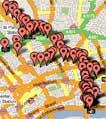 And so my month-long journey along London's hidden river Fleet is complete. It's been a fascinating trip through a cross section of historic (and not so historic) London, proving that you can still follow the course of a subterranean river by following the clues on the surface (and proving that it is possible to tackle and complete a nigh-impossible cross-capital multimedia project just by chopping the journey up into 31 manageable stages). As a final flourish (and a final treat) I've plotted
 Here it is, the
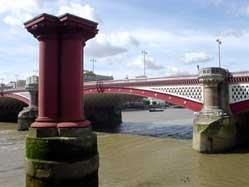 The first
 The
 As you might suspect from its name,
 Blackfriars is now better known as a mainline
 1515-1520: After the Royal Apartments at Whitehall are destroyed by fire, Henry VIII spends £39000 establishing a royal palace on the western bank of the Fleet, close to its mouth with the Thames. The palace is named
 London grew up around the twin centres of Westminster and the City, and medieval Fleet Street helped to