100 years ago today, not-so-deep below the River Thames, the Rotherhithe Tunnel was opened by the future King George V. This mile-long single bore tunnel had taken four years to build, at a cost of two million pounds, and was (at the time) "the largest subaqueous tunnel in existence". There weren't many cars around in the 1900s so the RotherhitheTunnel was primarily for the benefit of horse-drawn traffic and pedestrians. Not that you'd want to walk through its exhaust-fumed portals today. So I've done that for you. Here's what it's like down there...
To Rotherhithe, which is slightly harder than usual with the nearby Thames Tunnel closed until 2010. If I had a car I'd have to start at the Rotherhithe roundabout (take the turning for the A101, no explosives, no flammable liquids). But as a pedestrian I had it slightly easier. There are stepsdown onto the entrance ramp close to Rotherhithe station, avoiding the first few hundred yards past the speed camera. It doesn't look like anyone on foot should be allowed down here, but really, it's still perfectly legal. Only 20 pedestrians a day pass this way, apparently, even though it's the only walking route across the river between Tower Bridge and Greenwich? OK, deep breath (very very deep breath), and I ventured inside the southern portal.
Very quickly the artificial environment of the tunnel took over. Fluorescent strip lights, glazed white tiles and long grey lines vanishing into the distance. Last chance to turn back, or else there was a long slog ahead. Because this is no straight and simple tube. It was designed with horses in mind so it cuts across the river at an angle, allowing gradients to be shallower and easier to climb. And it was also constructed with several sharp zigzagging bends, ensuring that horses wouldn't be able to see daylight at the other end and bolt for the exit. Once I'd passed the first of five curves, the outside world seemed a very long way away.
It's relentlesslybleak down here, especially when the traffic's light. A few 20mph roadsigns, various ventilation units, a two-lane non-super highway, and look at that, two pavements! The circular roof means that traffic can't get too close to the walls, so there's room to walk two abreast on either side. Shame that almost nobody bothers. That's probably why I got several funny looks from the oncoming traffic. What the hell is he doing down here? Has he not yet dropped dead from carbon monoxide poisoning? Shall I mount the pavement and squash him flat?
At bend number two there was an unexpected sight tucked away in a tiled recess - a large iron spiral staircase. This used to be the pedestrian entrance, a shortcut down the airshaft from the banks of the Thames above, but wartime damage closed it off and the steps are now firmly locked top and bottom. I would have stayed to take a photo but there was a big sign saying EXHAUST FUMES DO NOT LOITER so I thought it wise not to. Plus I was expecting the police to arrive at any minute, having observed a suspicious looking white male hanging around near a security camera in a strategic location. Oh it felt so very wrong down there, but no backing out now.
The central straight section was the longest, with millions of gallons of water now suspended somewhere above my head. More locked-off stairs at the far end, and then just two more sharp bends and a gentle curve to go. Round this last curve I was surprised by an approaching cyclist riding on what I thought was the pavement (but probably not half as surprised as he was). And finally, yes, the welcoming sight of North London daylight. It took 20 minutes altogether to walk from one end of the tunnel to the other, eventually emerging almost a mile downstream in deepest Limehouse. By this time I'd probably breathed in more pollutants than the average countryside resident inhales in a year, and shortened my life by several weeks. But hey, even if I don't make it to 100, this crucial cross-London link has reached its landmark centenary in reasonable health. Probably best to celebrate by not visiting.
Keep your eyes open for a new series of artworks going up across the tube network this week. Don't go looking for watercolour masterpieces or ornate sculptures, because this time it's posters. Six different posters. Each of them plain white, with a single phrase in big black text down the middle. Dead cheap, dead simple.
OK, there's a bit more to it than just words on paper. The artist, Anna Barriball, found the phrases on the backs of photographs in an album she bought in a junk shop. The font she's used is NewJohnston, the official tube typeface, which is rather evocative. And the posters will appear in place of adverts, so they should make commuters think and/or smile. It's an ingenious idea.
Here are representations of four of Anna's posters (in non-copyright font).
60 miles of beautiful views.
Oh, boy, what a wonderful city!
The last place he ever saw me.
Off to work 8.15 AM. (Nylon uniform.)
Actually that's only three of the correct posters - I made the other phrase up. I'm sure you can spot my fake. That's because generating effortless minimalist art is a lot harder than it looks. Anna's poster collection may look like it was conceived, planned, designed and produced in ten minutes flat, but it probably took a lot longer than that. Probably. Anyway, I think it's a clever concept.
But oh dear, somebody's let the TfL art critic loose, and they've gushed something rotten over Anna's composition.
Location: Mapleton Road, Westerham, Kent TN16 1PS [map] Open: 11am - 5pm (closed Mondays & non-summer Tuesdays) (closed Nov-Feb) Admission: £11-ish (or free to National Trust types) 3-word summary: Churchill's Wealden homestead Website:www.nationaltrust.org.uk Time to set aside: half a day
1922 wasn't Winston Churchill's finest hour. He lost his seat in Parliament after a distinguished political career and suddenly found himself with plenty of time on his hands. The perfect year, then, to snap up a Victorian country manor house in the Kentish hills near Westerham. Chartwell Manor cost £5000 to buy (a fortune in those days) and another £18K for the architect Philip Tilden to rebuild. A delightful gabled family home emerged, with landscaped grounds sweeping down to two artificial lakes. Winston moved in at the age of fifty and lived here with his beloved wife Clementine for most of the next four decades. There was a financial hiccup in 1945 when the British population voted him out of office again, but friends ganged together to buy the property and donated it to the National Trust (with the Churchills as tenants on a nominal rent). And that's why there's now a car park at the head of the valley, and a tea shop, and a plant stall, and a queue of coaches disgorging a steady stream of mature visitors. Me, I arrived by bus.
Chartwell's grounds aren't enormous, but they are splendid. The house clings to one side of a narrow wooded valley, with distant views across the undulating Weald from a series of grassy terraces [photo]. A rather charming rose walk crosses the kitchen garden, planted to commemorate the couple's 50th wedding anniversary 50 years ago [photo]. There's a formal rose garden, an informal water garden and of course a pristine croquet lawn [photo]. It's all very Lutyens-Jekyll. Winston also grew his own vegetables (nice patch, Winnie), built his own walls (a plaque points out which), and indulged his love of painting in a garden studio (was there no end to this man's talents?).
Access to the main house is via timed ticket. Chartwell's a lot more cramped on the inside than it appears on the outside, so the volunteer stewards don't want everyone storming in at once. A visitors book in the hall records the names of civil dignitaries and world statesmen who popped by, with an original telephone resting nearby (Westerham 3344, if you ever fancy giving the great man a call). Many of the shelves in the compact library are filled with Winston's own books, written upstairs in the wood-panelled study. Even the disabled can get up to the first floor via the tiny lift installed for Mr Churchill's 80th birthday. Do stop to talk to the stewards, they have many fascinating tales to tell.
See that fish tank. The story goes that two schoolboys won a pair of goldfish at a central London funfair after the war, and walked up to the door of 10 Downing Street to present them to Mr Churchill. "We thinks you deserves them for saving our country Sir," they said (or something similarly endearing). Winston asked a member of his staff to rush out and buy a fishtank, and then took an interest in fish-keeping from that day on. Oh, and if you listen carefully you'll hear it's a silent fishtank, he couldn't bear even a low electric hum.
Watch out for the trademark cigars all over the house, and several framed examples of Winston's finer brushwork. Look, even the wartime Prime Minister had his own ration book. And there's his Nobel Prize for Literature, and his certificate of honorary American citizenship, and blimey Churchill was a bit of a superman really, wasn't he? Right man, right place, right time. Having visited Chartwell I can now also picture him as a family man, sat at the circular table in his low-ceilinged dining room, gazing out through the arched windows at the Westerham hills. Who wouldn't have been happy here [photo]?
• London's most famous address is 10Downing Street, home to the Prime Minister. • CityHall, seat of the Greater London Authority, has ten levels. • The Thames Flood Barrier has ten gates, the largest four of which weigh 3700 tonnes each. • Tenrailway bridges have been built across the River Thames in London: Alexandra, Blackfriars, Hungerford, Grosvenor, Battersea, Fulham, Barnes, Kew and Richmond. • Ten is the lowest number that isn't the first word of a London street name (in either the ordinal or cardinal form). • The A10trunk road runs due north from Monument to Kings Lynn. • Bus route10 runs from Kings Cross to Hammersmith. • What's the most famous number in Wimbledon? 10 is.
Bus 246: Bromley North - Chartwell Location: London southeast Length of journey: 15 miles Duration: 50 minutes (timetabled), 2 hours 55 minutes (actual)
It's London's most elevated bus route. It runs through the corner of London that's furthest from a railway station. It accepts Oyster cards south of the M25. It ventures along steep, narrow, leafy country lanes. It only runs, to the end of the line, about 250 times a year. And I spent three bloody hours on it yesterday because I made an elementary scheduling error. It's the 246, and it's the bus to Winston Churchill's house.
Bromley North station in a power cut, not the best of starts. All the traffic lights were down, and the empty-ish bus stumbled slowly through the undirected traffic. And then, at Bromley South, further complications. A teenage lad tried to board without a vaild ticket, claiming power-cut-related Oyster hardship. He argued adamantly that no shop could currently top him up, but the driver (and then a passenger, and then an inspector) told him in no certain terms to get off. Eventually, with a shower of lurid cursing, he backed down and moped off down the High Street. During this time, however, an unusually large queue of passengers had gathered at the bus stop. They piled aboard, filling the seats and the aisles to overflowing, leaving one late-arriving mum and her giant twin-buggy disconsolate at the kerbside. Never mind dear, there'll be another bus along in an hour.
Off through the suburbs of Bromley, occasionally stopping to let old ladies and their shopping disembark (but not stopping to let glaring would-be passengers get on). Past the end of the line at Hayes station, then exiting suburbia and zipping briskly across the common. So far so good. But then the serious traffic jams began. An interminable queue of snaking traffic on the approach to Keston village, inching forward a few feet at a time, with no sign of escape. It was at this point that I realised how badly I'd mistimed my bus journey. The annual Biggin Hill Air Fair was getting underway, three miles down the road, and every visitor who wasn't on the bus appeared to be in a car ahead of us. My fellow passengers became agitated. They shuffled and muttered and moaned. They tried to ring friends, but found that the mobile network had collapsed. Many of those without small children decided to get off and walk (it'll only take an hour and a bit, up and down hills, on the hottest day of June so far, why not?).
Some gave up on Keston Common (hell, let's spend the afternoon in the pub instead). Some gave up a quarter of a mile down the road, half an hour later. Gradually the bus emptied to tolerable seating levels, while the exodus of sweaty walkers passing alongside increased. Those of us who remained aboard could hear jet engines and roaring fighters in the distance, and occasionally (when the canopy of trees permitted) we caught a subsonic glimpse of what we were missing. Only when the bus finally filtered onto the main road did progress eventually became slightly faster. At one point a knackered pedestrian bashed on the door of the bus and demanded to be allowed on board. Our jobsworth driver apologised that he couldn't halt between stops, at which point the would-be passenger launched into a foul-mouthed Anglo-Saxon tirade (including female body crevices) and spat contemptuously at the window. Had a police officer been watching, an arrest would have been a certainty.
Many local residents (and tired pedestrians) had stopped off at Leaves Green to sit on the grass near the pub and watch the air display for free. Rather better value than the £21 charged by the organisers for a view on the other side of the hedge. The family who'd been sitting in the seats behind me an hour earlier waved from their picnic blanket beneath a shady tree, beer in hand. A DC6 flew by, repeatedly, and a spiralling Chinook proved that even helicopters can do intricate acrobatics. And slowly, finally, we edged towards the airport perimeter. The road runs right past the end of the runway and we arrived just in time to see a Lancaster bomber preparing to soar into the sky. Scores of people were standing along the fence, in contravention of safety advice, many of them bikers for whom the jammed traffic had proved no problem at all. An ear-splitting drone signalled a four-jet flypast, and I strained to look out of the window to watch them looping sunwards. Suddenly my mistimed bus journey didn't seem quite such a trial after all.
The traffic was a breeze after the airfield, but there were only a handful of us left aboard. Through the town of Biggin Hill (it didn't look overly posh, but it boasted a Waitrose almost immediately nextdoor to an M&S Simply Food) and climbing up onto the North Weald. Immediately before crossing into Kent the bus reached Westerham Heights, not only the most southerly bus stop in the capital but also (at 245m) the highest point in Greater Londonby some considerable distance. Not entirely coincidentally, the highest point in Kent lay a few metres further up the road, atop Bestrom's Hill. And then down into a gorgeous green valley, trying to ignore the M25 carving across the landscape in an ugly cutting, and on into the quiet town of Westerham, where this bus terminates.
Except on summer Sundays, when the 246 continues from the villagegreen to Chartwell. There were only five of us left aboard, all National Trust types, waiting patiently to arrive at our final destination more than two hours late. On into wooded uplands, along lanes sufficiently narrow to cause serious manoeuvring problems when we met another bus coming in the opposite direction. There was something very odd about riding a proper red London bus deep into rural seclusion, round sharp tree-lined bends and down into a stately home car park. But how fantastic that it's possible to travel to somewhere so distant and cultured armed only with an Oystercard and an awful lot of patience. And please time your visit to Chartwell more carefully than I did - any other Sunday before November should be fine.
I was in Beckton yesterday [don't ask] on a quest to visit a well-hidden green oasis [actually, I confess, I spotted it by accident on a map at a bus stop]. The East Ham Nature Reserve is a ten acre churchyard [the largest churchyard in London, no less] ,tucked away beside the busy A13 in a location which must once have been idyllic [but now, where a giant flyover crosses a major sewer, I think not]. The church in question is St Mary Magdalene[the oldest parish church in London, allegedly], a 12th century jewel blessed with a Norman interior[not that I got to look inside, because there was a wedding on]. And the entrance to the nature reserve is round the back [past the fat bridesmaid and her chubby pushchair-bound daughter].
By the side gate Newham Council have built a visitors centre [it looked like a green portakabin to me] to welcome schoolkids and nature-seekers [it was barely welcoming, it was firmly locked and shuttered]. Go straight ahead and you'll spot two gravestones dedicated to victims of the Titanic[I never saw them, I only found out when I got home and Googled the place]. More interesting, however to turn left and head into the churchyard proper [why are you telling them this? they don't care, they'll never visit]. [and is that the best photo you could find, it's a bit dull, and not even slightly representative]
This was once a well-tended cemetery, but it's been a nature reserve since 1977 [irrelevant date, stop it] and since has been allowed to become semi-overgrown [the paths are kept clear and immaculate by invisible council operatives]. Watch out and you might spot owls, foxes and kestrels rustling through the foliage [I saw some birds, and a cat, and a squashed snail, that was all][even the foliage is a bit same-y, unless you have a thing for shrubby green leaves]. There's also a nature trail to follow, marked by metal doornumbers nailed into stumpy wooden posts [but without knowing what all the numbers stand for, it's all a bit pointless]. [really, you're wasting your time writing this, nobody's been, and nobody's in the least bit interested]
There's something melancholy about reading the inscriptions in an obsolete graveyard [yes, obviously]. Most of the remaining headstones are from the first half of the last century [so a lot of Mauds, Arthurs and Sidneys] and are etched with the names of the forgotten dead ["My dear husband Joseph"], many of them children ["Nenn, adored daughter"]. Inscribed underneath there's often a melodramatic verse ["A face is from our household gone, a voice we love is still"] or poignant phrase ["God thought it best"]. Many gravestones are now tilting, cracked or overgrown [yes, most old cemeteries are like this]. But just occasionally a flash of yellow and red up a side path reveals a grave still lovingly tended by relatives. [do try to write something relevant and original, won't you?]
On Saturday afternoon I had the entire nature reserve to myself [bar the jabbering wedding party on the opposite side of the hedge]. All the way round the central wilderness [if you're buried in there, nobody's coming to see you], past the flowering dogroses [I think they were dogroses, I'm not good on plants] and along the avenue of shady pines [it was so quiet and so private that I kept expecting to bump into a gang of teenage glue sniffers or an embarrassed couple shagging, but no, just me]. My secluded circuit was a pleasant way to spend quarter of an hour [but in a very unspecial ordinary way]. Where better to commune with nature than this environmental East Ham hideout? [lots of other places to be honest][it's worth a look if you're in the neighbourhood, which is unlikely][really, don't bother making a special effort to visit][see, my Saturdays are often quite dull]
• The London postal district contains eightpostcodes: N, NW, W, SW, SE, E, WC and EC. • There are eightRoyal Parks in London: Bushy Park, Green Park, Greenwich Park, Hyde Park, Kensington Gardens, Regent's Park, Richmond Park and St James's Park • Eightdeep-level shelters were built in the early 1940s, linked to existing tube stations at Clapham South, Clapham Common, Clapham North, Stockwell, Goodge Street, Camden Town, Belsize Park and Chancery Lane. • Bus route8 runs from my house to Victoria.
Ten other blogs you might enjoy reading » If you like odd and neglected buildings from the English countryside, with nice photos:Unmitigated England » If you like odd and neglected buildings from the English countryside, with nice photos:English Buildings » If you like touring every Underground station on the network, slowly, one by one, to see what's there:To The End Of The Line » If you like discussing opinion polls and the state of the UK's political parties:UK Polling Report » If you like birds and insects and wildlife, and fancy a look round a coastal village east of Dover:St Margaret's at Cliffe Photo Diary » If you like those big adverts and signs they used to paint on walls and buildings, many of them now endangered by redevelopment:Ghost Signs » If you like carvings, sculpture and other intricate designs to be found on London's buildings:Ornamental Passions » If you like graphic design, typography and lovely modern lettering (with or without serifs):Noisy Decent Graphics » If you like discussing Greenwich, probably (but not exclusively) because you live or work there:The Greenwich Phantom » If you always thought Mark Kermode should have a blog about movies:Mark Kermode's Movie Blog
• Only seven people were ever executed inside the Tower of London on Tower Green, including Lady Jane Grey and two of the six wives of King Henry VIII. • Approximately 1 in 7 of the population of England live in London (population 7½million-ish). • 56 people died in the 7/7bombings in July 2005. • The walled City of London had sevengates - Aldersgate, Aldgate, Bishopsgate, Cripplegate, Ludgate, Moorgate and Newgate. • 7streets meet at SevenDials, named after the six sundials on the monument erected there in 1694. The monument itself casts a shadow - this is the seventh dial. • There are sevenglasshouses open to the public at the Royal Botanic Gardens, Kew, including the Temperate House, the Palm House and the Princess of Wales Conservatory. • Seven Sisters on the Victoria Line is London's highest numbered tube station. The area is named after 7 elm trees, supposedly planted in the 14th century by seven sisters (and replanted, by seven sisters, twice since). • Seven Anglo-Saxon kings are reputed to have been crowned on Kingston's Coronation Stone in the tenth century (including Ethelred The Unready). • SevenKings is a minor suburb to the east of Ilford, and is named after chieftan Seofoca (not a number). • Bus route7 runs from Russell Square to East Acton.
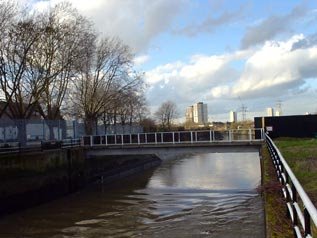
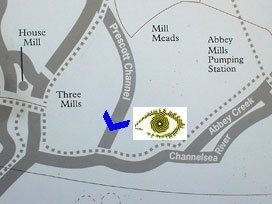
• Oh now that was careless. Pre-Olympic construction on the Bow Back Rivers has disturbed a rather enormous unexploded bomb on the bed of the Prescot Channel. It's a biggie, the largest WW2 German explosive to be uncovered in the capital since the 1970s. The bomb weighs a ton, which is not great news when you live in the neighbourhood. I was expecting some Army jobsworth to insist that I be unnecessarily barred from my home for 48 hours but thankfully no, they've only insisted on a 200m exclusion zone, not a kilometre. •The bomb's in the river between Three Mills Studios and the AbbeyMills sewage pumping station, so it could cause major hassle if it blows. And this is an area you know very well indeed, because the first two series of Big Brother were filmed in the field nextdoor. Olympic plans have already required the demolition of Davina'sBridge so that new lock gates can be built here, allowing construction materials to sail upriver to the main 2012 site. And it's this building work that has uncovered Hitler's belated delivery. If Big Brother 9 were still being filmed in Bromley-by-Bow, then this megabomb would have completely shut down yesterday's opening night. • I popped down to the Prescott Channel after work yesterday to take a look (yeah, going deliberately closer to an unexploded bomb, there's sensible for you). I was surprised to see nothing whatsoever from the train, immediately alongside, given that the police keep insisting on shutting down the District line in the vicinity. But all construction work on Prescott Lock (and all activity at Three Mills Studios) appeared to be halted while brave Army boysprepared for safe detonation. No sign of the brave army boys either. There were a handful of policemen guarding the courtyard outside the House Mill, armed only with a strip of blue tape. But life elsewhere was dangerously normal. So I went shopping at Tesco nextdoor (no panic, not even a sign near the door warning of unexpected death) and then walked back along the Lea towpath with my shopping, opposite an unevacuated riverside apartment block. • With a bit of luck the Royal Engineers have cleared the mudbanked warhead overnight, because East London tube travellers are getting a bit tired of circuitous replacement bus services. But, with the Olympic Park being really so very huge, who knows what they'll dig up next?
• Meanwhile, London 2012 bosses announced yesterday that they intend to build fewer stadia to save money. They're shifting the fencing events to the ExCel Centre and they're shifting the basketballarena to the space where the fencing would have been. If I understand this change of heart properly, there'll now be no Olympic events taking place in Tower Hamlets (bar a couple of road races). I no longer live in a properly Olympic borough. And this stadium shift also means that an entireindustrial estate has been needlessly demolished, just so that a few houses can be built in their place in five years time. It may save a bit of money, overall, but I'm unexpectedly gutted.
• London is a six-letter word. • Despite wiping out most of the City's buildings, it is traditionally believed that only six people died in the 1666Great Fire of London (although it was probably rather more than that). • Greater London is divided up into sixtravelcardzones, of which Zone 2 has the most stations. • All of London's underground lines run north of the Thames, but only six run south. • Six tube lines interchange at King's Cross St Pancras - more than at any other station. • Bus route6 runs from Aldwych to Kensal Rise.
It's exactly ten years since I bought my first mobile phone. I didn't really want one, I couldn't see the need, but I was cajoled and ultimately persuaded. My first mobile was a Motorolamr501, one of the first sub-brick fliptop phones, and it cost me £49.99. It had an extendable aerial, because that's what phones needed in those days, and it opened with a satisfying click. The very first phone call I made was to my parents and lasted 4 minutes and 38 seconds. It was downhill from there on.
My first phone couldn't do much. It could ring people, and it had an adjustable answerphone message, and it could run out of battery power in 2 days flat. Plus there was a new mysterious feature called text messaging. Very early on I had a go at "texting", as it would later be called, but the one other person I knew with a mobile wasn't really interested so the novelty soon wore off. And that was about the limit of my new phone's features. No games, no annoying ringtones, no online web browser, nothing that today's mobiles take for granted. But it had all of the key features that I still use now (on phone number 4), and none of the 3G-hungry extras.
I used to check my phone far too often to see if anybody had called, but nobody had. Then I learnt not to check it so often, which meant that on the rare occasion when somebody did ring I never noticed. Then they'd get annoyed ("I mean, what is the point of having a mobile phone if you don't use it?") and I'd go back to checking more often. My new mobile made me more accountable, and more subject to change and last-minute rearrangements ("I'm going to be late!" "I'm going to be very late!" "Tell you what, can you come and meet me?"). The power to communicate independently was in my hands, but also alas in other people's.
And then the bills came. They were low to start with, but then I had to use my phone beyond the scope of my monthly contract and they started getting higher. £1.30 for a five minute call, four quid for half an hour to another network - my mobile provider was merrily milking my bank balance. When I moved to London I started using my mobile a lot lot less, but I still forked out a tidy sum every month for the privilege of a monthly contract. I should have stopped before I'd paid out thousands of unnecessary pounds, but only last year did I switch to pay-as-you-go and I haven't looked back. Ten quid a month, max, that's much more realistic. I now exploit my phone, my phone doesn't exploit me.
Few inventions have transformed society quite so dramatically and quite so rapidly as the mobile phone. Back in 1998 my mobile was a relative rarity, but now the majority of the population can't go anywhere without one. If you choose, you need (almost) never be uncontactable. Why be bored when you can ring a mate and pointlessly gossip, whenever, wherever. SMS messaging has helped to introduce a newly-evolved form of shallow abbreviated English ("u calln mi fik!?"). Meanwhile fledgling web services are merely scratching the surface of facilities we'll all take for granted before the next decade is up.
My mobile still doesn't ring often enough for me to be truly addicted, obviously. But you're welcome to give me a call on 07... you know, same number as ten years ago.
I hate pdfs. I hate their all-pervasive dominance of online documentation. I hate their corporate over-functionality. I hate the way they hijack my desktop and interrupt whatever I'm doing. But most of all I hate their resource-hungry slowness. Bloody pdfs.
I hate pdfs. The three letters p d f strike fear into my web-based heart. Do I dare risk opening this document with Adobe's evil Acrobat Reader? I know what'll happen. My browser will momentarily halt, and the dreaded Windows hourglass will appear. Up at the top of the screen will come the dreaded words "Not responding" while Adobe's bloated software impregnates my operating system. I bet it's checking for updates, even though I don't want bloody updates. I don't want the additional ability to read Icelandic script out loud or whatever pointless extras it's trying to load. Every other process on my computer will halt - that mp3 will stop playing, that YouTube video will stop downloading, and my online connection will get the hiccups. I could go and make a cup of tea while this stuff churns through. Bloody pdfs.
I hate pdfs. I'd be quite happy with a simple document reader but no, Adobe wants to force upon me some fat multi-tasking beast. I've tried shifting some unnecessary additional files, embedded deep within the heart of the program, but Acrobat Reader still loads at the speed of an arthritic tortoise. I want fewer features, not more, but that's not an option. I don't want extra icons added to my toolbars, I don't want 30 megabytes of bloatware chundering away in the background, and I don't want pointless program components destabilising my operating system. Invariably, if my laptop ever grinds to a halt and requires rebooting, it's an Adobe process that's buggering everything up. Bloody pdfs.
I love pdfs. The ability to duplicate any document in a simple cross-platform format, that's brilliant. Every typeface nuance, every scalable layout, every intricate diagram, all available to be viewed, printed and saved. No need to obtain a paper version, just a perfect digital copy. OK, so the cut-and-paste option for text is positively archaic and impractical. OK, so I can't lift individual images and jpegs out of the frozen imprint. But it's a damned clever way to save and store publications for posterity. Hurrah for pdfs.
I hate pdfs. I hate that sense of unheralded despair when I click on a weblink only discover that I've clicked on a pdf, and the dawning realisation that my laptop will be unusable for the next minute. I hate the way that lazy organisations bung pdfs onto their websites without extracting the information into a simpler HTML format. I hate that even alternative pdf-reading software (Foxit Reader, anyone?) still materialises everything at snail-speed. Surely, in the 21st century, humankind must have come up with a better more efficient way of reading online documents than cutting-edge 1993 technology? Bloody pdfs. [Not responding]
Our nation's youth are out of control. Whereas we grew up in an era of innocence and purity, our offspring are increasingly likely to be underage alcoholic hooligans. And whose fault is this? Why, yours of course. We in the Government can only attempt to nurture the correct conditions for honour and respect to flourish, whereas you parents are at the cutting edge of society's imminent breakdown. Your kids are all potential drink-obsessed community-wreckers, every last one of them, and it's up to you to sort them out. To this end we've just published a new set of age-related guidelines on responsible parenting and alcohol, and we'd like you to enforce them for us. The next generation's moral future is in your hands.
Age Guidance <1> Breastfeed your child. Do not give them lager. <2> Train your child to hate alcohol by repeatedly pointing to a wine bottle and then vomiting. <3> Your toddler's temper tantrums are merely the early signs of a life of anti-social behaviour. Slap them down now. <4> It's illegal to give your child alcohol at this age. That's one law we've got right. <5> It's not illegal to give your child alcohol at this age. But please don't. <6> Do you know where your six-year-old is? Could he be out necking cider in the local playground? <7> Check under your daughter's bed. Are there alcopops hidden in amongst the pink princesses and cuddly toys? <8> If you're throwing a wild party this weekend, make sure your child stays in bed and doesn't see what a sozzled inebriate you are. <9> Are you sure that's a glass of water by your daughter's bed. Take heed, it could be vodka. <10> Introduce your child to alcohol responsibly. Offer them a sip of sherry at Christmas. And stop there. <11> Do try to keep your offspring busy. Scouts, camping, extra homework, violin lessons, that sort of thing. Boredom is the enemy of society. <12> Stop giving your child pocket money. You know they'll only spend it on beer, lager and vintage wine. <13> Never let your child travel by bus. Bus shelters are hotbeds of rampant underage swigging. Drive them everywhere instead. <14> If your teenager insists on having a rebellious habit, why not suggest they take up smoking instead? It's less anti-social, and it won't cost the Health Service for years yet. <15> Your child is probably sitting in the park with their mates and six bottles of White Lightning. Ring the police now. <16> Look, if you can't keep your intoxicated teenager under control, we're going to have to stop your benefits. That'll help. <17> Your daughter has the liver of a 60-year-old. Ask her to give it back. <18> Good news - the aggressive, abusive and suicidal binge drinker sleeping upstairs isn't your responsibility any more. But they are your fault. <40> Actually, we're thinking of raising the legal drinking age to 40. Sounds good to us (hic).
Exactly 55 years ago today the Coronation of Queen Elizabeth II was beamed to the homes of millions via the modern marvel of television. The Queen was crowned (and sceptred and orbed) in front of the high altar at Westminster Abbey, in the same spot as a millennium of her predecessors. The abbey is one of London's oldest and most historic buildings, founded in the 10th century and so often at the heart of national commemoration. But few Londoners ever choose to venture inside, forsaking their mother church to a steady stream of tourists and a handful of regular worshippers. I hadn't been since I was a child, so I thought it was about time for another visit. And you know, I'd forgotten what I was missing.
£10 at the North Door gets you inside the Abbey (or else the phrase "I'm coming to a service" gets you in for free). It's worth paying the extra £4 for an audio guide, otherwise you'll just wander round going "ooh, isn't that old" without really knowing what you're looking at. Put your camera away because photography is banned (today's excellent exterior shots are by Richard R, by the way). Mind where you're walking, because you may suddenly discover that you're standing on top of a famous dead person. And don't forget to look up, because the lofty vaulted ceiling is far more fabulous than any Artex you might have at home.
First stop is the space between the high altar and the quire, deliberately on the large side to act as a coronation "theatre". Here you can pretend to be the Archbishop of Canterbury, plonking down millions of pounds of gold and diamonds upon the sovereign's head. In the chancel is a stonkingly old medieval tiled pavement, currently de-carpeted to allow restoration work to proceed. And then follow the procession of pushchairs, rucksacks and French schoolkids eastward, round the back of Edward the Confessor's shrine, to explore the various chapels at the far end of the Abbey. Blimey, what a lot of otherwise-unknown lords and nobles managed to get their tombs crammed in back here. Some chapels look like a jumble sale for statuary and shiny chunks of marble. Rather more imposing are the twin tombs of Elizabeth I and Mary Queen of Scots, balanced on either side of the abbey in separate narrow chapels. And between them the stunning lady chapel, built for King Henry VII, with the most wonderfully intricate fan-vaulted ceiling. Oi, nophotos!
Returning to the main body of the church you pass the coronationchair, commissioned by Edward I, with a gaping hole beneath the seat where the stolen Stone of Scone used to rest. The seat's a bit of a mess, having been knocked about and graffitied by generations of pilgrims, tourists and choristers, but it'll no doubt look lovely on the telly by the time Prince Charles plonks his kingly backside on it. And then to Poet's Corner, where (I was disappointed to discover) scores of literary giants are commemorated but only a few are buried. Geoffrey Chaucer's really here, he was the first, and Rudyard Kipling and Charles Dickens too (even though he'd asked to be buried in Rochester Cathedral instead). Exit here for the museum, coffee shop and toilets.
Despite the tourists everywhere, this is very much a functional place of worship. Every hour a tannoy announcement invites visitors to pause for a minute in prayer/reflection (most do, some bumble on). Red-robed ministers wander around the great building, keeping an eye on visitors and occasionally vanishing through small wooden doorways. And the verger running the £5 guided tour might well reappear shortly afterwards wielding the chalice at Holy Communion in the nave. The centuries-old cycle of daily praise and prayer continues amidst the sightseeing, as well it should. And one day (maybe next year, maybe in two decades time) the world's Heads of State will be back inside Westminster Abbey to witness Britain's next coronation. But why wait until then to see for yourself.
• The Queen's postcode at Buckingham Palace is SW1A 1AA • Between 1825 and 1925 London was the number one city in the world, until overtaken by New York. • The 01dialling code was introduced to London telephone numbers over a four year period in the late 1960s. • The tallest building at Canary Wharf is at One Canada Square. The tower has 50 floors, 3960 windows, 4388 steps and is 800 feet (244 metres) high. • Bus route1 runs from Tottenham Court Road to Canada Water. • The M1motorway runs 193 miles from Staples Corner in London to Rothwell near Leeds, while the A1trunk road runs 409 miles from the Aldersgate roundabout in London to Waverley Station in Edinburgh. • The One London party, a bunch of rebranded Eurosceptics, were wiped out at the last London Assembly elections. • The 2005 One London campaign still lingers on the Mayoral website. • The Duke of Wellington's address, at ApsleyHouse, was Number One, London.
There are a lot of numbers in London. Capital numbers. So I've decided to attempt to list a different set of number-based London facts each and every day for the rest of the month. Today 1, tomorrow 2, and so on until I reach 30 at the end of June. I'd be grateful for any assistance you can provide.
» n.b. Suggestions for today and tomorrow are welcome in the comments box. » n.b. All facts must be about counting numbers, not measurements. So I'm not accepting "The Mall is one kilometre long", "Oyster Pay-As-You-Go journeys are valid for two hours" or "Three percent of Londoners are Jewish". » n.b. I'm hoping for about 5-10 facts per day. But, as I remember, some of the larger numbers get quite difficult. » n.b. Yes, I last did this five years ago, back when this blog was young (and green). But I thought it was about time for an update with revamped information, additional fascinating facts and current weblinks that actually work. » n.b. I reserve the right to ignore your suggestions if they're dull, quantitative or irrelevant.
BoJoWatch: As the Last Ordersparty on the Circle Line draws to a close (and Liverpool Street station reopens after a convenientshutdown), so Boris's alcohol ban slaps down on public transport in the capital. It's a cheap and easy ban to impose, although rather more expensive to enforce. We now face the ridiculous situation whereby tube trains leaving central London termini must be dry, whereas inter city services will happily sell you a can, a beaker or a bottle. That's everybody's civil liberties curtailed so that a bit of minor anti-social behaviour can be quashed. But what also annoys me about this ban are the posters recently splashed all over the tube, bus & DLR network. And in particular this slogan... Now I'm sorry, but that's BLATANTLY UNTRUE. This ban will make some people's journey more pleasant. Evening Standard journalists, for example, or nervous Londoners who mistakenly believe that every public transport journey might end in rampant criminality. But it's not going to improve journeys for alcoholics, nor indeed for sane normal Londoners who like the odd beer on the way into the West End. And it's not going to make my journey more pleasant. I don't get upset by the sight of a bloke sipping lager from a can, neither do I live in fear of bumping into a wine-swigger on the buses. And if my journey won't be more pleasant, then it's not true that everyone's journey will be. Boris's anti-alcohol slogan is a gross oversimplification, a logical untruth, a lie. I'll not drink to that.

To Rotherhithe, which is slightly harder than usual with the nearby Thames Tunnel closed until 2010. If I had a car I'd have to start at the Rotherhithe roundabout (take the turning for the A101, no explosives, no flammable liquids). But as a pedestrian I had it slightly easier. There are steps down onto the entrance ramp close to Rotherhithe station, avoiding the first few hundred yards past the speed camera. It doesn't look like anyone on foot should be allowed down here, but really, it's still perfectly legal. Only 20 pedestrians a day pass this way, apparently, even though it's the only walking route across the river between Tower Bridge and Greenwich? OK, deep breath (very very deep breath), and I ventured inside the southern portal.
It's relentlessly bleak down here, especially when the traffic's light. A few 20mph roadsigns, various ventilation units, a two-lane non-super highway, and look at that, two pavements! The circular roof means that traffic can't get too close to the walls, so there's room to walk two abreast on either side. Shame that almost nobody bothers. That's probably why I got several funny looks from the oncoming traffic. What the hell is he doing down here? Has he not yet dropped dead from carbon monoxide poisoning? Shall I mount the pavement and squash him flat?
Location: Mapleton Road, Westerham, Kent TN16 1PS [map]
Chartwell's grounds aren't enormous, but they are splendid. The house clings to one side of a narrow wooded valley, with distant views across the undulating Weald from a series of grassy terraces [photo]. A rather charming rose walk crosses the kitchen garden, planted to commemorate the couple's 50th wedding anniversary 50 years ago [photo]. There's a formal rose garden, an informal water garden and of course a pristine croquet lawn [photo]. It's all very Lutyens-Jekyll. Winston also grew his own vegetables (nice patch, Winnie), built his own walls (a plaque points out which), and indulged his love of painting in a garden studio (was there no end to this man's talents?).
Bus 246: Bromley North - Chartwell
Bromley North station in a power cut, not the best of starts. All the traffic lights were down, and the empty-ish bus stumbled slowly through the undirected traffic. And then, at Bromley South, further complications. A teenage lad tried to board without a vaild ticket, claiming power-cut-related Oyster hardship. He argued adamantly that no shop could currently top him up, but the driver (and then a passenger, and then an inspector) told him in no certain terms to get off. Eventually, with a shower of lurid cursing, he backed down and moped off down the High Street. During this time, however, an unusually large queue of passengers had gathered at the bus stop. They piled aboard, filling the seats and the aisles to overflowing, leaving one late-arriving mum and her giant twin-buggy disconsolate at the kerbside. Never mind dear, there'll be another bus along in an hour.
Many local residents (and tired pedestrians) had stopped off at Leaves Green to sit on the grass near the pub and watch the air display for free. Rather better value than the £21 charged by the organisers for a view on the other side of the hedge. The family who'd been sitting in the seats behind me an hour earlier waved from their picnic blanket beneath a shady tree, beer in hand. A DC6 flew by, repeatedly, and a spiralling Chinook proved that even helicopters can do intricate acrobatics. And slowly, finally, we edged towards the airport perimeter. The road runs right past the end of the runway and we arrived just in time to see a Lancaster bomber preparing to soar into the sky. Scores of people were standing along the fence, in contravention of safety advice, many of them bikers for whom the jammed traffic had proved no problem at all. An ear-splitting drone signalled a four-jet flypast, and I strained to look out of the window to watch them looping sunwards. Suddenly my mistimed bus journey didn't seem quite such a trial after all.
By the side gate Newham Council have built a visitors centre [it looked like a green portakabin to me] to welcome schoolkids and nature-seekers [it was barely welcoming, it was firmly locked and shuttered]. Go straight ahead and you'll spot two gravestones dedicated to victims of the Titanic [I never saw them, I only found out when I got home and Googled the place]. More interesting, however to turn left and head into the churchyard proper [why are you telling them this? they don't care, they'll never visit]. [and is that the best photo you could find, it's a bit dull, and not even slightly representative]
Olympic update
• Oh now that was careless. Pre-Olympic construction on the Bow Back Rivers has disturbed a rather enormous unexploded bomb on the bed of the Prescot Channel. It's a biggie, the largest WW2 German explosive to be uncovered in the capital since the 1970s. The bomb weighs a ton, which is not great news when you live in the neighbourhood. I was expecting some Army jobsworth to insist that I be unnecessarily barred from my home for 48 hours but thankfully no, they've only insisted on a 200m exclusion zone, not a kilometre.
• I popped down to the Prescott Channel after work yesterday to take a look (yeah, going deliberately closer to an unexploded bomb, there's sensible for you). I was surprised to see nothing whatsoever from the train, immediately alongside, given that the police keep insisting on shutting down the District line in the vicinity. But all construction work on Prescott Lock (and all activity at Three Mills Studios) appeared to be halted while brave Army boys prepared for safe detonation. No sign of the brave army boys either. There were a handful of policemen guarding the courtyard outside the House Mill, armed only with a strip of blue tape. But life elsewhere was dangerously normal. So I went shopping at Tesco nextdoor (no panic, not even a sign near the door warning of unexpected death) and then walked back along the Lea towpath with my shopping, opposite an unevacuated riverside apartment block.
It's exactly ten years since I bought my first mobile phone. I didn't really want one, I couldn't see the need, but I was cajoled and ultimately persuaded. My first mobile was a Motorola mr501, one of the first sub-brick fliptop phones, and it cost me £49.99. It had an extendable aerial, because that's what phones needed in those days, and it opened with a satisfying click. The very first phone call I made was to my parents and lasted 4 minutes and 38 seconds. It was downhill from there on.
Dear Parent,
Exactly 55 years ago today the Coronation of Queen Elizabeth II was beamed to the homes of millions via the modern marvel of television. The Queen was crowned (and sceptred and orbed) in front of the high altar at Westminster Abbey, in the same spot as a millennium of her predecessors. The abbey is one of London's oldest and most historic buildings, founded in the 10th century and so often at the heart of national commemoration. But few Londoners ever choose to venture inside, forsaking their mother church to a steady stream of tourists and a handful of regular worshippers. I hadn't been since I was a child, so I thought it was about time for another visit. And you know, I'd forgotten what I was missing.
First stop is the space between the high altar and the quire, deliberately on the large side to act as a coronation "theatre". Here you can pretend to be the Archbishop of Canterbury, plonking down millions of pounds of gold and diamonds upon the sovereign's head. In the chancel is a stonkingly old medieval tiled pavement, currently de-carpeted to allow restoration work to proceed. And then follow the procession of pushchairs, rucksacks and French schoolkids eastward, round the back of Edward the Confessor's shrine, to explore the various chapels at the far end of the Abbey. Blimey, what a lot of otherwise-unknown lords and nobles managed to get their tombs crammed in back here. Some chapels look like a jumble sale for statuary and shiny chunks of marble. Rather more imposing are the twin tombs of Elizabeth I and Mary Queen of Scots, balanced on either side of the abbey in separate narrow chapels. And between them the stunning lady chapel, built for King Henry VII, with the most wonderfully intricate fan-vaulted ceiling. Oi, no photos!


 • I popped down to the