Greater London contains around 2000 National Grid squares, each 1km by 1km in size. Back in August I picked one of these at random and visited it to see what I might find, and over the weekend I did it again. Last time I got Barking and Dagenham, and this time I got Hounslow, specifically a square covering the northeast of Osterley. Ooh I've never been there before, I thought, which sounded promising. But TQ1577 proved something of a disappointment, because all the interesting stuff turned out to be in the squares nextdoor.
8 Things To Do In Grid Square TQ1577
1) Drive straight through The most prominent feature hereabouts is the Great West Road, also known as the A4, which cuts Osterley in two. It wasn't always such a barrier, indeed it wasn't even here until 1925 when the Hounslow and Brentford bypass was built. But now there's a six lane carriageway scything through, with regularly spaced lights to slow down the traffic, where local residents queue patiently to feed into the melee. This section's quite dull, and lined by semi-detached houses in a classic example of ribbon development. But look to the east and you'll see the bold brick tower of the Gillette Factory, the first of several Art Deco marvels along what's known as Brentford's Golden Mile. This pre-war commercial zone is well worth a look if you're a fan of the futuristically architectural, and indeed I went and had an admiringlook later, but unfortunately it's in grid square TQ1677 so I can't tell you about it.
2) Stop off at the Osterley Park Hotel The only refreshment opportunity of any note in this 1km grid square is the Osterley Park Hotel. This roadside hostelry sits on the corner where Wood Lane crosses the A4, with a few hanging baskets outside, and the promise of Sky Sports Live within. It opened in 1928 as a free house called the Pillar to Post, indeed one part still is, but facilities have since extended to include a tandoori restaurant and a 3-star hotel (with banqueting hall) in a large annexe round the back. It's hardly the "Tudor style hotel" its website claims, especially now some philistine's whitewashed over the black timbers on the frontage, but it is convenient for the airport if that's the important thing. A more interesting looking pub is the Hare and Hounds on Windmill Lane, a Fullers classic with candle-filled fireplaces and a large garden, but unfortunately it's in grid square TQ1578 so I can't tell you about it.
3) Go for a walk in Osterley Park Osterley House is one of the National Trust's greatest London treasures, a Tudor mansion upgraded to banker's palace in the 18th century. The house sits in 142 acres of parkland, one of the largest open spaces in west London, complete with ornamental lakes, formal gardens and landscaped woodland. What's more this expanse is free to visit, once the parking fee is paid, with cedar lawns to stroll across and footpaths winding off round the estate. One of these heads east from the main drive, past fenced off pasture where cattle graze and calmly eye-up passers-by, before zigzagging past the backs of gardens on Jersey Road, the main vista towards the house now shielded by trees. I deviated and thoroughly enjoyed my tour of the state rooms and scullery, but unfortunately the House is in grid square TQ1477 so I can't tell you about it, only a few hundred muddy metres on the estate perimeter.
4) Ride through on the Piccadilly line If you've been to Heathrow by tube you'll have passed through TQ1577, midway between Boston Manor and Osterley stations. The Piccadilly line runs in cutting through this particular grid square, for about half a mile, after crossing the River Brent a short distance to the east. Peer down through the slats above one of the square's three road bridges and you can watch the trains rushing by, not that they actually stop. When the line was opened another station was close by, named Osterley Parkand Spring Grove, built on Thornbury Road to service the entrance to the estate. But in 1934 a better located station was opened on the Great West Road, and since 1967 the old bookingoffice has been occupied by one of London's quirkiest and most adorable second hand bookshops. OsterleyBooks is heapedhigh with paperbacks and ex library stock, plus greetings cards and bric-a-brac, lovingly curated by husband and wife team Tony and Pennie. I thoroughly enjoyed squeezing round their shelves for a browse, but unfortunately the bookshop's in grid square TQ1477 so I can't tell you about it.
5) Ride the H28 to Tesco Two buses serve grid square TQ1577 - the H91 which darts along the main road, and the H28 which threads sinuously through the backstreets. So meandering is the H28's route hereabouts, crossing the Great West Road four times and negotiating a level crossing, that TfL have been consulting on sending it a different way. But local people are up in arms at the thought of losing services on Wood Lane, despite improved connections elsewhere, so plans are currently on hold until a solution can be found. In the meantime this single decker is unique in London in terminating at a Tesco at both ends. At this end that's Osterley's huge Tesco Extra, a retail behemoth which conceals a more interesting empire behind. Sky Television is based here in a series of futuristic sheds and offices up Grant Way, with HQs for Sky News and Sky Everything Else watched over by security guards and billboards, but unfortunately it's all just inside grid square TQ1677 so I can't tell you about it.
6) Buy a house in a conservation area The Spring Groveconservation area extends north to the Great West Road, a web of Victorian streets laid out to attract City gentlemen, and which maintains an alluringly middle class cachet to this day. A few nicer homes exist near StMary'schurch, whose spire dominates the skyline hereabouts. Close by is Borough College, an institutional Gothic structure in polychrome brick with projecting wings and a central turreted tower. Its educational role lasted 140 years but the interior has recently become residential, and its spacious grounds have been eaten away by less dazzling houses and flats. The avenues beyond the war memorial and the Crown Court are the most impressive, including the house which was the nucleus of the original estate, but unfortunately they're in grid square TQ1576 so I can't enthuse about them.
7) Play lots of sport A surprising number of sports clubs have congregated in grid square TQ1577, particularly on former meadows along Syon Lane and Wood Lane. There's football at the Goals Soccer Centre, an athletics track at what was Borough College, cricket and tennis at Wycombe House, plus the squat 19th hole of the Wyke Green Golf Club (if not the main course itself). An enormous field off Syon Lane used to be the home ground of Harrow HillRovers FC, formerly of the Hellenic League Premier Division, but they folded in 2007 and their derelictclubhouse has recently been bulldozed. A notice on the chained gates reveals the Education Funding Agency is to blame, enraging the localpopulace by buying the land for a 1400-strong religious free school. As part of the deal Grasshoppers Rugby Football Club will be moving in nextdoor, their currentpitches being on land BSkyB wants to expand onto, except that's fractionally into grid square TQ1677 so I can't tell you about that.
8) Enjoy a stroll in Jersey Gardens There is I'm pleased to say one bona fide reason to maybe visit grid square TQ1577, and that's JerseyGardens. When the Great West Road was being dug in the 1920s this was the site of a gravel pit, its contents used to build the banks at the new Osterley station. The depression was subsequently landscaped into a sunken Alpine garden, an extensive feature believed unique in London, while land to the east became a small park, tennis courts and playing field. The alpine rockery is certainly unusual, with narrow paths leading down into an evergreen woodland dell, and occasional clusters of piled stones scattered beneath a pine canopy. I had these holly hollows entirely to myself, disturbing scores of pigeons from their rest as I wound through to a raised terrace with mysterious octagonal foundations. Jersey's sylvan dip rates somewhere between Enchanting and Dogger's Paradise, I'm not sure which, but I bet it looks gorgeous when the bluebells are out.
A crisp restaurant's opening in Soho
They don't do prawn cocktail or plain,
But smoked cheese and organic onion
Washed down with craft beer or champagne.
A crisp restaurant's opening in Soho
No really, this isn't a joke,
We're hoping to go to the preview
And meet up with the marketing bloke.
A crisp restaurant's opening in Soho
And if that's not gimmicky enough
The crisps will come down a conveyor,
You just couldn't make up this stuff.
A crisp restaurant's opening in Soho
We didn't believe it was true,
But the owners sent so much collateral
We just had to share it with you.
A crisp restaurant's opening in Soho
They're clearly just taking the piss,
And yet we suspect you'll be going
Which is why we print stories like this.
A crisp restaurant's opening in Soho
The money is all in the dips,
They're posh and will bleed you a fiver
We'd much prefer one bag of chips.
A crisp restaurant's opening in Soho
Or that's what the press release says,
We're keen to be first to inform you
So we just cut and pasted it, yes?
A crisp restaurant's opening in Soho
They wondered how stupid you were,
But they did their research in some detail
And there was no need to defer.
A crisp restaurant's opening in Soho
It's totally twenty sixteen!
You must add some photos to Facebook
And share them to prove that you've been.
A crisp restaurant's opening in Soho
A "crisp and dip concept" it says,
The PR team twitches with pleasure
Whenever we retweet that phrase.
A crisp restaurant's opening in Soho
With takeaway service no less,
A box of hand-baked discs can now be
Biked round to your office address.
A crisp restaurant's opening in Soho
By rights it should be total tripe,
But entrepreneurs know all too well now
That we'll give them plenty of hype.
A crisp restaurant's opening in Soho,
They claim to use heritage spuds
And seasonal ingredients like beetroot,
It's just like they take us for mugs.
A crisp restaurant's opening in Soho
They're going to do savoury and sweet,
They've worked out you'll buy twice as many,
There's method behind their conceit.
A crisp restaurant's opening in Soho
The first fifty orders come free
Except now we've mentioned it, sorry
The queue'll stretch far as can be.
A crisp restaurant's opening in Soho
A cynically vacuous mix,
But we'll spin a positive story
Because we make our living from clicks.
A crisp restaurant's opening in Soho
The hipsters will turn up in droves,
"It's classic!" they'll screech, without spotting
The emperor is wearing no clothes.
A crisp restaurant's opening in Soho
A twelve-pack of Walkers costs less,
But we say go out and enjoy it
For we're the uncritical press.
A crisp restaurant's opening in Soho
The first six months rent has been paid,
If cereal can sell for a tenner
We're certain that they've got it made.
A crisp restaurant's opening in Soho
What fresh concept hell will be next?
But whatever it is we'll be waiting
And keen to promote it in text.
Passengers on bus route 25, I have good news and bad news.
If you live beside the Bow Flyover it's good news, because buses on route 25 won't be whizzing over the flyover any more. Instead they'll be going via the roundabout, like they used to, which means they will be stopping at your local bus stop, which means you will be able to catch a 25 again.
They started disappearing over the flyover on Monday 16th March 2015. East London was in the grip of Cycle Superhighway works at the time, which were seriously slowing down the traffic, so buses on route 25 were diverted over the flyover to save a little time. By missing out a couple of bus stops, the traffic lights and some jams, it was possible to make up a few minutes lost queuing through roadworks in Aldgate, and elsewhere. It left a half mile gap in the middle of the busiest bus route in London, but the sacrifice of the few aided the travel experience of the many.
Eastbound the Marshgate Lane bus stop was skipped, and eastbound the Bow Flyover bus stop on the opposite side of the dual carriageway. It's OK, said TfL, all other buses will continue to stop here, so you won't be without a service. It's OK, said TfL, it's only for three months. But after three months they extended the diverstion "until further notice", and after six months they proposed to make it permanent. "No!" screamed the public in the ensuing consultation, so TfL relented and said they'd return the 25 to ground level "as soon as the current major roadworks on the route are complete". But these completed in June, and nothing happened.
If you'd turned up at the Marshgate Lane bus stop during the last 18 months you'd have seen a red cross stuck over the number '25'. You'd have seen all the buses on route 25 speeding past over the flyover. And you'd have seen a particularly rubbish diversion notice telling you where the "nearest alternative stops" were. Westbound the nearest was apparently "stop K on High Street near Warton Road", and eastbound "stop A on Bow Road near Bow Church Station (DLR)". Had anybody bothered to check they'd have discovered that these weren't the nearest stops, they were the third nearest, and both were ten minutes walk away. But nobody checked, and this drivel was left up to advise passengers for 570 days.
Residents living near to the omitted bus stops became increasingly incandescent about the diversion, there being no obvious reason for its continuation. They emailed, tweeted and complained, as you do, but TfL revealed nothing. The 25 continued to sail over the flyover throughout the summer, and throughout September, and nobody official appeared to be able to say anything. And then finally this Thursday, a full 81 weeks after the diversion began, local residents were sent this email.
From Saturday 8 October, there will be changes to bus route 25, which runs between Ilford and Oxford Circus. Following the completion of roadworks, buses will no longer be diverted over Bow Flyover and will once again run via Bow Roundabout.
The sticky red crosses came down on Thursday, and the ridiculous yellow diversion notice disappeared too, so everything looked promising. Passengers turning up yesterday were very confused, of course, staring at the 25s on the flyover then double-checking the bus stop, because the timetable switch had happened a day too early. But today they'll be able to board properly, or if they're travelling home get off at the correct stop rather than having to walk for an unnecessary extra five minutes.
A new timetable really did start this morning - I've been out to check! No longer do 25s take the high road over the flyover, they take the low road round the roundabout. Passengers at Marshgate Lane are once again able to board a frequent bus to Stratford and beyond, and are already doing so. Normal service has finally been resumed.
I said there was bad news, and for everybody else there is. If you don't live near Marshgate Lane, then the last 18 months have been excellent. Your journey on the 25 has been faster by at least a minute, often more, because the bus hasn't had to queue up for the traffic lights. Also the view from the top of the flyover has been better - far across the Olympic Park and down the Lower Lea Valley - and from the upper deck much better still. Now all these bonuses have been taken away, and the 25's journey is slower, less reliable and fractionally less interesting.
Indeed buses are always faster if they don't have to stop at places you don't want to go. The ultimate bus route skips loads of stops and whizzes you to your destination much quicker as a result. The catch is that the ultimate bus route is a taxi, and a London full of taxis would be a jammed-up nightmare.
So it's excellent news that the 25 is stopping again at Marshgate Lane, because the aim of any good bus service is to serve the communities through which it passes, not to miss them out. Several hundred people have been inconvenienced for a year and a half so that TfL can run an efficient timetable, but now their needs are once again being taken into account. And with tens of thousands more people due to move in by the Bow Roundabout over the next few years, everyone'll be best served by having the busiest bus route in London stopping close by. Come on down!
BOW ROUNDABOUT UPDATE
When pedestrian crossings were added to the Bow Roundabout in June, TfL stuck numbers to five of the flyover's pillars to indicate 'Exits'. Due to flimsy construction and poor adhesion these numbers then mostly peeled or fell off. Yesterday contractors came back and peeled the rest off, replacing them with proper permanent plastic numbers. These won't fall off, they're solid stuff, but they probably won't persuade many more of the public to cross via the new crossings either.
BOW BUS UPDATE
Bus Stop W (Marshgate Lane): Buses on route 25 are stopping again, but the timetable is three years old so shows incorrect frequencies. There are still no maps in the bus shelter. [MAP HAS APPEARED, end of October] Bus Stop P (Bow Flyover): Buses on route 25 are stopping again, but there's no timetable. The Countdown display shows all departures except those for route 25. [25 ON DISPLAY, end of October] Digital Bus Stop W:Doesn't yet show buses on route 25. Digital Bus Stop P:Doesn't yet show buses on route 25.
Routes 108/D8: Timetables at bus stops have not yet been updated (all stops, entire route) [TIMETABLES UPDATED, two weeks late] Routes 108/D8: Spider maps at bus stops have not yet been updated (all stops, entire route) [MAPS UPDATED, end of October] Routes 108/D8: Spider maps online have not been updated (so still show the 108 and D8 going via their old routes) [MAPS UPDATED, end of October] Route 108: Northbound buses still say 'Stratford' on the front, not 'Stratford City' or 'Stratford International Bus Station' (confusing passengers when the bus doesn't actually go to Stratford) Digital Bus Stop M:Doesn't yet show departures on route 108 (although the Countdown display at the stop works fine) [108 SHOWN, mid-October]
Digital Bus Stop K: Still nobody's switched the N205 nightbus from Bus Stop K to Bus Stop J. Digital Bus Stop L: Still nobody's switched route 8 from Bus Stop L to Bus Stop J. [ROUTE 8 SWITCHED TO BUS STOP J, mid-October] Digital Bus Stop G: Still appears on the TfL digital map, even though it hasn't existed for a year. Digital Bus Stop E: Still appears on the TfL digital map, unlabelled, even though it hasn't existed for a year.
WALK LONDON The London Loop[section 8]
Ewell to Kingston (7 miles)
For my penultimate Loop stroll I'm crossing from Surrey into southwest London, and staring at an awful lot of river. Section 8 follows the Hogsmill almost all the way, breaking off only when circumstances and sewage works intrude. I've also blogged most of it previously, back when I was randomboroughing, so I apologise if any of it sounds familiar. At least there was half an hour in the middle I hadn't walked before. [map][6 photos]
Ewell is Epsom's smaller twin, located not on the Downs but at the head of the Hogsmill. The Loop kicks off at the town's most iconic structure, the saucer-like Bourne Hall, squatting at the top of the lawn above the pond like a library from space. Do pop inside and up to the flight deck to check out the museum before you depart. The Loop sets off from an information board by the waterside, then exits the park to follow a chain of woodland north. The path weaves over and between a succession of threaded streamlets, before they eventually get their act together and combine into a single channel. This occurs just in time for the river to duck beneath the railway embankment through a narrow tunnel, with the footpath cunningly following on wooden stilts. This makes for an especially low headroom - a mere five foot four at the far end - so I was particularly surprised when a cyclist came whizzing out of the darkness as I emerged.
Brambly meanders lie ahead, opening out occasionally into meadow spaces allowing canine visitors greater room to roam. The path currently exhibits the first flushes of autumn mud, a few patches of solid surface turning liquid until summer returns again, and the remainder due to follow. At Chamber Mead a tributary of approximately equal dimensions flows in from a nearby estate, crossed shortly afterwards by a dip of stepping stones. Here William Holman Hunt painted his Hireling Shepherd over a three month period in 1851, and had a miserable time of it, oppressed by large flies, the local magistrate and two swans who insisted on nibbling the scenery. Meanwhile his colleague John Everett Millais was busy upriver painting Shakespearean heroine Ophelia floating serenely in the water, at a point we'll be passing in a few minutes or maybe an hour, nobody's quite certain where.
Millais' easel was definitely set up beyond the tiny Packhorse bridge, and the site of the largest gunpowder mill erected in these parts. It was also past the delightfully named Ruxley Splash, formerly a ford, now a considerably more contemporary highway intrusion. It might have been by the footbridge near Riverview School, although the great painting would have been considerably more full of nettles had this been the case. My hopes of taking a photo were thwarted by two modern Ophelias standing on the bridge with their small children, shrieking delightedly as they dropped stones and twigs into the water below. The river remains narrow and shallow at this point, drifting beneath willows and speckled with yellow leaves heading downstream. And this paragraph is all I have to show for the half hour I hadn't walked before - pleasant enough but nothing to write home about.
For the next three quarters of a mile the Hogsmill marks the boundary between Surrey and London. For those on foot the switch happens at Tolworth Court Bridge, once minor, now a roaring dual carriageway. Technically the path continues across the road, but the Loop diverts via the safest sets of traffic lights necessitating a circuitous route that almost lost me along the way. As the river widens so the path alongside it narrows, far less suitable for anything on wheels, nudged up against the rear fence of the Surbiton Speedway. William Holman Hunt's more famous painting 'The Light of the World' may have been painted along this stretch, his Christ-like figure standing in the door of a derelict gunpowder mill and knocking. A scattering of pink 'orchids' enlivens the banks, except this is actually Himalayan balsam, an invasive weed I'll be seeing considerably more of later.
At a small bridge by the Toby Carvery I pause and look over the rail. For a moment nothing happens, then a blue-green flash appears and skims off across the water beneath the trees. All too briefly it's joined by a second, before both disappear over a rooty stump and are hidden from view. It can't be a coincidence that the only other kingfisher I've seen in my life was also on the Hogsmill river, within a mile of this pair, if you ever fancy your ornithological chances. And then the Loop goes wrong. According to TfL's instructions track I can "carry on along the river as it curves to the left passing several sports grounds", and I think that's the way I walked when I was here in 2010. But that route is inexpertly boarded up, and thereby inaccessible, so I'm forced to take TfL's "alternative route" which proves a lengthy diversion.
There is a lane parallel to the river but it's pavementless, and a rat-run, so the alternative involves the avenues of Cuddington. It's an awkward jolt, despite the attractiveness of the houses, and not especially recommended. Try not to miss the turn off down what looks like a cul-de-sac - I did, and ended up half a mile later in Worcester Park. Instead head for the alleyway that leads you back into London, past St John the Baptist, Old Malden, and (eventually) back down to the river. This is another contender for "Ophelia woz ere", specifically Six Acre Meadow on the western bank, annoyingly a few hundred yards back along the unvisited section. I'm not quite sure what's going on here, and why the official documentation is so vague, but it'd be good to see the end of this bifurcation.
The Hogsmill Open Space bestrides the river, covering the zone where house-building has been deemed unwise. The Loop isn't comprehensively signed, but always taking the path closest to the river works a treat, as you'd expect. This is a broadly verdant stretch along a mile of meadow, although plagued in far too many places by Himalayan balsam which appears to have edged out several native species. The Chessington rail bridge isn't too intrusive, but the A3 Kingston bypass is another matter, forcing a subway hike (and offering a rare newsagent opportunity). The Hogsmill is broader now, signalling greater importance as a drainage mechanism, but still with charm... assuming you're not tired of riverside walking by now. But at Berrylands we must say goodbye, and soon you'll be wishing the river was back again.
A parade of shops tumbles down from the local pub, many units now offering hair and beauty treatments or acting as cheap office space. Lower Marsh Lane begins beneath Berrylands station, whose wooden platforms haven't been replaced since the Thirties and still look like a temporary stopgap. The cycleway passes between sludge beds and a sewage works, - the main reason we can't get anywhere near the river, and adding a element of whiff which may make walkers hurry. It's not the nicest setting for Surbiton Cemetery, which is up next, nor for the sellers of granite and marble who congregate nearby. What's odd is how this lane switches from industrially bleak at one end to comfortingly residential at the other, emerging eventually into the outskirts of Kingston. There's rather more busyness as we nudge back towards the river, and across it, and edge back again.
Swan Walk has a community garden to one side and an art gallery at the end, the Stanley Picker at Middle Mill, part of Kingston University London. This sits on a small island in the stream, around which students can be seen milling, and wandering around with folders, and sipping campus coffees, and tapping on screens that might or not be to do with study. The path continues tight up against the playground of a primary school, one of half a dozen educational establishments located hereabouts, then manoeuvres round to a weir by Watersplash Close. Whilst it's nice to see the river flowing freely in this urban setting, tracking it has become a somewhat bitty experience, hurled out onto one last busy main road near Surrey County Hall.
The final few hundred metres are thankfully worth the wait, slipping alongside a tamed channel as the river passes a bevy of administrative buildings - the Kingston Guildhall complex. The most interesting feature, indeed a nationally historic one, is the CoronationStone. Seven Saxon kings are believed to have been crowned at, on or near this sarsen, including Ethelred the Unready, although it wasn't mounted on a monumental plinth at the time. Alongside is the Clattern Bridge, one of the oldest road bridges still in daily use by vehicles, though the 12th century structure has been topped and strengthened somewhat since. Take the narrow staircase down to reach Charter Quay, a much more modern development of boutiques and pizzerias on the banks of the Thames, potentially softened by the presence of swans and herons. Kingston Bridge is only a couple of bars ahead, and the south London Loop is complete.
As we move forward into a new political landscape, this question is becoming increasingly important.
When we turn up for an interview, or request a property to let, even when we pass each other in the street, our citizenship is coming into question as never before.
Now a new government initiative brings the opportunity to confirm our national identity. A solution which allows us to stake our proper place in the world. The Certificate of Britishness.
This official documentation will soon be welcomed at point of use by all places of work and public services. Simply present your Certificate of Britishness as appropriate to signify approval and to speed your progress through the system. This common sense measure will help to increase our personal freedoms whilst isolating those who seek to exploit our country as if it were their own.
The Certificate of Britishness will only be awarded to true British citizens, and not to foreigners, immigrants or Citizens of Nowhere.
In the future a Certificate of Britishness will be issued at birth. In the meantime a simple act of registration is required, and all citizens will be obliged to undertake this at their earliest convenience.
A true British citizen is defined as someone whose parents were born British. This simple definition has been chosen to speed up applications, and because it cannot possibly lead to any paradoxical misunderstandings. For the absence of doubt, those born abroad, those with funny coloured passports and those who are not like us will be denied certification.
The Home Office has decreed that the baseline for CoB eligibility will be the 1951 census. This date has been chosen because the Fifties were a golden decade of prosperity, prior to immigration and the Common Market coming over here and changing things. True Britons appear in, or are the direct offspring of, our proudest wartime generation.
Those who moved later to this country, or who were born here but whose parents fail the eligibility criteria, will be awarded Second Class citizen status. This is only fair and right, because it's what the average voter is thinking, even if they don't have the nerve to say it.
Always carry your Certificate of Britishness with you at all times. NHS staff and academy personnel may ask to see your paperwork before granting free access to public services, and police will have the right to stop and search if a certificate cannot be produced.
Companies will be asked to submit a weekly return on the number of employees with, or more specifically without, a Certificate of Britishness. Please support them by bringing your certificate to the workplace for accreditation, or by confessing your non-Britishness at the earliest possible opportunity.
The government recognises that many Britons will want to wear their citizenship with pride, rather than keeping it hidden on a plastic card in their pocket. A special armband will therefore be produced, in a patriotic shade of blue, which can only be worn by those with approved citizen status.
Second Class citizens have not been forgotten and will be permitted a yellow armband. Whilst not as iconic as the blue armband worn by the majority, it will still represent a shared faith and vision in our nation's values, and will be seen as better than having no armband at all.
Later this year a more finely-tuned system of armband recognition will be introduced. EU nationals will be presented with a burgundy armband, to match the cover of their passports. This will make it easier for these interlopers to be identified when we leave Europe in 2019 and their presence is no longer required.
Citizens holding the passports of other nations will be asked to wear a purple armband, while convicted criminals will be awarded green. Asocial elements and the work-shy will wear black armbands, rapists and paedophiles will be tagged in pink, and communists will wear red.
Once all non-citizens have been allocated armbands, their usage will be made compulsory. This will permit the populace to recognise the provenance of people they meet in the street, and to decide whether to greet them with a cheery smile or to laugh at them, spit on them or consider some form of grievous bodily harm.
Tourists to our country should not worry. They remain very welcome, so long as they spend lots of depreciating currency while they are here and do not attempt to settle permanently.
Change must come because of the quiet revolution that took place in our country just three months ago – a revolution in which millions of our fellow citizens stood up and said they were not prepared to be ignored any more.
Their patriotism is not distasteful. Their concerns about immigration are not parochial. Instead this is a turning point for our country, a once-in-a-generation chance to change the direction of our nation and turn inwards upon ourselves, bravely telling those illegally settled here to leave us be.
The Certificate of Britishness is the right way forward, the proper solution for reigniting national pride, and the only way to stamp down on the painted devil of immigration. The liberal elites might find such thinking distasteful, but the sooner we face up to the realities of isolation and cast out the foreign freeloaders the better.
Sign up for your Certificate of Britishness today, assume your rightful place in the hierarchy, and wear your armband with pride.
Philippe Parreno:Anywhen Tate Modern (4 October 2016 – 2 April 2017)
Artists have been filling the Turbine Hall annually since 2000, and the good news is that this year's is better than last. Not difficult. French avant-garde artist Philippe Parreno has constructed what's perhaps best described as "anexperience", combining sound and light and film, and things that go up and down. The most obvious of these is a set of ten large white screens, one large and used for projection, and the remainder capable of being lowered to create a makeshift cinema - three for the roof and three for each wall. Most of the time they're not a cinema, however, they rise and fall looking like they're going to do something and then withdraw, or rearrange themselves into geometrical patterns, or hide in the roofspace out of the way. There are also dozens of small loudspeakers on cables which occasionally descend en masse, plus one large one which sometimes comes down and plays classical music.
If it all sounds random then it's meant to be - a chain of events and activities coordinated elsewhere, supposedly according to the proclivities of a vat of yeast at the end of the hall. What happens next might be the lights flashing, or an impromptu thunderstorm, or commentary on a schoolkids' football match, or whatever. Apparently the sequence of events changes throughout the day, so a late afternoon visit is different to a morning one, and there'll also be some evolution as the six months play out. I hung around for an hour and I doubt I saw the entire range of activities, nor did anything repeat, not to say that the entire hour was a satisfying sequence of uncompromising variety, but it was agreeable enough.
I'd been there half an hour before the long-anticipated film moment kicked in, the signal for this being the lowering of the screens to their fullest extent. Many of the audience were sprawled out on the floor watching the aerial ballet, and you could sense growing disquiet as the walls came down without indicating whether they'd stop. It transpired you could still have sat (but not stood) beneath the two outer walls, but the main screen would have thwacked you unless you were lying flat on your back, and a member of staff was watching carefully to make sure that no harm was caused to the oblivious. The installation's big film features ventriloquist Nina Conti reading a speech, not that you can tell, and several close-ups of a squid. I was impressed that most viewers stuck it out for the full twenty minutes, but it appears that most young people can sit through anything when they have a smartphone in their hand.
And then there are the helium fish. This is Parreno's masterstroke, an excellent way to fill the Turbine Hall's cavernous space with something simple, charming and erratic. They float and bob, often low enough that it's possible to touch them, particularly if they've not been freshly filled. Small children in particular are keen to grab hold, seeing each fish as a trophy rather than as art, and parents sometimes have to encourage their offspring to let go and tap them back up. Another issue is that the Turbine Hall isn't a smooth box, so the fish don't always make it back down. I spotted three trapped high in the gantry, and four more on a ledge above the education rooms, stranded and going nowhere. Occasionally a member of staff emerged from the office at the back and batted a newly-pumped fish into the arena, but most of the time only two were airborne, and this just isn't enough. Beats last year's by miles, though. [Unmissable - The Guardian ★★★★★] [Dull - The Times ★★☆☆☆]
Various Artists:The Infinite Mix Hayward Gallery off-site (9 September – 4 December)
While the Hayward is closed for two years, this exhibition of audiovisual art helps fill the gap. It's being hosted on the other side of the river in an empty office block on the Strand, where various former workspaces have been sectioned off and filled with screens, and it's free to look around. The full tour includes ten different installations and a lot of wandering around the building, from the second floor to the basement car park, with individual durations ranging from four minutes to six hours. This means engaging repeatedly with the key dilemmas of any looped video presentation - how far into the film have I entered, what the hell is going on, is it worth staying to watch all the way round to the point I walked in, and will I recognise when that is?
Martin Creed's up first with the shortest piece, as various 'challenged' people cross a sideroad in New York, followed by an extended jamming session in the room next door. The music is one of the best things about the overall exhibition, never obvious, often alluring, and occasionally mesmeric. Room three is in the round, as a 75 year-old beat poet appears on several screens and applauds the disappointments of his life, while the next room whisks us to Compton in LA for a youthful African-American insight. The weirdest presentation is Jeremy Deller's Bom Bom's Dream, a surreal cartoonlike mix of chameleons and provocative dancing featuring larger than life scissoring fishnets. And that's immediately contrasted by an astronaut reflecting on his spacewalk, with the South Bank silhouetted through the fabric screen from the other side of the river.
Part of the experience is the opportunity to wander round a dead office block, past former meeting rooms and graffitied stairwells. It's therefore a bit of a shock to push open some double doors halfway round and find a fully branded cafe space complete with cake and comfy sofas, on which are sitting most of the people you've been wandering around the exhibition with. After thirty minutes (or thirty seconds) it's onwards to some young men humping living room furniture, which I'm afraid didn't stick around to see the end of, so might have improved. More intriguing was the video of nylon stockings being made, with a seemingly irrelevant commentary via headphones, then an operatic hologram warbling in a doorway. Finally it's 3D specs on for some aerial nighttime action, the highlight being a firework's-eye view of Berlin, although the windy trees were unexpectedly memorable. I was amazed to discover I'd spent two hours in the building, eyes opened and brain engaged, although I expect the Infinite Mix is not for everyone. [Most engaging - Time Out ★★★★★] [Best avoided - Londonist ★☆☆☆☆]
David Shrigley:Really Good Fourth Plinth (29 September 2016 – 2018)
A larger-than-life fist with a much-longer-than-it-ought-to-be thumb, the latest artwork on Trafalgar Square's Fourth Plinth is a mischievously ambiguous symbol. Does it mean hang on in there, things aren't too bad, or is it a sarcastic sideswipe at how godawful everything is about to turn out to be? The artist says "this simple gesture will become a self-fulfilling prophecy; that things considered ‘bad’ such as the economy, the weather and society, will benefit from a change of consensus towards positivity", which immediately makes me think it's the latter interpretation. What this oversized statue doesn't seem to have is Instagram power, as it was being mostly ignored by tourists in the square yesterday, which may be down to the camouflaging nature of its bronze patina or might just be that Nelson's still the dominant handiwork round here.
Are these London's 7 Best Cocktail Secrets of the River Thames?
As Autumn descends, where would the capital be without its river and its cocktails?
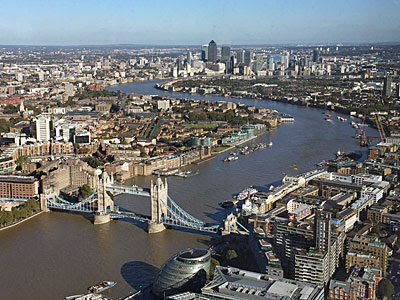
Londoners can take comfort that certain things always stay the same, namely Old Father Thames and London Cocktail Week. The river was known to the Romans as Tamesis, and meanders through enormous bends all the way down to the North Sea, as here at Rotherhithe, a view which can be seen in the credits to EastEnders. Of similarly classic vintage is the margarita, a hand-crafted Mexican concoction served with a dash of pizazz to a wildly appreciative congregation at the Cocktail Week Village in Old Spitalfields. Buy your £10 wristband in advance to avoid queues on the day, any time before last orders on October 9th, and taste the zing before your wait loses its sparkle.
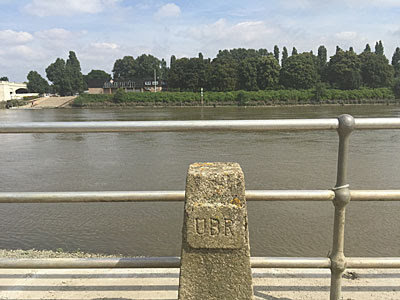
The tidal Thames rises and falls up to seven metres a day, bobbing up and down with little boats, and carrying the hopes of the capital downstream. Here at Chiswick the Boat Race is run every year on the incoming spring tide, where Oxford take on Cambridge, and only once in 1877 has there ever been a dead heat. Another finely-balanced act is the martini, a 50-50 pairing of gin and vermouth. This bespoke combination can be found headlining the speakeasy vibe at the Brick Lane Hub Distillery in both natural and organic pairings. Buy your tickets in advance on the London Cocktail Week portal, or turn up on the day and take a chance on being shaken not stirred.
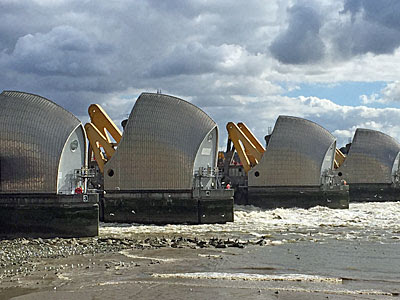
Every year the Thames Barrier is closed as a test to ensure it still works, bringing crystal waters and brimming spectacle to the Woolwich riverside. Underspill begins just before high tide as the gates twist to allow surging white white water, displacing the seagulls and bringing Greenwich Marina's yacht regatta to a premature close. Another annual event is London Cocktail Week, a joyous outpouring of alcoholic exuberance during which exclusive delights are dispensed to the elite masses in carefully curated combinations. Buying your ticket in advance, including complimentary Dirty Screwdriver, is an absolute must.
Tower Bridge has stood since 1894, raising its great arms three or more times on a good day to allow river traffic to pass through. A siren is sounded and the master of the ship must manoeuvre their craft carefully between the spans, or else forfeit three barrel-loads of hay to the Lord Quartermaster. Modern sightseers can enjoy an equally tricky challenge at the Old Truman Brewery - the Whisky Sours Masterblend Malt-Off - whilst sipping hand-crafted specialities from the destination bar. It's important to commit to buying a wristband now, from this link, because Tower Bridge is closed to traffic until the New Year due to renovation work.
The lighthouse at Trinity Buoy Wharf, opposite the O2, was first used by the great Victorian physicist Michael Faraday to test his theory of laser diffraction. These days the lantern is used for performances of a 1000-year musical composition called Longplayer, and peanut butter milk shakes are served from the American diner parked in a trailer below. If it's boozy elixirs you seek, the maverick combos at Shoreditch's globally feted Roots Tequila bar are certain to bring this imbiber's paradise to life. Check in and tag a picture of your cocktail for a chance to win a pair of tickets to the exclusive after-party, or dig deep and grab your VIP pass now.
The City of London's rubbish is carted away in crates from a jetty near Cannon Street station, just as it has been since the days of Dick Whittington. The Queen's equerry rides aboard each launch as it heads downstream to Maldonsea, the artificial island in the Thames near Canvey which has been created by three centuries of compacted urban waste. The best cocktails are also laid down in layers, as premier mixologist Patrice duZane will demonstrate in his immersive spritzer masterclass at the Grey Goose pop-up marquee. Tickets for these heavily discounted tinctures are expected to disappear fast, so don't delay, pre-order today.
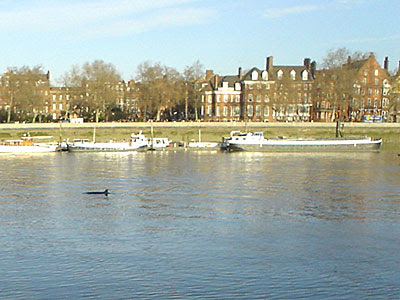
In 2006 a whale nicknamed Charlotte was spotted swimming in the Thames near Battersea, although she later died. Eels and salmon are still forced upstream when storm drains empty into the river after particularly heavy rain, and upturned canoeists often find themselves swimming in a sea of raw effluent. A similar torrent of sewage has been written about London Cocktail Week, the annual attempt by drinks manufacturers to persuade richer members of the general public to hand over considerable sums of money in return for a few small glasses of overhyped liquid. If you're seriously considering attending, why not ease your conscience by donating a tenner to your local food bank before you go?
Yesterday afternoon I thought I'd ride the newly-realigned 108 bus route between Lewisham and Stratford International. It's only supposed to take an hour, according to the timetable. Instead it took more than two hours, for reasons which will become apparent, and was a deeply unsatisfying experience.
(also, please be aware that I split the journey into three parts, and they may not have happened in this order)
Route 108: Lewisham - North Greenwich Length of journey: 6 miles, 42 minutes
I'm pleased to have remembered that the 108's first stop is just outside the DLR station. Unfortunately memory counts for little in central Lewisham these days, which is going through a turbulent phase of long-term redevelopment which essentially involves erasing everything and starting again, only this time with more tower blocks. Roads vanish, bus stops flicker, and the immediate environment is a hateful expanse of swirling vehicles and temporary walkways which has done permanent damage to my opinion of the place. There are no obvious signs to indicate where the 108 does start, and it takes me five minutes to find a map on the other side of Lewisham Gateway, then another five minutes to walk there.
The first stop is by the market, near where BHS used to be, behind a stall selling cut-price homewares. A wall of red buses clogs the High Street, not one of which is a 108, and it takes twenty minutes for one to appear. Had I taken the DLR to Stratford rather than attempting to catch a bus, I could have been there by now. The front of the bus says 'Stratford', not yet 'Stratford International' because the blind is out of date. The onboard announcement says "108 to..." followed by silence, because the audio for the correct destination hasn't yet been programmed. What's more the bus stop had an out-of-date timetable, and didn't have a yellow notice warning passengers of the route change (as there is at almost every other stop along the way). The initial customer experience in Lewisham is piss poor, in other words, but that's Day One for you.
Fifteen of us pile on board, including a group of lads in red and black check and baseball caps who monopolise the back seat. They've brought their favourite tinny music with them but can't decide what to play, so eventually thankfully turn it off. Somebody sitting close to me hasn't deodoranted, and so smells faintly of sausage roll. Escaping the queue of buses in the High Street takes five minutes before eventually breaking off to bus stop number two, where suddenly there are only a handful of free seats left. At 'The Squirrels' a pair of tightly-groomed wedding guests climb aboard, one dangling a golden gift bag, his partner forced to sit separately further back and rest her heels. A couple of the more elderly passengers soon disembark on the climb to Blackheath, a short ride on the bus being much preferable to walking uphill.
The bus's internal scrolling display has some useful information about the day's big change - 'Route 108 now serves Stratford City and International Station'. This is occasionally supplemented by an even more useful audio announcement which fully explains the new route, including the nuances of where it will and won't be stopping in Stratford. This is good stuff, and I'm impressed by the clarity. Peculiarly the message ends with an exhortation to "visit TfL dot gov dot uk for full details", except there's bugger all on the home page about the 108 and most passengers wouldn't have a clue where to look anyway. The girl next to me is astute enough to find the 108's webpage on her phone and bring up 'map view', except that nobody at TfL has yet updated the map so it shows the old route, and hey presto the piss-poor customer experience is back.
Blackheath Village's gentrified shops are being well-frequented as we thread through, with a Big Issue seller outside the station a rare reminder that not all of London is this middle class. Four ambulances and a couple of police cars are parked up outside the Boulangerie Jade bakery, suggesting that something ghastly has occurred within. Necks crane. The bus is now so full that fifteen people are standing, not including the elegant young lady in brimmed hat who strides through to take the last back seat, nudging the lads to one side. A shower disperses those enjoying recreation on Blackheath, but not the ducks. Partway across this grassy expanse the local vicar alights, clutching a microwave lasagne for one.
"The next bus stop is closed. Please get off at this stop or wait for the stop after." This is a new extended audio message on London's buses, delivered by a new voice, and you'd think more useful than the briefer version delivered before. But in this particular case it's definitely the stop before the Royal Standard you want, not the one after, which is a long way down a steep hill you wouldn't want to pant back up. In various front gardens the Blackheath Royal Standard Jumble Trail is in full swing, with residents under brollies selling teapots, cakes and copies of old I-Spy Books, along with any other bric-a-brac they hope to recycle.
There are at least 20 passengers standing by now, and they're not well pleased when a much emptier 108 creeps up behind and then overtakes. But it's not going all the way, it's only going to 'Blackwall Tunnel North Side' (wherever that is now on this reconstituted route). At the foot of Westcombe Hill the second 108 slips through the lights and escapes from view, leaving our sardine can to rumble on. Those standing nearest to the door are occasionally thwacked as it opens - a hint that this 14 year-old vehicle is soon to be retired.
At the entrance to the retail park one young boy points out the footprint of Greenwich's eco-Sainsbury's to his skateboarding friends. "It used to be there, between those green mounds", he says, with a pang of unexpected nostalgia. The supermarket would have been here all his life, I realise, and now it's just a cleared patch of concrete awaiting transformation into IKEA. Our run past North Greenwich's trading sheds and cinema has cleared out the standees, as we approach the latest colour-stacked flats, and the traffic lights change to pause us unnecessarily. The peninsula's central park is mostly empty, with residents keener to hurry by, and only a couple of families are at play. Meanwhile the millennial fountains near the cablecar have been hidden behind a wall of arty boards, almost as if they never existed. Bus station ahoy.
Two-thirds of our passengers alight at North Greenwich - the next onward stage of their journey will be underground. And only one person boards, which might seem strange given how long it's been since the last service, but there are much faster ways to cross the river. The 108 has to return down the peninsula to gain access to the Blackwall Tunnel, which is one of the things that makes the route so slow, and traffic is another. There's tons of it today, clogging up the roundabout and tailing back towards the shopping park, and suddenly almost nothing is moving. Something is amiss beneath the Thames, a vehicle has broken down blocking all northbound progress, and forcing our driver to rethink. "We're going back to North Greenwich," he tells a disappointed audience, and keeps his word.
For half an hour the 108 gives up all semblance of running a full service, abandoning the half of the route north of the river to run only between Lewisham and North Greenwich. Once the tunnel breaks it's Tower Hamlets and Newham which get sacrificed, and passengers waiting in Poplar are suddenly abandoned in a way that wouldn't have happened the day before. An old lady at Bazeley Street stares up at the Countdown display and despairs. "It says the next 108 is eight minutes away," she says, "but it's been saying that for the last half hour." When the system goes down it leaves us to figure this out on our own, and so she gives up, tugging her basket morosely behind her.
Route 108: North Greenwich - Bow Church Length of journey: 4½ miles, 28 minutes
I try again at North Greenwich later. My smartphone tells me a bus really is coming this time, but not for a while. A pair of elderly ladies emerge from the tube carrying bags for life, one in a pink fleece, the other in black slacks. They've been shopping in Stratford, and weren't sure how to get the 108 home now its end has changed, so have retreated to a point in its journey they understand. They pick the wrong stop at first, one bewildered, the other angry as she stomps off beneath the canopy and shoots me a look. They reach the correct stop just in time for a southbound bus, but are too late in arriving for there to be free seats, nor is anyone packed on board going to make way. They continue to wait at the stop in the vain hope that the next bus will be emptier, like it would have been in Stratford. My smartphone says the next southbound bus is still a long way away.
But here's the northbound bus I need, and it's one of the new vehicles, recently swapped across from routes 507 and 521. These commuter-friendly buses are like cattle trucks on wheels, formerly ideal for transporting rush hour crowds from Waterloo, and it's hoped they'll ease the crush the 108 often suffers. But there aren't many seats, indeed only four in front of the central doors, and on this journey most of those up the back have been taken by the youthful entourage of a bossy mother. I stand along the side like I'm leaning against a wall, as third class travel returns to the streets of east and southeast London.
Traffic at the roundabout where the last driver turned back is still terrible, but only for those in cars driving up from the shopping park, which are still queueing back as far as the eye can see. Imagine if someone added an IKEA to this gridlocked mix, how chaotic that would be... or simply wait a few years and watch the area grind to a halt. Thankfully the 108 has a golden ticket, permitted to whizz for several hundred yards up the sideroad alongside the dual carriageway, where redeveloped wharves are being reborn with geometric collateral. The driver of a Mercedes scowls as he sees we're going to tuck in front of his motor, edging into the left-hand lane, then merging in turn at the tunnel portal. This fragile bore is all that threads cross river traffic together, and all that keeps the 108 in motion.
Down into the tiled tunnel we go, and at a decent speed. The vehicle whirrs and wheezes exactly like a bendy bus did - same manufacturer, less articulation. The Blackwall's repeated zigzags soon cut out the phone signal, causing several passengers to look up from their phones and start willing us out the other side. When we do emerge, it's time for the first change of route compared to what's gone before. The 108 now turns left up towards the East India Dock Road, abandoning the bus stop beneath the roundabout which suddenly has no bus service whatsoever. Our first stop is some way off, six minutes after the last on the peninsula, as we head into the backstreets of Poplar.
The seatless corral at the front of the bus is filling fast, and the paucity of front seats is causing problems for our more elderly passengers. One old lady with a Jack Russell and a shopping trolley takes the accessible seat, but all subsequent pensioners are forced to stand, the spare seats at the back of the bus being too far away and too inaccessible to reach. These internally featureless buses might have been a good way to deal with inner London commuters, but they're far from ideal in residential streets where the population can be rather older. On the positive side, people with pushchairs who yesterday would have been left at the roadside can today squeeze easily on board, a benefit that's even more important when your bus service has unreliable gaps.
We've collected a lot of souls up Violet and Campbell Roads, I think generally unimpressed at the replacement service TfL has thrust their way. Those forced to stand aren't helped by the journey being rather jolty, both when passing parked vehicles or when manoeuvring over speed bumps. At one point I lose my footing completely and fall onto the man beside me, quickly apologising, then holding on more tight. At the back of the bus the younger boys are now hanging from the loops on the roof, as if this were a playground or amusement park ride, or even a zoo. And finally we emerge onto Bow Road, the 108 serving a DLR station it's never served before, then pulling in at Bus Stop M. I've seen the traffic ahead, and this would seem the ideal moment to pop home for a cup of tea.
Route 108: Bow Church - Stratford International Length of journey: 2½ miles, 37 minutes
What I'm expecting is a short run up Stratford High Street, then a corkscrew round the Olympic Park. That's what the D8 used to do these last three years, and what the 108's timetabled to do henceforth. But I missed something important, and instead endured one of the slowest journeys from Bow to Stratford I've ever known. The mounted police trotting by should have been a clue.
Initially leaving Bow Church all is as expected... but not for the pair of elderly ladies in the front seat, one in a pink fleece, the other in black slacks. They boarded south of the river, heading for the shops in Stratford, and the long detour they've taken through Tower Hamlets has them bemused. The bus has taken them down streets they don't know and past buildings they don't recognise, and when they spot 'Blackwall Tunnel' on a road sign they get worried. "We're not going that way are we?" one asks. "There's them flats," says the other, gesturing at the Bow Bridge Estate, "so I know where we are now!" "Oh," replies the first, "I suppose we'll be coming this way all the time now. But it takes ages to get there!" They seem deeply underwhelmed.
An ambulance squeezes by outside McDonalds as the lights change, and we rattle round the Bow Interchange at roundabout level. At the Marshgate Lane bus stop a woman who's been waiting patiently (and watching several 25s speed by across the flyover) checks the bus's final destination with the driver. She's well informed, she knows the 108's terminus has changed, but the blind on the front still only says 'Stratford'. Unfortunately her Oyster card is cashless and then her contactless card fails to work, twice, so she is unable to convert her knowledge into experience. The two elderly ladies in the front seat are still chatting, trying to remember if they've come this way before, which of course they have because this half mile of the route is unchanged. And as we slow down into the back of a whopping traffic jam they turn their eye to the newbuild flats along Stratford High Street and criticise each in turn.
The problem ahead is football, specifically West Ham. A bus diversion is put into operation for two hours either side of a home match, and during it too, so that police can shepherd supporters on foot down Montfichet Road. This closure used to affect the D8, and now affects the 108, but more importantly it affects all the cars trying to drive to the multi-storeys at Westfield. They have to travel a much longer way than usual, which completely chokes up the centre of Stratford and several roads feeding into it for up to seven hours. It's a total traffic nightmare, and all because there's only one road into Westfield from the southwest. Did Olympic planners not think ahead, or are the police's crowd control measures over-zealous? Whichever, they've screwed up the Stratford economy every time a home game takes place on a Saturday afternoon.
We are barely moving, edging occasionally forward, and take a good ten minutes to reach the next stop. Then suddenly we hear 'This bus is on diversion', bolstering a scrolling message about the football that most passengers haven't read. Ironically the diversion takes us along the 108's original route, the route it used to follow until yesterday, sticking to the southern side of the railway line. There is one last chance to alight, and the chain of red buses trapped in the traffic ahead strongly hints this might be a good idea. But the very idea that it might be quicker to walk seems to be beyond the experience of the passengers on board, most of whom are perfectly capable of reaching Stratford well before the bus, and all of them sit tight.
We should have turned left to serve the Aquatic Centre and Stratford City, but this afternoon that section of the new route is cancelled. West Ham's fans are trickling through the streets, many safely tucked up at The Builders Arms, which has lured them inside using a blue and claret banner announcing 'Traditional East End Pie and Mash'. It's their fault we're going nowhere fast, and they're not even on the closed road, they're downing beers. We creep onto the inner ring road where we filter into additional queuing vehicles and eventually find a bus lane. All in all it takes nearly half an hour to reach Stratford bus station from Bow, a journey which can normally be done in eight minutes. When the new football season hits Christmas shopping expect things to get far worse.
Yesterday the 108 terminated here at the bus station, but today it doesn't, which presents our driver with a dilemma. He opts to pull over alongside one of the bus stops, or rather almost alongside, leaving a broad chasm between the bus and the pavement. On opening the doors there is a rush to get off, indeed every single one of the 40 or so passengers except me disembarks. This is ironic too, given that the 108's not supposed to come here any more but it is where everybody wants to go. Stratford International is merely the booby prize, and even though we will be heading there eventually, nobody else on board gives a damn.
The two elderly ladies are not alone in having questions for the driver. Chief amongst these is "Where do I have to go to get the bus back again?" This is a good question, because even though Stratford bus station is plastered with signs stating that the 108 has been diverted, there's no explicit mention of where to go to catch it instead. The driver struggles to explain because there are two answers, one for the future, and another valid only during this football diversion. "It's too confusing, say the ladies, "we'll have to take the tube back," not yet realising how bewildered and angry this will make them later.
Ten people are waiting patiently at the front doors thinking the bus is going to Lewisham, like it would have been previously, but have to be shooed away. Meanwhile the bus station manager has wandered over, keen to give our driver a dressing down. Parking some distance from the kerb is a no-no, firstly because it's blocking the traffic behind, and secondly because it's forced several frail passengers to have to step down further than they should. "I'm just leaving," says the driver, which he nearly is, setting off on a futile trip to what's now the end of the line.
The only way to Stratford International is to continue in the jam round Great Eastern Road and join the cars attempting to reach the multi-storeys from the east, and I'm the only passenger who seems to want to go. That's another ten minutes of my life I shall never get back. The railway completely severs Westfield from the old town centre, bar one pedestrian bridge, so a convoluted six-traffic-light drive is required. At Stratford International I alight with a forced cheery "thanks", and the driver parks up for a well-deserved break. There might later be fresh passengers waiting to go back the other way, but there aren't any now - they're probably all waiting in the wrong place in Stratford, wherever the wrong place is on football diversion day.
The West Ham match wasn't TfL's fault, nor the tortuous route to be followed to avoid it. The broken down vehicle in the Blackwall Tunnel wasn't TfL's fault, nor the total collapse of the bus service north of the river when it happened. But the switching of the D8 and 108's routes is their decision, and does seem somewhat ill-advised. The more important long-distance route, the 108, has been sidelined through Poplar and shunted off to a terminate at a quiet station, bringing fragility and irregularity to communities used to a better service. And if the main aim of the swap was to bring double deckers to the D8, I watched several of those swan past yesterday carrying mostly air, and a minibus would have easily sufficed.
Sorry, I don't think I've ever written up a bus journey, or an attempted bus journey, in quite so much detail before. But I fear it'll be some time before I feel like risking a ride on the 108 again.
It's another new dawn at what's now called Bus Stop M.
Up until yesterday the stop was served by bus route D8, indeed has been for the last 25 years. But no longer.
As of this morning we've got the 108 instead, as part of a permanent change to swap the northern ends of the two bus routes.
The D8 now breaks off from its original route at All Saints to follow the Blackwall Tunnel Approach Road to the Bow Roundabout, while the 108 emerges from the Blackwall Tunnel and takes the D8's former route through the Poplar backstreets. The two routes have also swapped their termini, with the 108 now diverting to Stratford International while the D8 continues to Stratford bus station. [map]
There is sense to this, in that the D8 no longer has to duck under the Carpenters Road railway bridge so can now be run with double deckers, and these are being introduced this morning. And it also means the D8 no longer stops at Bus Stop M, we've got the 108 instead.
What's more the tile-switchers have already been out and added the [108] while taking away the [D8], and they've done this correctly. I was impressed.
However they made the switch at least a day early, along the entire route, which left some passengers yesterday looking somewhat baffled. "I know it says the D8 stops here," said the driver of the 108 at Stratford station, "but the D8 doesn't stop here until tomorrow. If you hop on board I'll tell you when to get off and change, and don't worry, this Hopper thing means it won't cost you any extra."
Expect considerably more confusion at several stops this morning when an unfamiliar bus turns up and people start wondering why they can't go where they're expecting any more.
We don't have a 108 timetable yet, and the spider maps are out of date, because Bus Stop M never runs completely smoothly. But look at that, three nightbuses where yesterday there used to be two - who needs the Night Tube anyway?
A brief history of the buses which stopped at 'Bus Stop M', Bow Church
One less welcome outcome of today's swap is that journeys on route 108 north of the Blackwall Tunnel will now take longer.
Travelling southbound it's only a minute or two longer, so most passengers heading from Stratford to North Greenwich won't notice.
But northbound the differences are significant, adding several minutes to the average daytime journey. Yesterday the 108 was timetabled to take about 22 minutes from North Greenwich station to Stratford bus station - a particularly speedy run. Today's it's more like 32 minutes from North Greenwich to Stratford City bus station, an increase of 10 minutes - almost a 50% longer journey time. Better take the tube?

Greater London contains around 2000 National Grid squares, each 1km by 1km in size. Back in August I picked one of these at random and visited it to see what I might find, and over the weekend I did it again. Last time I got Barking and Dagenham, and this time I got Hounslow, specifically a square covering the northeast of Osterley. Ooh I've never been there before, I thought, which sounded promising. But TQ1577 proved something of a disappointment, because all the interesting stuff turned out to be in the squares nextdoor.
Route 108: Lewisham - North Greenwich