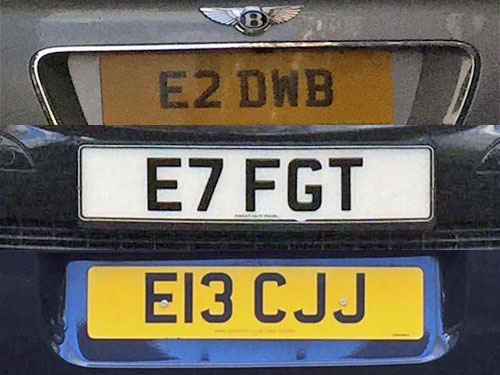
Eight alternative futures. But which one will we be in come January? Let me ask again...
1
2
3
4
5
6
7
8
LOCKDOWN
NEW NORMAL
HARD BREXIT
DEAL
HARD BREXIT
DEAL
TRUMP
NOT
TRUMP
TRUMP
NOT
TRUMP
TRUMP
NOT
TRUMP
TRUMP
NOT
TRUMP
Pick a number, and leave your prediction here. predictions
To be clear this isn't the future you want, it's the future you expect.
• We defined LOCKDOWN as being like the Spring (e.g. pubs and restaurants closed) and NEW NORMAL as being like the Summer (e.g. pubs and restaurants open).
• We defined HARD BREXIT as not agreeing a deal with the EU (even though DEAL is a fairly hard Brexit, relatively speaking).
• And TRUMP/NOT TRUMP should become clear tomorrow, fingers crossed, which is why I'm asking you today.
Last time about half of you picked 5 or 6, with 3, 4 and 7 the least popular.
Predictions above, please, and any general comments in the normal comments box below.
And then in January we can look back and see whether we saw it coming.
I've been playing numberplate spotting games again, looking for registration letters in sequence.
Registration letters first appeared at the start of numberplates in 1983. The letter 'A' was used for the twelve months starting 1st August 1983, then B from 1st August 1984 and so on. The process sped up in 1999 with two letter changes per year, one in March and one in September, until on 1st September 2001 the current two-digit code kicked in. The letters I, O, Q, U and Z were not used as registration letters, which means the sequence to hunt for is...
A B C D E F G H J K L M N P R S T V W X Y
This game takes a long time to play. It helps that registration letters appear on personalised numberplates as well as on old vehicles, but to work my way through the entire sequence of 21 letters still took me eight days. The DVLA reckons that only 7% of vehicles have a personalised numberplate, which helps to explain the scarcity.
I noticed while I was playing that some letters seemed to appear more often than others. J, M and S were popular, I thought, whereas waiting for an F took an age. So I decided to do a survey to check on letter popularity. I tallied all the registration letters I saw while walking the streets, and I did this for four days to get the sample size up to 450.
Here are my results.
Y came top, closely followed by R, S and T. The start of the alphabet proved a lot less common than the middle and the end. The lowest totals were for C, F and H, while even P looked oddly low compared to its neighbours. Vehicle registration letters are by no means evenly distributed.
Y R S T M W K N V L X J E P A B D G C H F
In fact what we have here are two overlapping graphs, one for 'old vehicles' and one for 'personalised plates'. Age of vehicle helps to explain why the gradient slopes upwards from left to right, roughly speaking, there being a lot more 19 year-old cars on the road than thirty-somethings. Most of the Ys I saw were old. But the varying popularity of letters on personalised plates has to be superimposed on top, and this is the more significant factor. Almost all the Ms and Rs I saw were personalised. Not many people want an F.
And this got me wondering about the most common first letters in people's names. Are there really that many first names starting with R, S and T, and so few starting with F, G and H? To try to find out I researched the Top 100 first names for boys and girls registered in 1944, 1954, 1964, 1974, 1984, 1994 and 2004, then totted up how many of these started with each letter of the alphabet. To add a touch of sexist realism I halved the totals for girls names before I added them to the boys.
J is the big winner here, particularly for younger males (Jacob/Joshua/Jack) and older females (Jean/Janet/Julie). A is second, fairly consistently through time, then S (with a peak around the 70s and 80s). Meanwhile F is far less frequent, and the end of the alphabet hardly gets a look in.
J A S M C D R G L K T H B P E N F W V Y X
But this doesn't quite follow-through to the results I saw on numberplates. M and S are popular in both, and F and P noticeably subdued. Egotistical Matthews buy a lot more personalised plates than elderly Freds. But if first names really were the key driver I'd have expected to see a lot more As than Ns, for example, and in fact I saw the reverse.
One reason for the discrepancy is that drivers choose registration letters for reasons other than their name, for example because they spell words or because 'X looks cool'. Another reason is that many personalised plates appear on company vehicles so reflect the name of the business. But possibly most important is that I carried out my survey in East London where many local residents don't have Christian names but Asian ones, so K, M, R and S are common first letters and C very much isn't.
Another intriguing skew is that most of the E registrations I saw appeared to be postcode-related, and you probably wouldn't get an E hump where you live. Essentially my analysis is too rough and ready to have proven anything. But maybe don't start playing Alphabetical by Registration Letter unless you have a lot of time to spare.
Thu 1: Spotted Michaela Coel again, this time in the vicinity of Victoria Park and much better disguised in baseball cap, designer dark glasses and a white scarf across her chin. Didn't fool me though - once spotted never forgotten. Fri 2: Those BBC4 pop documentaries they schedule just before screening another year of Top Of The Pops reruns are excellent, and 1990 was no exception. Sat 3: After two inches of rain fell yesterday, the northern Olympic Park was fulfilling its role as a flood bowl to ease water levels downstream. A heron lurked on the riverside footpath in several inches of water, right where I was standing yesterday, while gulls paddled around the nearby benches.
Sun 4: My favourite trainers have developed peeling soles, probably because I've walked hundreds of extra miles this spring and summer. Originally they were "special occasions only", then "definitely avoiding anywhere muddy", then "everyday choice" and before long they'll be "holes, dammit, farewell". Mon 5: Seasonal style tip - the men's headgear of choice this autumn is the mustard-coloured beanie. Other less hip shades are available. But any fool wearing one today is dressing by the calendar, not the weather forecast. Tue 6: My annual house insurance bill has somehow increased by over 150%. Not 50%, but 150%. Rang the brokers who apologised, found something cheaper and halved the annual fee they've suddenly started charging, but the bill is still up 30% and I fear for next year. Wed 7:Filming in the Olympic Park 1: A film crew village has appeared on an empty site beside Pudding Mill Lane station. It has six caravans for actors to hide inside between shoots, and two marquees, and a refreshment truck, and minibuses, but no actual filming. Whatever they're shooting nearby must be major because the caravans are still here three weeks later. Thu 8: The 3-year-old battery in my 5-year-old iPhone is now starting to show its age and will suddenly drop 30% for no readily apparent reason. Fri 9: Tesco say they've reduced the amount of plastic packing on their own brand cheese by 41%. That's good. They've also reduced the pack size from 460g to 400g. That's less good. The price per 100g has stayed exactly the same. That's good. The new pack is no longer self-seal. That's less good. Sat 10: A sign outside the Premier Inn/Brewers Fayre in Beckton says Book Now for Christmas, and I wish them good luck with that.
Sun 11: I can't believe it's not butter. Mon 12: Last November I had to have a new boiler installed in a different part of the flat. Today the builder finally came back to beautify the resulting mess. He started in a different room to the room I was expecting, which required some annoying last minute shifting of stuff. He's not especially good at social distancing. Tue 13: The builder again started in a different room to the room I was expecting, which required some annoying last minute shifting of stuff. By the end of the day some ugly pipes had disappeared behind new skirting and several tiles had been replaced. He's quite profligate with toilet roll. Wed 14: The builder arrived earlier than I was expecting, which required some annoying last minute shifting of stuff. By the end of the day I had a new cupboard where the boiler used to be. Alas he can't finish the job because its doors haven't arrived yet, and this means the new skirting's not going to get its final coat of paint until he returns in, sigh, maybe three weeks. Thu 15: Spotted 12 magpies on a grassy bank in the Olympic Park, and I have no idea what that signifies. Fri 16: Went round to BestMate's for dinner, rare chat and to finally watch S3E10 of The Crown. Stayed late, but was careful to leave shortly before midnight when Tier 2 restrictions kicked in. Sat 17: Had a mammoth number of visitors to the blog today, but it was mostly you lot refreshing the page endlessly to try to get past the High Alert screen (or to test out the random number generator). All the comments on the Sutton bus route word search were therefore fake, sorry.
Sun 18: I like listening to Ramblings on Radio 4, but this week's Walthamstow/Hackney Marshes episode is the first time I've listened to Clare Balding chatting to her guest in the same place I was walking. Mon 19: My landline doesn't normally ring on a Monday. Today it rang with the news that my mum's sister has died - not from that - following a few weeks of inexorable medical decline. She was always one to slip a letter into a birthday or Christmas card, even when there was nothing much to say. I shall miss them. Tue 20: Went to the non-essential clock shop in the Stratford Centre for a replacement watch battery - a rare purchase - thankful that it decided to fail during the gap between lockdowns. My 30 year-old Casio is so iconic you can still buy one (£29.99 in the front window) but I'm chuffed mine's an original. Wed 21: Rang BT because my broadband contract is coming to an end, and they somehow managed to find me a cheaper (identical) deal but with a Fibre upgrade thrown in. So that's good. Thu 22: Hurrah, the Roku player stuck into my smart TV now has a BBC Sounds app, so I can listen back to radio programmes over decent speakers. Fri 23:Filming in the Olympic Park 2: The western end of Northwall Road was busy with trucks, crew, refreshment tables and several stewards to keep members of the public at bay... and all to film a commercial, so they said. Sat 24: I slipped while clambering round Mudchute Park and grazed my hand on a gravel slope. End result: minor cuts across my palm and a tiny thorn to pick out. But I happened to have some hand sanitiser in my pocket, and that's the first time I've been thankful it's 2020. Sun 25: I haven't adjusted the clock on the microwave because I'll only have to change it again when the builder comes back.
Mon 26:Filming in the Olympic Park 3: Today's film crew on Northwall Road are from Warner Brothers, who appear to be organising a major vehicle incident underneath the bridge by the Velodrome. If you're watching a movie next year and spot a silver Subaru (RK52ZXF) upside down on the bonnet of a white car, that's where they filmed it. Tue 27: At Hackney Bridge the door to the perfumery reads GALLIVANT - Fragrance For Urban Explorers, and I have never wanted a start-up to fail more. Wed 28: As a follow-up to the major leak which disrupted much of East London's water supply three weeks ago, Thames Water have laid a temporary road across Hackney Marshes and are excavating two large holes beside the football pitches. Thu 29: A letter arrived from BT with details of my new broadband/landline contract, confirming that the terms have actually changed and kicked in yesterday so I'll get no more free weekend calls. A phone call to customer services confirmed they don't have a free weekend calls option any more and I should have been told this, sorry, and they can't undo it because it changed yesterday, sorry, and I should have received an email but they failed to update my address, sorry. The financial recompense they offered should pay for several weekend calls. Fri 30: Even though I've spent most of the last seven months walking around my local area, there always seems to be a fresh new street to explore. I may not be saying this by March. Sat 31: It's been London's wettestOctober on record, topping six inches of precipitation. It's also been the dullestOctober since 1894 with just fifty-or-so hours of sunshine. You weren't imagining it.
Nothing is more important to the English people than Christmas. The giving of gifts, high streets lit up with fairy lights, children's twinkly faces and twenty people sitting round a table feasting on a huge turkey with all the trimmings. We must protect Christmas at all costs, no matter what the naysayers say.
That's why I'm announcing not a lockdown but a strengthening of national measures, definitely not a lockdown. We must all spend November indoors so that Christmas can take place as normally as possible - carol singers on the doorstep, tinsel on the tree and maybe ten people sitting round a table guzzling a large turkey with trimmings.
I'm under no illusion about how difficult these next four weeks will be, but it is my sincere belief that if we shutdown over Divali we can surely rescue Christmas. Last minute shopping, Santa bringing presents and a maximum of six people sitting round a table eating a medium-sized turkey with some of the trimmings.
I am truly sorry for having to close everything again, but I firmly believe the country can only be persuaded to stay indoors if I pretend to promise a perfectly normal Christmas at the end of it. A bag of Aunt Bessie's from the freezer, a small tin of Quality Street and a single household gathered in the kitchen defrosting a turkey joint.
No freedom-loving Prime Minister wants to be seen imposing such harsh restrictions, but we will get through this if we act now and follow the rules I have so clearly stated. Stay at home and I can guarantee you the most memorable Christmas of your life, sat on an empty sofa with a box of After Eights and nobody to pull your cracker with.
• Spain introduces night-time curfew
• Wales anticipates another firebreak in January
• row about free school meal vouchers, again
• Nottinghamshire → tier 3
• Tory MPs call for roadmap out of lockdown
• study says antibodies decline rapidly
• sharp rise in deaths across Europe
• Staffordshire → tier 2
• 'too early to say what Christmas rules will be'
• Heathrow no longer Europe's busiest airport
• 2/3 of businesses at risk of insolvency
• second national lockdown in France
• 100,000 catching virus every day
• E Yorks → tier 2, W Yorks → tier 3
• Melbourne emerges from four month lockdown
• ½ million in England had virus last week
• Govt trying to avoid blanket measures
• cases now well above worst-case scenario
• 4 week lockdown across England from next week
• furlough scheme extended by a month
Worldwide deaths: 1,150,000 → 1,190,000 Worldwide cases: 42,400,000 → 45,800,000 UK deaths: 44,745 → 46,555 UK cases: 854,010 → 1,011,660 FTSE: down 5% (5860 → 5577)
At the end of October 2000 my Dad and I caught the train and came up to London for the day. It being the Millennium there were several new things to see, so we tried to visit a few like the tourists we were. I don't have any photos, sorry, because those I took haven't survived the intervening twenty years.
Tate Modern had opened five months previously in the former Bankside power station. We were blown away by the scale of the building and the sleek lines of the refurb, not to mention the giant spider crouched on Level 2. This had been sculpted by Louise Bourgeois, the first artist to get the Turbine Hall commission, and was accompanied by a trio of thin steel towers topped by giant circular mirrors. We queued patiently to be allowed to climb to the top of one of them via a vertiginous spiral staircase, then enjoyed our brief period on the upper platform before it was time to politely pass on the opportunity to another visitor.
We then did something I've never done since, because I don't think you can, which is to have lunch in the cafe on the 7th floor. We didn't push the boat out, we had a cup of tea and a tuna sandwich, and enjoyed the really rather excellent view. Then it was time to explore two floors of modern art, which back then were hung chronologically and all the better for it. We ticked off Warhol, Lichtenstein, Riley, Picasso and Mondrian at a suitably reverential pace, not to mention some famous waterlilies, several neon tubes and the infamous pile of bricks. My Dad enjoyed the collection enough to buy two postcards on the way out, which now feels terribly 20th century.
Our next stop was the Millennium Bridge immediately outside. This had opened four months previously, and closed the same day due to dodgy harmonics, so we could only appreciate its slender form rather than its infamous bounce. By the time it opened properly in 2002 I'd be living in the capital, a thought which wasn't anywhere on my radar at the time. Next we walked west along the Victoria Embankment so that I could point out the spot where I'd been standing to see in the Millennium, bang opposite the freshly iconic London Eye, and yes that's Portcullis House, that's brand new too. Fancy a trip on the year-old Jubilee line extension?
It being 2000 we felt we had to go and see the MillenniumDome at North Greenwich. Our original plan was to stare from outside, but in the souvenir shop we discovered there was a special "only £10 after 4pm" offer and this appealed to our collective sense of tightwaddedness so in we went. Just how much could we cram into three and a half hours flat?
Queues for the famous Body Zone were ridiculously long because the Dome wasn't the tumbleweed attraction many have since assumed. But there were no queues for Learning (sponsored by Tesco) or Work (sponsored by Manpower), likely because magical orchards and table football didn't have the same appeal as climbing someone's oesophagus. Home Planet (sponsored by British Airways) was the only immersive ride, permitting a virtual voyage with an airline plug at the end. The Faith zone was mostly empty space, which I think was the point.
Despite rumbling stomachs we had to break off at 6 to go and watch the aerial spectacle in the central arena. The Millennium Show was the Dome's must-see, a three act love story with abseiling acrobats, giant stilts and a soundtrack by Peter Gabriel. When the central tower ascended in the finale amid ribbons and whirling wheels we were duly impressed. But it did go on a bit, so we had to speed up our tour of the Dome's innards before closing time at 8.
Ford's transport cavalcade of mostly cars, tick. Marks & Spencer's vacuous spiral of selfies, tick. Camelot's improbable talking sofa, tick. The City of London's temple to money, tick. We saw the latter a week before thieves broke in and tried to steal its diamonds so we did well there. Unfortunately it was raining heavily so we didn't risk going outside to see the actual meridian bit, which I still regret. And the queue for the Body was still too long, dammit, so all we could do was filter out through the gift shop (where the mugs and playing cards were already marked down for clearance). I'm so glad we went, but I wish now we'd been long enough to see it all.
When the Mayoral election finally comes round, hopefully in six months time, all the betting is that Sadiq Khan will trounce his Conservative challenger by a landslide.
Shaun Bailey's campaign has been an angry one characterised by bold accusations against the incumbent, many of questionable veracity. He's been particularly keen of late to accuse Sadiq of bankrupting TfL (whereas the pandemic delivered the killer blow) and of unfairly raising the congestion charge (despite the fact central government demanded it). Nuanced argument is not Shaun's style.
But the prize for chutzpah and rank stupidity has to go to something Shaun tweeted on Wednesday about... I can't believe I'm typing this... the Metropolitan Line extension.
London isn’t just Westminster and the square mile, but Watford very much isn't in London. The Metropolitan Line extension, long promised but never delivered, would have run entirely outside the capital and became part of the mayor's portfolio solely because it's on the tube. @BorisJohnson merely promised to fund it whatever the cost (immediately before a General Election), and @SadiqKhan mothballed it (extremely quietly) because those costs spiralled out of control. London Reconnections has the entire sorry story here, and I've covered it afairfewtimes too.
And we could perhaps have left things there if only Shaun hadn't gone to Watford, stood outside the station and recorded a minute-long video. You can watch it in his tweet, or you can read the entire speech below, perhaps open-mouthed. Why is this man attempting to reopen a dead can of worms?
I've just been hosted by Dean Russell, who's the MP for Watford.
I wonder if Shaun realises Watford is outside London. We may find out later.
He and his constituents are very worried about the closure of Watford station which you see just behind me.
Hang on what? There are no plans to close Watford station. Local constituents are not, in any way, worried. Had the Metropolitan Line extension gone ahead then the station would have closed, severed by the diversion to Watford Junction. But as things stand 'Watford Met' is perfectly safe... unless the extension Shaun appears to be supporting goes ahead.
When Boris Johnson was the Mayor he left the money behind to make sure this station, and the extension, actually happened so that Watford and London would be closely linked as lots of people commute.
Where to begin? Boris did indeed negotiate a £284m funding package, but when TfL took control of the project they calculated it'd need at least £50m more and weren't willing to take the risk. All sorts of people got annoyed by this, including local residents and the DfT, but nothing Boris did ensured the extension "actually happened".
Watford station doesn't need to "actually happen" either because it's been open for 95 years. Watford and London are already closely linked by train, both here and at the much-better-used Watford Junction, so commuters are hardly missing out. It's increasingly evident that Shaun has blundered into a project he knows pitifully little about.
But under Sadiq Khan's poor management of TfL's finances this station is now under threat.
Quite the opposite. Sadiq's funding concerns in fact removed the threat hanging over Watford station by cancelling the extension. Shaun is so intent on bashing the Mayor's poor financial management that any old backdrop will do, justified or fictional, in the hope that voters will simply nod along in anger.
It's just another example of how Sadiq Khan has failed to deliver transport across London and the wider region.
The chief project Sadiq has failed to deliver is Crossrail, a limping behemoth nobody who'd been in power for the last four years could have forced through. Governance of Crossrail has been the mayor's responsibility for precisely four weeks. Meanwhile Shaun's website is able to promise "I’ll deliver much-needed improvements, like Crossrail" because whoever's in power during the next Mayoral term will claim this prize, just as Boris claimed hire bikes and Sadiq claimed the Night Tube.
Also note that Shaun is lambasting Sadiq for not delivering transport improvements beyond the Greater London boundary. This is of course not the Mayor's responsibility, even though he continues to gift the Home Counties step-free stations and has repeatedly attempted to wrest control of Southeastern Metro services.
We've had 21 of 26 major infrastructure projects cancelled, and this was before COVID, not since.
This has taken some tracking down, but I believe I've found the 26 projects Shaun is talking about. In January this year a report from the London Assembly's Budget and Performance Committee reviewed 26 commitments from the 2016 TfL Business Plan. Only five of these remained on schedule according to 2016 timelines whereas 21 had slipped. But of these 21 slippages only four projects had been paused or cancelled (e.g. the removal of the Vauxhall gyratory and the Piccadilly line signalling upgrade) and the other 17 were still in progress.
A correct reading of the report would be "4 of 26 major infrastructure projects paused or cancelled", or "21 of 26 major infrastructure projects delayed". A world of difference exists between 'cancelled' and 'delayed', but Shaun seems happy to use the two interchangeably without any respect for the truth.
And I just want to say to everybody, I have a plan to fix transport in London...
I wondered what Shaun's plan was, so I checked his website. His transport plan is entitled Make London Move and this is the full extent of it.
There's the bankrupt claim again, and the Crossrail open goal, and the congestion charge zinger. But the heart of Shaun's policy seems to be that transport is more likely to receive funding if London elects a Mayor from the same political party as the government. Relatively speaking, that's probably true. But Shaun's certainty that he can reverse the congestion charge increase on day one, an increase the government conveniently imposed on his predecessor, looks increasingly like a stitch-up.
...and stations like this will be rescued wherever possible.
To repeat, Watford station does not need rescuing, it is safe. No other existing stations are in need of rescue either, nor under any kind of threat.
But I want to make a challenge to Sadiq Khan - it's time to stop blaming the government...
In 2015 Boris and George Osborne engineered a huge reduction in TfL's grant from central government. No other European metro system receives a smaller subsidy. Sadiq's fares freeze is about a quarter of that magnitude. It is quite easy to blame the government in such circumstances.
... and deliver transport for London and the wider southeast.
Shaun is pitching to too wide an audience here. Inhabitants of Dartford and Reading have no vote on TfL services they may or may not receive, and venturing out to Watford has been a misguided waste of time.
There are all sorts of reasons to despise an incumbent Mayor, indeed they usually do things millions disagree with. Shaun must be hoping that a desire for change will propel him into office. But to elect a fool with no grasp of policy... well, we've done that before and look where the country is now.
Walking round the City at the weekend I was surprised to see this 'Borough of Shoreditch' street sign above Costa Coffee on Eldon Street.
This sign can't have been replaced since 1965 when Shoreditch was one of the three boroughs merged to form Hackney. These leftovers happen. But the peculiar thing is that Eldon Street's not in Hackney. The entire street is part of the City of London as are all the buildings along it (and the whole of Finsbury Avenue alongside). Why is a Hackney street sign adrift in the City?
The answer is because the boundaries of the City of London have changed, in this case substantially, thanks to a boundary review conducted in the 1990s. And Eldon Street's shift, unlikely as it may seem, is the result of a suggestion from a single member of the public.
In the 1980s the Boundary Commission were tasked with undertaking a mandatory review of non-Metropolitan Counties, Metropolitan Districts and London Boroughs. They reached London in 1987 and worked their way round the boundaries of all the boroughs looking for sensible tweaks. In total they published 74 reports, all typewritten of course, to summarise their extensive deliberations. I'm delighted to say that the Commission have scanned these reports and made them available to download, so it's possible to look back and see what your local recommendations were. I dived straight for Report No. 636 - City of London.
The committee of five recognised the City's historic significance ("logic has its limits, and the position of the City lies outside them") and strove to avoid contentious boundary changes wherever possible. In particular they disregarded calls from certain adjacent boroughs that the City be abolished, because that was beyond their remit, but also ignored an initial plea from the City that its historic boundaries remain intact. Only 22 submissions were received in response to the Commission's draft proposals, of which just seven were from members of the public. 1991 was very much a different age.
Seven boroughs adjoin the City of London, but I'm going to focus on Hackney because this'll explain the Eldon Street anomaly. Leave the boundary alone, said the City. Abolish the City altogether, said Hackney, without presenting any specific proposals for changes to their boundary. Looking back this may have been a strategic error. A single member of the public, however, "suggested realigning the boundary to reflect the pattern of development in the Broadgate area, on the grounds that this would be in the interests of administrative efficiency." The Boundary Commission duly leapt.
The City's boundary had previously made good sense, extending north to encompass Broad Street and Liverpool Street stations. But the recently-built Broadgate development straddled this dividing line, with several new buildings administratively split, so the Boundary Commission proposed realigning the boundary to reunite Broadgate within the City. Wilson Street... Sun Street... Appold Street... Worship Street... simple.
Hackney strongly opposed this proposal saying that the transfer of land was excessive, and instead proposed a change which would retain the final stages of the Broadgate development within its jurisdiction. OK let's do that, said the Boundary Commission. Not so fast, said the City. You've only been paying attention at ground level whereas Broadgate has a basement service concourse and your proposed alignment defaces that. Ah, said the Boundary Commission, we hadn't thought of that... and retreated to their original "all of it in the City" proposal.
The Commission's final report includes eight detailed maps which show how the City's boundary was to be redefined. I've bolted two of them together to create the map above which shows the realignment across Bishopsgate ward. The City's original boundary is the solid line and the new one, introduced in April 1994, is thickly dashed. Parcels of land to be transferred are identified by letter. 'Area D' is an irregular 15 acre chunk with a thin central neck, which when removed from Hackney gifted the entire Broadgate development to the City. It also contains the Costa in my original photograph, which explains why Eldon Street originally had a Shoreditch street sign.
The map additionally shows the results of discussions between the City and Tower Hamlets. 'Area E' was taken from the City so that the whole of Spitalfields would be in Tower Hamlets, because the City didn't get their way on everything. Meanwhile the smaller 'Area F' was transferred the other way so that the new boundary followed the modern street pattern rather than some historical alignment long since built over.
This map, taken from The City and London Borough Boundaries Order 1993, shows the land which ended up being transferred one way or the other. 1990s legislation was a solely black and white affair so the use of colour is all mine, with yellow showing land transferred to the City and green showing land taken away. The four largest transfers of land are all yellow, specifically a) east of Chancery Lane, b) the Golden Lane estate, c) the Broadgate development and d) south of Aldgate.
Note how uneven the boundary used to be and how the changes served to smooth things out. Note how only three significant stretches of the City boundary remained unchanged, one skirting the Temple, one along the Thames and the third along Middlesex Street (in Whitechapel). Note how the City ended up gaining more land than it lost, as well as an estimated 1200 additional population. And note how Westminster, Camden, Islington and Tower Hamlets all gained and lost land, whereas Hackney only lost.
Indeed the 15 acres lost by Hackney was the largest transfer of all, which just goes to show why it's always worth replying constructively to a consultation. History does not name the 'member of the general public' who encouraged Broadgate to be given to the City, but their discreet nudge must have lost Hackney council millions of pounds over the last quarter of a century.
My second random ward is one of the largest and a jarring hybrid of old and new. Essentially it's the area around Liverpool Street station. It was named after one of the gates in the City's walls, the portal through which Ermine Street once headed northwards. For centuries it was two wards - Bishopsgate Within and Bishopsgate Without - but changes in 2003 saw most of Within gifted to other wards so the remainder is almost all Without. It took a lot longer to walk around than Candlewick, and generated some very different sights. [9 photos]
Bishopsgate is the new name for Ermine Street hereabouts and remains a major thoroughfare. Only the northern half now falls within Bishopsgate ward, the section from St Helen's Place to Norton Folgate, not that those bustling past would ever notice. The original site of the Bishop's Gate was just to the north of the junction with Wormwood Street, and is marked on one side of the road by a stone mitre in the wall above Boots the chemist. You won't find anything historic on the other side because that's the foot of the City's second tallest building, HeronTower, or as brandingwhores would prefer us to call it 'Salesforce Tower, 110 Bishopsgate'. It'd only be the third tallest if you lopped its mast off.
Another whopper stands opposite at 100 Bishopsgate, completed last year to provide office space for little known banks and brokers. At its foot is one of the most soulless areas of public space I've ever wandered through, a blank piazza sprung from an architect's out-tray surrounded by a cliff-face of pillars and windows. This small area is the only scrap of Bishopsgate Within to have been retained in the administrative restructure of 2003, mainly because it also contains the HQ of the Worshipful Company of Leathersellers and a rare medieval church. St Ethelburga's survived the Great Fire, then mostly survived the Blitz, but in 1993 took the full force of an IRA bomb parked outside in a truck. It's since been rebuilt not as a place of worship but as a Centre for Reconciliation and Peace, "building community resilience for times of ecological and social emergency", so I'd expect them to be rather busy at present.
Bishopsgate's chief church is St Botolph's, another rebuilt Fire survivor and once the first building beyond the city wall. Its churchyard has since been repurposed as a cut-through/garden dotted with chunks of modern sculpture, and very pleasantly at that. Buildings to look out for on the way through include a classical redbrick church hall (once home to the Worshipful Company of Fan Makers), an overdecorated Victorian Turkish bath (now a subterranean events venue) and the City Garden outpost of restaurant The Ivy (ideal for any provincial dining party keen to spend £14.50 on egg and chips while straining their necks to spot non-existent celebrities). The lesser alleyway to the north of St Botolph's is Alderman's Walk, which I'm indebted to Ian Visits for writing about on Monday because it means I don't have to today.
Which brings us to Liverpool Street (yes, there is one) and to Liverpool Streetstation. This was built on a site previously occupied by Bethlem Royal Hospital, or 'Bedlam', who scarpered to Lambeth when the new terminus arrived. Its ornate Gothic trainshed has thankfully been retained and restored, but more modern development now encroaches on every side. The very latest addition is an upper storey to the Octagon Arcade, above Smiths and Boots, where several brands targeting bankers' disposable income will shortly be installed. Posh watches, designer clothes and spur-of-the-moment fragrances are on their way, Westfield-style, should their inbound Essex clientele ever return. The Victorian arcade across the street lingers on in hollowed-out gloom.
Purple update: Crossrail's new 'glass wedge' entrance is almost ready at the western end of Liverpool Street. Crossrail's offices in the building opposite, however, have served their time and are being boarded up.
But the biggest development hereabouts is Broadgate, a Thatcherite business neighbourhood built between 1985 and 1991 across the footprint of the former Broad Street station. This brash maze of office blocks and oddly-shaped piazzas is the City's largest pedestrianised neighbourhood and is still very much privately overseen (as security notices at every entrance affirm). At its heart is Broadgate Circle, in summer an alfresco refreshment deck and in winter an ice rink, except in 2020. Contractors are taking advantage of social tumbleweed in Exchange Square by cutting down all the trees to make way for a water feature, amphitheatre seating and additional retail space. The best view across Liverpool Street's platforms is from back here (although it was even better before an intermediate plastic screen was deemed necessary).
A fun game to play around Broadgate is to follow a passageway and see where it ends up. Sun Street Passage starts off outside the bus station but ends up beneath an office block beside the station's goods lift. Exchange Arcade crosses a delivery ramp - please look both ways. Exchange Place drops you on the edge of Hackney. The oddest is probably Great Eastern Walkway whose hidden escalators deliver you to a service corridor above the full length of platform 11 with a real "are you sure I'm allowed to be here?" vibe. Or duck beneath Exchange House to reach a glass atrium crossed by thick steel beams supporting the weight of the BishopsgateTower - the third skyscraper within Broadgate ward to make the City's Top 10.
For contrast the ward additionally includes a slice of older buildings on the eastern side of Bishopsgate (if you know the area it's between Spitalfields Market and Houndsditch). Follow a narrow passageway here and it's likely to lead somewhere very different, for example to a row of police cars or the back entrance to Dirty Dick's. The bleakest path is the double dogleg of Catherine Wheel Alley, named after a former coaching inn, which emerges into a pissy dead end at the top of Cock Hill. But I still prefer that to Devonshire Square, a sprawling business campus based around former warehouses which might feel more "vibrant" were its anchor tenant not failed real-estate hoarders WeWork.
It's broadly varied is Bishopsgate, within and without.
At this time of the year, with the trees on the turn, it's hard to beat a walk in the woods.
So long as there are any woods nearby, that is.
In England only 18% of the population live within 500m of accessible woodland. This varies a lot according to where you live, for example from 8% in Suffolk to 26% in Surrey, or from 4% in Portsmouth to 62% in Southampton. Greater London manages a lower-than-average 14%.
But 68% of England's population live within 4km of a larger area of woodland (specifically at least two hectares - the size of three football pitches). Again this varies according to where you live, for example from 2% in East Yorkshire to 82% in East Sussex, or from 6% in Leicester to 100% in Sheffield. Greater London manages an above-average 75%.
In Tower Hamlets, alas, woodland is very thin on the ground. The council are only able to give four examples.
» Tower Hamlets Cemetery Park: This is fabulous to have on your doorstep, a Victorian cemetery last used in 1966 and since repurposed as a nature reserve. It now resembles natural woodland with towering sycamores, winding muddy paths and bluebells in the spring, although a large amount of gravestones and funerary monuments are scattered almost everywhere. It's definitely the nearest thing Tower Hamlets has to woodland, but hard to escape the notion that you're really in a cemetery. » Mudchute Park and Farm: According to the council this "contains wooded areas and woodland trails", and these are very pleasant, but nowhere's extensively planted enough that you could describe it as a proper wood. » Mile End Park: This has hundreds of trees and a couple of small areas described as woodland walks, but these both have gravelly paths bounded by chunks of treetrunk and are of very limited extent, so they're not woods. » Weavers Field: This has a woodland trail, which is essentially a thin strip of trees planted along one side of a park. It's just wide enough that you could take poorly-travelled children there and say "this is what a wood looks like", but it's not a wood.
Newham nextdoor doesn't fare much better. Again I can think of several parks with trees, long stripped paths through Beckton and a decently wooded churchyard nature reserve in East Ham. But proper woods, I'd argue, should have an air of natural development about them, and parks and cycleways and cemeteries don't quite cut it. They should also be accessible to the public, at least two hectares in size and allow you to wander off piste beneath a canopy of branches. Essentially if you're not sure if somewhere is proper woodland, it probably isn't.
But some boroughs have woods aplenty, particularly in outer London, and their lucky residents get to enjoy the autumn colours in their natural habitat.
So I thought I'd have a go at compiling The Best Wood In Each London Borough.
In some boroughs it's really easy to pick the best woods, and in others much harder. Some boroughs are hard because there are too many good woods (e.g. Bromley and Croydon) and others are hard because there aren't enough (e.g. Kingston and Ealing). You may disagree.
I like to go out for a long walk every day, and I like to keep it varied.
Last week I see I walked in a different direction each day.
Mon 19 ↖
Fri 23 ↑
Tue 20 ↗
← Sun 25
⌂ Wed 21
→ Thu 22
↓ Sat 24
Monday 19th(northwest)
This is Clapton Pond, E5. It's been here since the 17th century, back when all this was hay fields, fed by a natural spring from which farmers would bring their animals to drink. The Victorians ornamentalised it, splitting it in two and adding a footbridge, flower beds and a gravel path. Today it remains an oasis of watery green amid Clapton's choked bustle. Normally I'd expect to see ducks and loafing youth, probably smoking something, and these boxes were indeed ticked. What I've never seen before is a heron, in this case perched atop an ivy-strangled treetrunk and scanning the area for prey. Finer hunting grounds could be found a short distance up the Lea Bridge Road, but Clapton's ponds are still stocked with fish so it may not have been an entirely wasted stakeout.
Tuesday 20th(northeast)
This is Forest Gate, E7. Specifically it's three wayfinding signs along Woodgrange Road pointing the way from Wanstead Park station (Overground) to Forest Gate station (TfL Rail). For some reason no similar wayfinding signs have been provided pointing the other way. But what really baffled me were the distances on the three signs which have been given to an unusual degree of accuracy. Normally you'd expect distances to the nearest 50m, maybe 10m, maybe even 5m. The final sign could have been rounded to any of these, but 242m and 159m plainly haven't. I did some checking to see if the trio might potentially be rounded Imperial distances but no, they equate to 265 yards, 174 yards and 55 yards respectively. Presumably then the given measurements are the actual distances to the station entrance which some signmaker has accidentally let out into the wild without the usual arithmetical blurring.
Wednesday 21st
Rained all day. Admitted defeat. Stayed in.
Thursday 22nd(east)
This is Hadleigh Walk in Beckton, E6. The residential streets of Beckton are entirely atypical for Newham, and indeed for most of inner London, having been built as late as the 1980s. Houses rather than flats are slotted in along quiet branching streets, always with parking out front, and invariably a back garden because space wasn't at a premium back then. Mini-cul-de-sacs are everywhere, not quite unkempt but past their prime, now overlooked and outshone by some resplendent trees. Hadleigh Walk is a lengthy back alley which planners must have hoped would bring neighbours together, but because they only drive it mostly keeps them apart. Walking for several minutes between its shady fences reminded me somehow of Milton Keynes.
Friday 23rd(north)
This is Hackney Bridge, E20, which finally opened this week. Picture a collection of temporary sheds on a future development plot, officially targeting small businesses and creative workers but with dreams of becoming a cultural canalside destination. So far the only useful presence appears to be a bespoke skateboard workshop (and some toilets), but a nail bar, perfumery and tuck shop won't be far behind. The architects have been to town with big bold colours, chunky wooden seating and painted stripes on the boardwalk, all the better to generate some necessary Insta-appreciation. Were this not 2020 it ought to do well, providing somewhere new for Hackney Wick's youthful incomers to collectively experience, but its best hope for the next few months may be woolly-gloved beer. It's here until 2032, so need to rush just yet.
Saturday 24th(south)
This is Mudchute Farm, E14. It's London's largest city farm, at 32 acres, covering an expanse unsurprisingly once used for the dumping of dredged mud. Today it smells more of manure, with over 100 cute animals and rare breeds kept in enclosures at the heart of the Isle of Dogs, and is freely accessible to the public. My visit was enlivened by two particularly frisky donkeys, which made up for the fact that the sheep were all sitting placidly by a fence so weren't in position for the classic Canary Wharf backdrop photo. Wandering deeper into the site is prohibited at present, but horse-riding lessons continue unabated, the cut-through to Asda is still open and small children never fail to get overly excited.
Sunday 25th(west)
This is Petticoat Lane Market, E1, a Sunday East End staple. It spreads along Middlesex Street and Wentworth Street, there being no Petticoat Lane as such, and is the place to come for cut price fashion "as sold in stores" honest guv. I thought I'd grab a photograph of the buzzing commercial scene, and was taken aback when an officious gentleman with a clipboard strode over and asked me if I'd taken his picture. Not deliberately, I said, but you're probably in the frame somewhere. He insisted I delete it, then stood grudgingly at a social distance while I pretended to do so, then grumbled off. I've pixelated out his face because I'm not unreasonable, not that you'd ever have noticed him anyway.
Currently it covers the same area as the Congestion Charge zone but the plan is to extend it as far as the North and South Circular Roads. That's a huge increase... from 1.3% of the capital by area to 24%, and encompassing 40% of its population. [booklet (pdf)]
The expanded ULEZ is targeted at users of high polluting vehicles in an attempt to reduce particulates and improve air quality. A lot more of North London will be included than South London, which might sound unfair but is a fairly decent match to where the worst pollution is.
A daily charge will be applied for driving inside the zone, and diesels bear the brunt.
Roughly speaking, you have to pay if your vehicle was registered...
• before 2005:cars with petrol engines (Euro 4)
• before 2006:vans with petrol engines (Euro 4)
• before 2007:motorbikes(Euro 3)
• before 2014: lorries, coaches and larger vehicles(Euro VI)
• before September 2015:cars with diesel engines (Euro 6)
• before September 2016:vans with diesel engines (Euro 6)
A 13 year-old petrol-driven car pays nothing, but a 5 year-old diesel-driven van pays full whack. (best check online to confirm whether your vehicle is or isn't affected)
For cars, vans and motorbikes the daily charge is £12.50.
For lorries, coaches and larger vehicles it's a whopping £100.
Importantly there won't be a resident's discount, so the charge for driving within the ULEZ applies whether you live in the zone or not. Quick trip to the shops... £12.50. Driving either side of midnight... £25. Commuting to work five days a week and a visit to gran's at the weekend... £75.
Driving round the North and South Circulars remains free, which'll be great if you're trying to cross the river via the Woolwich Ferry but potentially expensive if you want to use the Blackwall Tunnel. Extra cameras are already going up around the boundary, and plenty more cameras exist to keep tabs on those inside.
Residents of Barking, Balham and Brentford marginally escape, but those in Bowes Park, Beckton, Barnes and Blackheath are going to have to stump up or change their cars. This is of course the intention, or better still to nudge people to switch to walking, car clubs and public transport.
This map shows the percentage of households with at least one car. (some smaller boroughs, conveniently, have the same proportion as the borough nextdoor)
The lowest levels of car ownership are in inner London, dropping as low as three in ten households in Westminster, Camden, Islington, Hackney and Tower Hamlets. This proportion increases dramatically the further out you go, almost reaching the national average of 78% in the outer boroughs. The new ULEZ boundary, intriguingly, approximates to the dividing line between "most households have a car" and "most don't".
To put all this into perspective, City Hall's estimate is that four out of five cars in London already meet the ULEZ emissions standards so won't incur charges. But for the less well-off with a second-hand diesel parked out front, and only 12 months to make a difference, it could be a whopping financial shock.
Had everything gone to plan the 2020 Mayoral election would have been safely out of the way long before the ULEZ extension kicked in. But the delay until May 2021 brings the launch date much closer, which Sadiq's opponents will undoubtedly conspire to make an important issue. Never underestimate the fury of a driver who bought their vehicle in good faith ("but everyone was telling me to get a diesel!") only to be told they now need a new one.
And things could be much worse. One of the conditions the government is considering imposing on TfL in return for a bailout is the extension of the Congestion Charge zone to cover the same area as the extended ULEZ. This would be a double whammy for owners of high-polluting vehicles inside the zone who'd suddenly be charged £27.50 for driving anywhere. But it'd also drag owners of the 80% of less-polluting vehicles into the fray, and that's a heck of a lot of voters.
At present the Congestion Charge extension is only a proposal, which the Mayor intends to fight, rather than an imposition. It's also unclear if and how a resident's discount might be applied, the technicalities of which might have all sorts of additional consequences. Meanwhile who knows where public transport capacity might be by this time next year, potentially still unable to cope with an influx of bankrupted drivers.
Whatever, 25th October 2021 looks like being a good day not to own a car... which is of course essentially the point.
• police allowed access to test and trace data
• Manchester still refusing to join tier 3
• Italy tightens the rules
• 2½ week "firebreak" lockdown in Wales
• high level restrictions for 6 weeks in Ireland
• 'tsunami' of new infections in Belgium
• Heathrow - tests for those flying to Hong Kong
• tier 3 imposed on Greater Manchester
• ..."a game of poker with people's lives”
• Melania Trump still has lingering cough
• South Yorkshire is next into tier 3
• Chancellor offers extra aid for tier 2
• Scots told to prepare for 'digital Christmas'
• Stoke, Coventry and Slough → tier 2
• Test and Trace needs to improve (PM)
• Scotland to introduce 5-tier system
• PM hopes families can celebrate Xmas together
• Warrington → tier 3
• Polish president tests positive
• yet another (small) anti-lockdown protest
Worldwide deaths: 1,110,000 → 1,150,000 Worldwide cases: 39,500,000 → 42,400,000 UK deaths: 43,579 → 44,745 UK cases: 705,428 → 854,010 FTSE: down 1% (5919 → 5860)
A correct answer exists, which is good because this is a very ambiguous question.
The big problem is that the length of a coastline can't be precisely calculated. Whatever scale of map you choose to use, zoom in further and the length of the coastline inexorably increases. What looks like a bay may include several coves, and they in turn may have rocks jutting out into the sea with complex irregular surfaces, and just what height did you think the tide was at anyway? Indeed when mathematician Benoit Mandelbrot wanted to popularise the concept of fractals in the 1960s he chose to call his paper "How long is the coast of Britain?"
"Seacoast shapes are examples of highly involved curves with the property that - in a statistical sense - each portion can be considered a reduced-scale image of the whole. The concept of ‘length’ is usually meaningless for geographical curves."
It all comes down to how many points you choose to measure between. For example if your map of the British coastline has 2282 vertices then its length would be 3876 miles, but if you increase the number of vertices to 2,282,000 then the length shoots up to 11,023 miles. Alasdair Rae's written an excellent post explaining how the calculations work, with diminishing gifs, if this piques your interest.
But to find the longest coastline only requires putting the English counties in order, not calculating absolute values, so I only need to be consistent in my measurements. Here's what happened when I tried measuring the coastline of (ceremonial) English counties using Google Maps.
1
Cornwall
410 km
2
Devon
340 km
3
Kent
270 km
4
Essex
260 km
5
Cumbria
220 km
By my calculations the longest coastlines belong to Cornwall and Devon, two southwestern counties with the sea on both sides. Kent is surrounded on three sides, but is a smaller county, while Essex's high showing is due to its high number of creeks and estuaries. But don't read too much into these rankings because I was only using Google Maps level 9, and zooming into level 11 changes the order somewhat.
1
Cornwall
460 km
2
Devon
390 km
3
Essex
320 km
4
Kent
280 km
5
Cumbria
230 km
Cornwall, Devon and Essex have each put on about 50km, or 15%, because zooming in has revealed a lot more coastal contortions. Meanwhile Kent and Cumbria are only up by 10km, or 5%, because their coastlines are less indented. Bays and cliffs don't increase in length as you zoom in as much as creeks and estuaries... and this has allowed Essex to leapfrog Kent.
I could zoom in further and calculate again, but that's not a great use of my time. Instead let me switch to a potentially more accurate measurement courtesy of GB circumnavigator Quintin Lake. He's just finished five years of walking round the British coast, sticking as close to it as possible and taking some gloriousphotographs along the way. He's also kept very careful record of kilometrestravelled and produced a summary map, which has allowed me to compile this Top 10 of County Coastlines.
1
Cornwall
724 km
2
Essex
526 km
3
Devon
509 km
4
Cumbria
352 km
5
Kent
321 km
6
Lincs
238 km
7
Suffolk
234 km
8
Norfolk
232 km
9
Dorset
222 km
10
Sussex
219 km
This won't be perfect either because rights of way don't always follow the coast, but because it's micro-level data it's likely much more accurate than my blunt Google Maps estimate. Notice that the distances are a lot higher than before, as you'd expect from finer detail, with Cornwall and Essex receiving a particular boost. Quintin found walking around Essex somewhat tortuous, forever following another sea wall up another inlet, which has leapfrogged this unassuming county into second place. Even better, this turns out to be correct....
Three years ago the Ordnance Survey bashed the figures by measuring the length of the High Water mark on a 1:10,000 map. They only published a top three, annoyingly, but as the ultimate arbiters of all things map-based their top three ought to be correct.
1
Cornwall
1086 km
2
Essex
905 km
3
Devon
819 km
Devon is confirmed in third place thanks to its twin shores, and Essex's estuarine wiggles place it comfortably in second. But the English county with the longest coastline is definitely Cornwall, because it turns out you can answer the question even when you can't measure the data.

Embargo until