Following the shock revelation that 60% of my readers are viewing this blog via an RSS feed, I realise I've got my priorities all wrong. The majority of diamond geezer's consumers are now viewing a stripped-out feed, not my main blog page. So I need to stop focusing on my web presence, and concentrate instead on keeping my RSS subscribers informed. Always realign to the majority - that's the best way to optimise market share. It's time to stop worrying about how my blog looks, because feedreaders don't care. It's time to maximise information and minimise presentation. It's time to go monochrome. Hey RSS readers, today's post is for you...
Hello. We don't normally get to chat like this, do we? I hope you're well. I thought you might like to know what you've been missing by only reading my RSS feed. It appears I've been deliberately making part of my blog inaccessible to you, the bit that doesn't appear in any my daily posts, namely my comments and my sidebar. And for this I apologise, because equality of opportunity is where it's at these days. We need to catch up. Sidebar first.
This is me. Well, it's the image I use to represent myself in the online world, the Jack of Diamonds. He's been perched up at the top of my sidebar for six years now. You probably saw him once, long ago, before you defected to the other side. Pleased to make your reacquaintance.
There are exactly 1400 days to go until the London Olympics begin. Good excuse for a party, I reckon. I've been counting down since the 2012 Olympics were announced, way back at 2578 days to go. Doesn't time fly? They'd better hurry up and finish that stadium.
You can email me if you like. Yes, I have an email address - who knew? And I have a Twitter account too. Given how much you like RSS feeds, you might be more interested in my Twitter RSS feed. But be warned that I use the service quite sparingly, so don't expect lots of inane banter about who I'm going drinking with and which social media sites I aspire to.
I have another blog, called lndn, where I re-post all my London-related blogposts. It's usually way out of date (about a month late at the moment), and you're not missing anything by not reading it. But you might be missing out on my photographs. You've probably heard me mention individual photographs a lot, but you can also access the whole stream direct (or more likely subscribe to yet another feed).
There are some great things going on in London this weekend. Apologies, you'd have known about them all by now if you read the main blog because I display in the sidebar. Fat lot of good that is to you feedreaders, I know. But here's this week's big list...
I also have a blogroll that you never see. There are always 20 blogs in it, and I update the list sometimes when someone great and new comes along (or when someone old goes on hiatus). Here's a list of the 20 blogs I'm linking to at the moment. I could link direct to their RSS feeds, to save you the trouble, but I think you deserve to view their main page at least once.
And I have archives too! I know that in your feederworld, only the last few posts are probably visible. But there are about 3400 older posts still in the system which you can't easily access, plus a collection of 73 monthly archives to peruse. I'm not going to link to all 73, but I've selected one month at random should you get bored this afternoon and fancy a trip down memory lane.
As for comments, which are the most important thing you never normally see, I thought I'd cut and paste a couple from yesterday's 40-odd comments so you can see what you missed. Click here to be taken directly to yesterday's comment page without the need to pop-up via my blog first. Really, it was a great conversation - all lively and intellectual, and fascinatingly focused.
You make an interesting point about passivity. I'd like to counter that perhaps as the number of blogs grows, and as the number of blogs people read grows, people feel less inclined to comment as they feel that their point of view has already been represented elsewhere. Alternately, it could also be a symptom of troll fatigue. The feeling that there is no point making an intelligent observation because you'll be just drowned out by people arguing over trollish comments. Lokulin
The main thing is probably dilution by transfer to other forums, especially Facebook, MySpace and Bebo. Small clusters of people who used to read and comment on each others blogs, may now be in the friend lists on Facebook and so no longer posting "to the world" - which was always only theoretical, as only the same group ever read anything.F Moon
And finally, if you'd like to contribute to today's comments thread, let me make it easy for you. It's here.
You'd think this would be an easy question to answer. Either there are or there aren't, and surely it's just a case of counting? But as we've discussed before, comments are a fickle breed. A fascinating post can gather no comments because people have nothing to add, while a throwaway post can gather tons of comments if it hits a nerve. So something a little more scientific is required. And I think we're heading for the answer "yes".
[I don't want this to sound like sour grapes. I know I'm damned fortunate to get any comments at all. I don't publish posts with the expectation that other people ought to comment on them, nor do I sulk if few people bother. But if the number of comments on offer is in decline, then this might well be a trend across a greater number of blogs than just my own. And well worth discussing in depth]
Evidence 1: Tuesday's post didn't get many comments
What do you mean, didn't get many? That "Mayor of Londo" post got 23 comments for heavens sake, and that's loads! Except I was expecting more. Based on past experience, I had a gut feeling that a cunning sarky post about Mayor Boris might get nearer 30. And it didn't, things spluttered out well before that. Sorry, this is all sounding very subjective, isn't it? Let me try something more convincing.
Evidence 2: Yesterday's post didn't get as many comments as the last time I posted it
Sorry, but yesterday's post was a repeat. Admittedly an updated repeat with additional information, but essentially identical in thrust and tone to the post I published on Wednesday 22nd November 2006. The same message each time, but two years apart. So response levels to this post should be a fairly good barometer to see if comment numbers have dipped. And yes they have, by roughly 20%.
date of posting
number of comments
in the first 24 hours
22 Nov 2006
34
24 Sep 2008
28
Slightly more convincing, maybe? But still very much open to statistical variation, obviously, and by no means a watertight case. So I need to dig deeper.
Evidence 3: Yesterday's post didn't get as many comments as last time I posted it, even though I now have more visitors
Yes, I get more visitors to this site than I did two years ago, which is nice. Not hugely more, but more. And you'd think more visitors would mean more comments, but no, the opposite appears to be the case.
date of posting
number of comments
number of visitors
visitors per comment
22 Nov 2006
34
821
24
24 Sep 2008
28
912
33
Back in 2006 one in every 24 visitors left a comment, but now that's decreased to one in every 33. Every comment today requires about 40% more visitors than used to be the case. There, these figures are a bit more scientifically sound, aren't they? Although I suspect I can do even better...
Evidence 4: The number of visitors per comment has trebled over the last five years
I have vaultfuls of past blog statistics to draw on, so it's not difficult to tot up the average number of visitors I've received each year and to compare that to the average number of comments. This is for all posts, not just a few popular ones. From this I can calculate how many visitors I need, on average, before one of them leaves a comment. And look, commenting activity really is getting significantly quieter.
year
average number of
visitors per comment
2003
18
2004
19
2005
27
2006
46
2007
42
2008
58
Back in "the old days", about one in every 20 blog readers left a message. That's a phenomenally high response rate - perhaps reflecting more of a sense of community than we see today. And now it's more like one in every sixty. The other 59 of you just read and move on. This isn't necessarily a bad thing, of course, because there are a lot more blogs out there and you lot only have a finite amount of time to interact with each one. Reading takes long enough, and commenting can become just an occasional extra.
Except, hang on, I believe the situation is even more pronounced than I've described above. And it's all the fault of this little orange square . I first advertised my blog's RSS feed back in early 2006, and ever since then more and more of you have been creeping off to feedreaderland to read my blog there. That's fine, because you still get to read what I wrote (even if it doesn't always quite look the same). But it also means you don't have access to my comments. You can't read them and, more importantly, you can't add to them unless you click through and read my blog on the proper page. It's not rocket science - the more readers who switch to RSS feeds, the fewer comments I'm likely to get. So for more accurate results I've added my RSS subscribers numbers to my visitor numbers to get a total number of blog "readers". And let's see how considering readers rather than visitors shifts the statistics.
Evidence 5: Readers make eight times fewer comments than they used to five years ago
year
proportion of
you using RSS
average number of
readers per comment
2003
0%
18
2004
0%
19
2005
0%
27
2006
20%
58
2007
45%
76
2008
60%
145
Let's just unpick this. Before 2006 everyone who wanted to read my blog had to come to diamondgeezer.blogspot.com, and about one in 20 of them left a comment. Today 60% of the people who read my blog don't come to diamondgeezer.blogspot.com, they read it elsewhere. Which means that a majority of my readers now read this blog in a comment-free zone, buried deep in some feedreader somewhere, rather than visiting the homepage I serve up to them. And that's why I now need an amazing 145 readers, rather than 18, in order to attract each individual comment.
And I'm not complaining, really I'm not. But blimey, there really has been a seismic shift in blogging over the past few years, hasn't there? A genuine shift towards passive consumption rather than active interaction. More RSS usage means quieter comments boxes. Most of you read, but you don't respond. I'm sure that the one in 145 of you who contribute to my comments will have plenty to say about that. But I guess we'll never know what the other 144 of you think.
A couple of years ago I did a survey to investigate when people comment on my blog. I selected 10 typical posts, then I counted your comments and the time at which you made them. The survey confirmed that most of my comments appear fairly soon after a new post appears, and then fewer and fewer new comments appear as time goes by. Not rocket science, but intriguing enough. Just recently I've had a hunch that things have sped up, and that the majority of my comments now appear even quicker. So I've carried out the survey again, just to check. And what do you know, I was right.
[For analytical purposes I've only considered posts posted on this blog at 7am on a weekday, and I've selected the ten most recent of these. That's about 200 of your comments under consideration altogether. I'm aware that I'm very fortunate to have this many comments, so thank you. I'm aware that most bloggers don't post a new post every day, instantly demoting yesterday's post to obscurity. And I'm aware that most bloggers don't post at the same time every day, with readers expecting a fresh post every morning. In fact I'm aware that my blog isn't typical in any way. But I still think the data's interesting.]
elapsed time
comments
the first 6 hours
60%
the first 12 hours
80%
the first 24 hours
92%
More than half of the comments on my blog are posted within 6 hours of a post appearing, while it's still fresh and new. Four out of five comments are made in the first 12 hours, by which time most regular readers have checked out the page to see what today's post is. And more than 90% of comments are made during the first day, while the post is at the top of the page. After that I stick another daily post on top, and the old post is relegated down the page, and the comments dry up. All of which suggests that if you lot have anything to say, you say it quickly. And you say things quicker than before. Here are the corresponding figures for two years ago:
elapsed time (2006)
comments
the first 6 hours
50%
the first 12 hours
75%
the first 24 hours
90%
Two years ago half of my comments came in the first six hours, now it's the first five hours. Two years ago it took 12 hours to get three quarters of my comments, now I get 80% during that same period. And two years ago one in ten comments dribbled in after Day 1, now it's a mere one in twelve. The flurry of activity in my comments box peaks earlier, and dies off faster. Here are the latest results in more detail:
time comment made
comments 2008
comments 2006
7am → 9am
21%
17%
9am → 12 noon
30%
28%
12 noon → 3pm
17%
15%
3pm → 6pm
7%
13%
6pm → 9pm
7%
10%
9pm → midnight
8%
4%
day 2
8%
8%
later than day 2
2%
6%
When I post a new post at 7am, most UK blog readers are still asleep (or otherwise occupied). But some of you are very quick off the mark and get in with an early comment. My busiest hour for comments is still usually 8:30-9:30am, just after many of you have arrived in the office for work, and while the post is still fresh. The rest of the morning is also relatively busy, comments-wise, but by early afternoon this interactive activity has already started to fade. Two years ago there was a slight peak at the end of the working day, around 5pm, but that seems to have disappeared. Things go fairly quiet during the evening, presumably because you're all busy being sociable and have no time to comment, or maybe everything's already been said. During the early hours, UK time, I receive only a handful of occasional comments (usually either from Americans or those Down Under). Then there's barely a flicker of interest as the second day dawns, and passes, because now there's something more recent to comment on. And very few people stumble across an 'old' post after more than two days and feel they have to add to the debate. Conversation by then is essentially dead and buried, and even if you do write a comment it's unlikely that anybody else is still going to be around to read it.
So, there you have it. If today's post is typical I'll get a quarter of my total comments by 9:30am, half of my comments by noon, three quarters of my comments by 6pm and nigh all of them by 7am tomorrow morning. Which, typically, is nigh exactly what happened yesterday.
(Oh, and another thing I've noticed... I suspect I'm also getting fewer comments than I used to. I have a theory as to why, and it might additionally explain the speeding up of comments. More research tomorrow)
Mayor Boris Johnson has revealed proposals to shorten the name of our capital city by removing its final letter, in order to cut costs and save the planet.
The city of London will in future be rebranded as Londo, creating a 16% reduction in printing costs. This is in line with key manifesto pledges and creates a powerful environmental legacy in alignment with essential political priorities.
The Mayor said: “Over the past two millennia the name of London has served the capital well, achieving international awareness through a series of global expansion campaigns. But the name has also created needless expense, being longer than is strictly necessary, thereby ramping up the costs of ink, electronic display and signage. The taxpayers of Paris, for example, need print only five letters on their headed notepaper, and the good citizens of Rome pay even less. Our own six-letter wastage cannot be allowed to continue, and my lexicographical amputation will deliver better value for hard-pressed London residents.”
“The previous Mayor's cynical and irresponsible use of a superfluous 'N' is unsustainable, and has generated a funding gap that demands to be plugged. I am therefore pleased to take the lead by rebranding my own identity to become the Mayor of Londo. Let the red circle at the end of my personal logo signify aspirational zero wastage, which henceforth will be the watchword of the Greater Londo Authority.”
In order to deliver significant cost savings, the new Londo identity will be introduced immediately and not phased in over some namby-pamby transition period. All homes and businesses will be expected to comply by removing the second N from the penultimate line of their address. Airline tickets will be one letter shorter, helping to reduce aviation-related carbon impact. Electronic messages at Piccadilly Circus will scroll past quicker, ensuring that energy bills are substantially reduced. Not even leadingbloggers will be immune from these important changes.
Kulveer Ranger, Director of Transport Policy said: “I am delighted to support the Mayor and all the people of Londo in increasing efficiency across our infrastructure network. As a result of the Mayor's innovative ecological enterprise, TfL will be renamed Transport for Londo with immediate effect. I'm also particularly excited to announce a radical redesignation of our tube network, which henceforth shall be known as the Londoground. This is an impressive 35% cut in lettering requirements, which will help to offset the scandalous rise in fare prices foisted upon the citizens of Londo by the previous incumbent.”
The Mayor's new initiative will be launched later this morning at a press conference on Londo Bridge. Stonemasons will chisel away the unnecessary Ns from the concrete beneath the bridge, creating an iconic symbol of the new City of Londo. Members of the press will then be invited to enter the Tower of Londo for a symbolic beheading ceremony, before boarding a Londo bus to the site of the 2012 Londolympics. It is anticipated that the carbon saved by this single journey will be sufficient to power one City Hall lightbulb for a week.
Commenting on the changes Boris Johnson said: “My forward-thinking strategy will spearhead sustainable development into the next century as the people and businesses of Londo move forward in adapting to meet the challenges of climate change. Through this simple-minded scheme I also believe we can cut knife crime, increase teenage participation in sport and bring back the Routemaster, all at no additional cost to the taxpayer. Three cheers for value for money, three cheers for Londo, and three cheers for Londoers everywhere.”
London Open House (catchup): There are 700 potential buildings to visit on Open House weekend, so even when you think you've visited a lot you've barely scratched the surface. I managed 13 altogether, spread out across the capital. Here's a rundown of those I've failed to mention thus far.
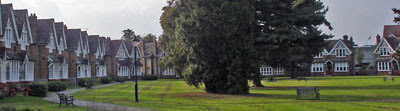
Barnardo's Village: When I was little, and every penny counted, I used to have a Dr Barnardo's collecting box in the shape of a cottage. It was given to me by a nice old lady who lived up the road, and every year she'd invite all the box-owning boys and girls in the village to a big party in her back garden. I always felt slightly guilty attending because I knew how few pennies were inside my box, and that my share of the sandwiches and squash on the table beneath the tulip tree had probably cost considerably more. Yesterday I went along to Barnardo's HQ in Barkingside, out on the loopy bit of the Central line, and discovered that these cottages are based on real life buildings that played a major part in the charity's work. More to the point, my old collecting box is rare enough that it would now be worth more empty that it ever was full. If only I'd have known, I could have eaten those sausage rolls and jelly with a clear conscience.
Dr Barnardo's initial work with ragged children had concentrated solely on boys, but a wedding gift of Essex land in 1873 allowed him to establish a home for girls as well. He created a Girls' Village of 14 cottages set around a rural green, each housing about 20 girls looked after by a supervisor called 'Mother'. Girls were trained in washing, cleaning and embroidery, all the sorts of skills that might get them a job as a household servant when they were older. The village grew with the addition of further cottages around a second green, until more than 1300 girls were being housed, fed and educated on site. It took until the 1930s for boys to be admitted, ending the practice of splitting brothers and sisters on separate sites. It wasn't until the 60s that institutional care was frowned upon and the village emptied of residents. One of the greens was developed as a (criminally hideous) residential school for disabled children, and another area sold off to the council (now, perhaps unsurprisingly, home to a Tesco supermarket).
The Barnardo village in Barkingside isn't usually accessible to the public, but for Open House we were shown an Ever Open Door. One cottage has been restored as a heritage exhibit, with charity memorabilia and a reproduction of the good doctor's office inside. There was also access to the Children's Church, normal-sized on the outside but with child-height pews on the inside. "Suffer the little children to come unto me and forbid them not" reads the inscription on the arch over the chancel, and this might well have been Dr B's motto. I doubt there'd have been volunteers selling squash and biscuits at the back in his day, let alone Christmas cards, pens and mugs. I followed a most informative tour round the perimeter of the green, viewing the modern housing association infill and trying to block out views of the 60s monstrosity office block in the old apple orchard. And we ended up beneath the clock tower at the bronze memorial marking the spot where Barnardo's ashes were scattered in 1905. His heart will be forever here on the edge of the London suburbs, amongst his girls, and deserving of our thanks.
plus... » Bevis Marks Synagogue: Another Sunday, another synagogue. I'm getting the hang of covering my head now, but the skull cap they provided kept trying to slide off so I had to hold myself upright to avoid unintentional offence. Considerably more photogenic than Nelson Street which I visited last week, but conspicuously unwilling to allow photographs. [exterior photo] » Christ Church Spitalfields: Hawksmoor's triumphant Baroque box, permitted to fall derelict but recently restored to former glories and reopened in 2004. The congregation's on the evangelical side, and they were just clearing off when I arrived on Sunday which may explain the two toddlers whizzing round the nave on scooters. But what a place in which to worship. [interior photo] » Kirkaldy Testing Museum: The centrepiece of the museum is a Victorian curiosity - a 47ft long metal device for testing the stresses and strains of metals. It works on hydraulics, and so attracts (extremely keen) enthusiasts of a mechanical bent who like wearing overalls and getting greasy. The museum's small but rammed, and opens on the first Sunday of every month. Ian can tell you more. » The Linnean Society: Serious natural historians, tucked away in a side wing near the Royal Academy, as they have been for centuries. Darwin first announced his theories of natural selection at a meeting of the Society in 1858. And they have a lovelylibrary. » Old Turkish Baths: Looks like a mini minaretted temple on the outside, accidentally discarded between two office blocks near Bishopsgate. Enter inside, down the steps, and it's a pizza restaurant. A damned ornate fame-obsessed pizzeria, but a pizzeria all the same. [exterior][interior] » Blue Fin Building: Yet another new office block, home to IPC Media, in the shadow of Tate Modern on Southwark Street. "Sorry, we're closed." Damn. [exterior photo] » Greenwich Yacht Club: No, completely missed this one. How the hell am I supposed to get (promptly) from the East End to the North Greenwich Peninsula when the Jubilee line's shut, the East London line's shut and the only bus under the Thames refuses to pick me up because it's full. Damned frustrating. Yeah, should have gone by boat.
London Open House (day 2): A perfect sun-dappled architectural weekend continues. I've been dashing around the capital again, lime green brochure in hand, although thwarted on more than one occasion by TfL's ubiquitous engineering works. A selection of Sunday reports are below, and I've saved a few more to post tomorrow.
One Bishops Square: Every Open House catalogue contains, if you know where to look, free access to some brand new shiny City office block whose owners are keen to show off their cutting edge interior to the general public. This year, admittedly just outside the Square Mile, the proud parents are Allen & Overy in Spitalfields. I think they're a bank - the glossy leaflet they handed us failed to mention this, so maybe the Brand Manager will get the sack tomorrow morning. Instead our visit was all about the architecture, in a wholly jealous 'I wish my workplace looked like this' sort of way. Deep glassy atria contain unexpected features like a shower of illuminated balls or a cascade of fluttering fabric flowers. Viewed from the glass lift, the flowers open and close to the rhythm of your descent. You might recognise the animated figure striding across the basement walls - that's your fractured image filmed earlier at the top of the escalator. There's a state-of-the-art gym, which they must be very proud of because our self-guided tour took an unnecesary diversion looping past whole avenues of rubber-handled cardio treadmills. From the first floor meeting rooms managers can look directly down into Spitalfields Market, a reminder that acres of heritage retail was eradicated to give these bankers their fresh new home. But the best view is from the spacious roof terraces - one on the sixthfloor, another on the tenth - where clients can be opulently dined and secretaries can enjoy a full-on Gherkin with their coffee. Had the credit crunch not intervened, all our City fringes might have been destined to be consumed beneath towering temples to capitalism such as this.
Queen Mary College, Institute of Cell & Molecular Science: If university science labs conjure up visions of acid-pocked benches in musty halls, think again. Queen Mary's took a completely different approach with their most recent research facility, a wacky vibrant building full of light, shape and colour. It's tucked away behind the Royal London Hospital in Whitechapel, which might be why so few other visitors managed to find it this afternoon. But, wow. First point of call was the Perrin Lecture Theatre, which might have been quite normal were it not bright green throughout (bar ten randomly selected seats upholstered in red) and lit by flying saucer lights. Next across the bridge linking the two halves of the building - in today's bright sun, a tunnel of dazzling pinky orange. And on the far side a vast hall with room-sized organicpods floating in the centre, the shape of nuclei and headless insects. Look down to the open basement and you'll see the benches where QM students toil to discover stuff, like a scientific bazaar selling experimental equipment arranged in neat blue-capped rows. You get the feeling that working here might just be fun, and it's easy to see why the Blizard Building won a RIBA award in 2006.
Hoover Building: If There's nothing worse than travelling way out into the suburbs to an iconic Open House location only to find no banner, no volunteer and no sign of activity. Every OH minute is precious, and Zone 4 isn't a good place to waste them. I've been to this Art Deco treasure several times before, even bought teabags in the supermarket at the rear, but never managed to get inside the building proper. Thankfully, bang on ten o'clock, the chained front door swung open and we were invited within. The shiny angular lights and lift fittings delighted us all, until our guide informed us that almost all the decor we'd see was nothing but a carefully crafted fake. Hoover executives worked in these offices for 50 years, but the current lease is held by cigarette manufacturer Gallagher who dutifully refurbished the shell of the building in the 90s and then promptly moved out. What remains are epic stairwells, branded doors and echoing workspaces, all of them a curious mixture of modern and modernist. This was the canteen... this was the vacuum cleaner design studio... this was the boss's office. Even the ladies in our party appreciated the almost-original fittings in the gents toilets, including two central tub-like sinks. And it was great to get out onto the 2nd floor balcony and walk behind the giant lettering above the entrance, looking down over the gardens and the busy A40. Behind this magnificent frontage a timewarped warren of rooms awaits a fresh caring tenant.
London Open House (day 1): Blimey, what magnificent late summer weather for a stroll around town looking at buildings. Lots of buildings, as it turned out. I even managed a walk through the middle of HMTreasury (past the coffee bars where scores of civil servants must have been fretting this week over a snatched latte), which isn't something you can do every weekend. Same again tomorrow?
William Booth College: If you're training to become a Salvation Army Officer, you'll spend two years here in the southern suburb of Denmark Hill. The college was designed by Sir Giles Gilbert Scott, and is built throughout in typical Twenties austere brick. There's a main Assembly Hall where ceremonial flags are paraded, and in which the faithful meet before a Blood & Fire emblem. But the most noticeable feature is the 190 foot tower which dominates the local skyline. For Open House, visitors were allowed to climb to the top. First up three floors in one of the oldest operational lifts in London (they filmed Poirot here, it's that old). And then a succession of red spiral staircases, the first 58 steps to the mobile mast gallery and the final 58 to the very top. From way up here, on a gorgeous sunny day like today, there's a fantastic view in all directions. From the City round to Canary Wharf, and Crystal Palace round to Battersea Power Station, all with ordinary modern estates in the foreground. Join the Sally Army and you might be able to sneak up here for an after dark panorama, or even to watch the New Year fireworks. Well worth the tottery ascent, and another unique Open House experience.
Royal Institution: Behind a pillared facade up a Mayfair sidestreet, an astonishingly high number of major scientific discoveries have been made. Here ten chemical elements were first identified, the first electric generator was powered up and the first laser beam was fired. You can see many of these pioneering experimental gizmos in a new museum in the basement of this just-reopened building. It's not yet quite complete, but the illuminated periodic table is ready for you to bash in time to Tom Lehrer's song The Elements. Upstairs is the Lecture Theatre, as viewed every year at Christmas on the TV. I got to sit on the newly refurbished pink seats and look down on the famous bench at which so many discoveries were first demonstrated. There's plenty for visitors to see scattered through the corridors and libraries, and a busy programme of upcoming events to herald the Institution's rebirth. Expect to hear a lot more from Albermarle Street in the future.
Marlborough House: This is one of those grand houses overlooking The Mall, the posh villas originally built by nobles but later snapped up the Royal Family. Not surprisingly the Duke of Marlborough built this one. His wife the Duchess supervised the interior design, shamelessly butchering a set of ceiling murals from the Queen's House in Greenwich by shrinking them down to fit her own central saloon. There are two main staircases, both fabulously decorated with oil paintings of the Duke's famous wartime victories. The house later passed on to the future Edward VII and his wife Alexandra. Hunt round the back of the garden and you might find gravestones to Caesar (Eddie's beloved fox terrier) and Bonny ('favourite rabbit' of the Princess of Wales). For the last 50 years the house has been at the disposal of the Commonwealth Secretariat, and world statesmen meet here every now and again to discuss matters of trade and sustainability and global stuff. Everyone has a seat crammed round the long oval table in the Red Drawing Room, arranged not by importance but in alphabetical order (the UK falls between Uganda and the United Republic of Tanzania). A most elegant setting for such international relations.
Lambeth Palace: It's always tough to decide where to visit first on an Open House morning, and when to arrive. The ideal building is a rarely open architectural big hitter, and the ideal time is before the day's mammoth queues descend. I plumped for the Archbishop's pad on the Thames Embankment, and turned up an hour before opening time to ensure I was on the second tour and not still waiting round the corner at noon. We got a 50 minute look round, starting in the Crypt Chapel (which used to flood when the river was wider). There's a surprisingly spacious courtyard at the heart of the building, and a far bigger ornamental garden beyond. Outside the Great Hall is a 16th century fig tree, and inside is a spectacular hammerbeam roof carved with Moorish busts above the library. We were treated to tales of murdered archbishops, but didn't catch sight of the present incumbent (even though he was in the building somewhere). And finally to the main chapel, to sit on a bishop's chair beneath modern muralled vaulting. The complex is now too small to host the once a decade Lambeth Conference, but remains grand and reverential inside.
It's Architectural Christmas. It's London Open House. But where to visit?
10 Open House venues where you might spot me this weekend » Lambeth Palace: the Archbishop's ancient riverside pad (Saturday only) [photo] » Royal Institution: just-reopened crucible of science, the one that hosts Christmas lectures (Saturday only) (tours and demos throughout the day) » Old Turkish Baths: a tiny minaretted curiosity, now an underground pizza restaurant (near Liverpool Street) [photo] » Hoover Building: Art Deco façade along the A40 which now conceals a Tesco supermarket (queues likely) [photos] » Barnardo's Village: Victorian children's estate with church and 70 cottages (in Barkingside, of all places) » Finsbury Town Hall: Art Nouveau civic HQ » St Augustine's Tower: climb to the top of this lone 13th century tower beside Hackney's Narroway (ooh, I never realised you could go up that) (photo) » Bevis Marks synagogue: the oldest synagogue in Britain, in the City (Sunday only) » Greenwich Yacht Club: wood & metal pierhouse, stuck out into the Thames (with Dome/Barrier views) » William Booth College: Climb the massive brick tower at the Sally Army training centre in Denmark Hill (Saturday afternoon)
10 Open House venues I can heartily recommend from previous years » Crossness Engines House: gobsmacking Victorian water-pumping works on the Bexley riverside (queues likely) (Sunday only) [photos][I've been] » Foreign Office & India Office: opulent government building in Whitehall, paid for by the fruits of empire (queues likely) (gorgeous) » Freemasons' Hall: ornamental inner temple in Holborn, and HQ of the rolled-up trouser brigade (trowel not essential) (Saturday only) » Royal Courts of Justice: see behind the scenes of this vast Gothic building, including courtrooms and police cells (tons to see) (Saturday only) » Severndroog Castle: triangular folly on Shooter's Hill, with panoramic views from the roof (long queues likely) » Lloyd's of London: iconic City insurance behemoth, with the inside on the outside (long queues likely) (Saturday only) [photo] » Shri Swaminarayan Mandir: giant Hindu temple made from 2,000 tonnes of Italian marble (in Neasden, of all places) (dress respectfully) [photo] » Village Underground: two recycled tube carriages aloft on a Shoreditch viaduct, used as artists' studios (Saturday only) [photos] » Roof Gardens: unlikely oasis atop Derry & Toms in Kensington High Street (Sunday 8am-11am) (the queues last year were scary, so arrive early) [photo][I've been] » Benjamin Franklin House: Take a unique acted tour round this American statesman's home near Charing Cross (Saturday only) [I've been]
10 Open House venues in Tower Hamlets » Trinity Buoy Wharf: London's only lighthouse is here, opposite the Dome, along with Container City and Fatboy's Diner(there's a 10th Birthday regatta and arts festival this weekend, so well worth visiting for the extra activities) [I've been] » Balfron Tower: Trellick Tower's older, shorter, and lesser known sister (it's in Poplar) (see inside a top floor flat) [I've been] » 19 Princelet Street: Huguenot silk merchant's East End home, with a synagogue built into the rear of the house (now the Museum of Immigration and Diversity) [photo] » Queen Mary University: tour the exterior of the main campus buildings, and the poddy interior of the molecular research laboratory (also amongst Londonist's many recommendations) » Wilton's Music Hall: London's oldest surviving music hall, still with the wow factor (dark, rickety and atmospheric) (Sunday only) [photo] » Kingsley Hall: pioneering E3 community centre, as stayed in by Gandhi (see his rooftop cell) (Saturday only) » Bromley Hall: Henry VIII's former hunting lodge (on the Blackwall Tunnel Approach Road) » Donnybrook Quarter: modern Mediterranean-looking development in deepest Bow (award winning, innit?) [photo] » House Mill: the UK's oldest and largest tidal mill, on the River Lea in Bromley-by-Bow » St Mary's-by-the-Flyover: my local medieval church, the one in the middle of the road (it's not in the Guide but it must be open because the vicar's hung a big Open House sign outside)
The East End of London has a long-standing Jewish heritage. As with so many other immigrant groups, it was to the dockside slums east of the Tower that Jewish émigrés came... and settled, and grew, and thrived, and from which they eventually moved on. On Sunday I joined a guided walk round Jewish Tower Hamlets, as part of the East London Heritage Trails weekend, to try to discover what remains here. And it's not much.
There used to be nearly two hundred synagogues in the East End, and now there are only four. We began our walk outside one of the survivors - the Congregation of Jacob on the Commercial Road. I'd not noticed the building before, hemmed in between a pound shop and a travel agent, and with a bold black Star of David perched on the apex of the roof. The building was once a cobblers, transformed in the 1920s with an Arts and Crafts interior, featuring high balconies and side benches gathered around a central space for worship. At least that's how it looks in the photos. The synagogue hadn't opened by the time our walk arrived, and our guide Clive told us he'd probably not have been welcomed inside anyway. I'm sorry I didn't return later for a proper look.
Much of the rest of the two hour tour featured vanished locations once at the heart of Jewish life. A famous Yiddish theatre, now demolished with a Tesco Express on the site. A kosher street market, now little more than a run-down anonymous alley. A top Jewish school, long since escaped to the suburbs and replaced by an Asian convenience store. There's a new crowd of immigrants here these days, and streets that were once fiercely Jewish are now very definitely a Bangladeshi stronghold. Indeed, little expressed this transformation better than a refrigerated lorry which parked up beside us in Cannon Street Road. As Clive pointed out various former Jewish businesses, the driver emerged with a bloodied sheep's carcass slung over his shoulder and lugged it past us to the halal butcher round the corner.
The highlight of the tour was another synagogue, this time on Nelson Street and with the opportunity to venture inside. I'd not brought anything to cover my head so I thought I might be abandoned outside, but thankfully skull caps for visitors were available. This visit was a first for me, and it was fascinating to experience a very different place of worship. Again there were balconies for the ladies and ground floor galleries for the gentlemen, this time set beneath a light blue neo-Georgian roof. In the centre was a raised dais, and to the east two carved lions guarded the vault in the wall containing several golden scrolls of scripture [enlarge photo]. One of the synagogue's elderly worshippers spent a good half hour explaining what goes on here, and a little of the building's history, and just how much money they need to repair the roof. Most astonishingly he told of the steady decline in the number of worshippers, now reduced to little more than a quorum of 10, thanks to a Federation rule which permits only local Jews to join the congregation. The average age of the worshippers here is currently around 80-something, and as the elders die off there's a genuine risk that no Jewish East Enders will be around to replace them. A diminished congregation for the weekly service means that the building is increasingly likely to be sold off for flats, and one of the last survivors of a long heritage would be lost forever. A humbling visit.
I went on a second Heritage Trail walk in the afternoon, this time exploring the area around Mile End station. There's a surprisingly high number of intriguing locations in the vicinity, as you'll remember from my High Street 2012 chronicles. But our guide saved the best until last, a spot I'd never previously encountered, tucked away inside the Queen Mary's campus. Here was a field-sized fragment of an old Jewish cemetery, hemmed in on all sides by hedges and university buildings, containing around 2000 flat-topped graves. There used to be four times as many, but university expansion required several thousand bodies to be disinterred and relocated to a burial ground in Essex. The remainder created an impressive enough sight [enlarge photo]. As a rare treat the gate of the Nuevo Cemetery was specially unlocked on Sunday allowing access inside, and it was strangely moving to be able to stand alone amongst so many long dead generations. Hopefully this space, at the very least, will be properly protected against future development. The Jewish East End - visit now while evidence remains.
• The East London Heritage Trails booklet is a fantastic 76-page colour guide to the secret heritage of Tower Hamlets. There's a wealth of historical information inside, as well as 13 short self-guided walks you can follow at your leisure. It took me three attempts to obtain a free copy from a local library (Whitechapel Idea Store finally managed to locate their booklets in a box behind the helpdesk, but only after I'd been sent on a 15 minute wild goose chase around the building). Alternatively you could send off a stamped addressed envelope or, for a virtual copy, download the booklet as a pdf. Recommended.
I really shouldn't be telling you this but, should we ever meet, there's one sure fire way to annoy me. It doesn't involve harsh words or physical jostling. It's not about guilt, hostility or rudeness. It's about paper. Dare to mess with a sheet of my paper and I get really annoyed.
In my world every sheet of paper ought to be smooth and flawless, like it's just out of the packet. No crumples, no creases and most definitely no unnecessary folds. I try very hard in my life to preserve the purity of the paper in my possession, and not to allow anyone or anything defile its innate two-dimensionalness. You have been warned.
I'm damned good at preserving sheets of paper in their original flat form. Give me a printed sheet, or some scribbled A4, or any published work, and you can rest assured that it'll come to no harm. I treat photocopies, magazines and even tax forms with due reverence. After I've finished reading a book, it'll still look like it's fresh off the bookstore shelf. I can carry a leaflet across town without a bag and it'll arrive home looking unspoilt and unruffled. Paper is always 100% protected while in my care.
To me, the corner of a sheet of paper is a sacred object. Corners are meant to be perfect right angles, all sharp and pointed, and that's the way I like to keep them. Under no circumstances should they be folded over, either accidentally or deliberately. No process of erosion should be allowed to round them off, say by natural wear and tear or through careless storage. Untidy corners reflect thoughtless handling, and cannot be tolerated.
Other people, it seems, don't share my sense of woodpulp-related responsibility. They'll bung a sheet of paper into a pile, drawer or bag without a second thought for its welfare. They'll grasp a book cover too heavily and leave an indelible crease that no amount of wishing can ever remove. They'll staple willy-nilly, or paperclip too roughly, or holepunch without due care and attention. In short, other people just don't respect the sanctity of paper like I do, and I can't cope with such wanton desecration.
If you're ever handling a sheet of paper that belongs to me, you'd better watch out for telltale signs of my distress. See the pain in my eyes should you accidentally fold the sheet or grasp it too tightly and leave a mark. Watch me wince should you dare to write or doodle thereon, or even dot the page with the tip of a pen. And should I ever risk lending you a book to read (which is quite frankly unlikely), beware my reaction to the unforgivable sins of page-flicking, corner-folding or spine-breaking. I can go off people very quickly, and you'll probably never guess that your unintentional origami was to blame.
I have a suspicion that this behaviour is not normal. Other people aren't quite so obsessed by the preservation of pristine paper. They don't get upset by imperfection, or go out of their way to maintain virginal flatness, not like I do. And yes, I'm aware that I'm acting irrationally. I fully recognise that the meaning of the information written on a page isn't affected by its physical condition. But that doesn't prevent me from going out of my way to protect every sheet of paper in my care from inadvertent harm. Everybody's allowed one irrational aversion in their life. And mine's in creasing.
Over the Hill
Flippin eck, an era has ended. Yesterday afternoon the BBC screened the very last episode of Grange Hill, an amazing 30 years after the very first. I watched them both (as well as 90% of the episodes inbetween), and I bet there's nobody else reading this blog who can say the same. I've always been a big fan, which is why I wrote a long in-depth nostalgic post back in February (which I won't bore you with again). But it was good to see the final series returning to form after a few naff years in the CBBC wilderness. Yesterday's final episode was rather sweet, and rather silly, and rather uplifting, and rather improbable, and rather cheesy, and all the things that a decent Grange Hill story ought to be. Very Phil Redmond to have an unexploded WW2 bomb being discovered underneath the school hall during the end of term disco, and very CBBC to have it not exploding. And rather fitting to have Tucker Jenkins back to offer some careers advice to his cousin Togger, and to deliver a heartfelt sermon in praise of a comprehensive education. They won't make children's drama like this again, and the next generation of Year 7s are definitely missing out.
Diet update
mid-March: X stone 7
mid-May: (X-1) stone 7
mid-July: (X-1) stone 4
mid-Sept: (X-1) stone 2
Going well, isn't it? I switched from low-cholesterol crash diet to sensible eating back in May, and I'm pleased to say that my weight is still slipping gradually downwards. I'll even gorge myself on greasy seaside fish and chips these days without fear of arterial retribution. At this rate I might even be (X-2) stone something by the end of the year. But please, that's not an excuse to buy me new trousers for Christmas, OK?
Yellow peril
I've had my Oyster card for five years (five years this week, in fact), and I'm still using the original blue wallet. It goes everywhere with me in my pocket - to work, to the shops, even to the occasional sweaty nightclub - so not surprisingly it's started to look a bit worn. The ink's gradually wearing off, the interior plastic's a little crumpled, and there are two small rips at the weak point near the central fold. It's these tiny tears that concern me most, as one day soon I may whip out my Oyster and rip my wallet in two. Trouble is, all TfL's replacement wallets these days are bright yellow IKEA adverts, and I don't want to wave a sponsored eyesore every time I walk through a ticket gate thank you very much. Alas, I doubt TfL will ever again hand out tasteful unbranded Oyster wallets, not when they can raise money to fill Boris's budgetary black hole instead. So should I hunt down a tastefulalternative (with essential exterior pocket) or do I risk carrying on using my Oyster original? I'm torn.
Everything is borrowed (The Streets)
I do love a good Streets album. Which is just as well, because Mikey's latest offering is merely good, not great. His latest collection of low-key garage mumbling is an attempt at uplifting positivity, which is in direct contrast to the last album's unloveable brashness. And it sort of works. The lyrics are almost as cunning as ever, although not quite so rapid-fire and dense. The underlying beats are moretuneful, moregentle, although nowhere near as hooky as his earlier work (not even after a week's preview listening on MySpace). And the singing? Well, you don't buy a Streets album for the singing. I kind of like this latest rebirth, near enough. The Times, Guardian and NME are more keen, and the Scotsman, Time Out and Telegraph (and mike) less so. Here's hoping that Mr Skinner's fifth (and reputedly final) album (of reputedly Berlin-based electronica) will be a return to the glories of one and two.
Seaside postcard: Shivering Sands There are some mighty strange places around the UK coast. One of the weirdest lies nine miles out into the North Sea, between the coasts of Kent and Essex. It's a 7-part wartime defensive structure, dating back to 1943, and it looks completely out of this world. Hop on a speedboat from Herne Bay and you too could join the surprisingly small number of us who've actually seen it.
These are the Maunsell Forts at Shivering Sands, strategically positioned alongside the shipping lanes at the mouth of the Thames Estuary. They were designed to house a variety of gun installations, both to shoot down approaching aircraft and to destroy enemy ships. Seven towers were built and towed out to sea, then dropped so that their concrete foundations sank firmly into the sand. The central tower was then linked to each of the others via an aerial cat walk, enabling military personnel to move freely around the defensive complex. Needless to say this isolated existence was not a popular posting, so the forts were evacuated after the war and finally decommissioned in the 1950s.
But that's not the end of the Shivering Sands story. In 1963 a Swedish ship careered into the searchlight tower in thick fog, breaking its legs and carrying it several hundred miles across the North Sea before anybody noticed. The northern control tower, now severed from the remaining five, was put to use by the Port of London Authority as a tidal monitoring station. And because Shivering Sands lies outside the official limit of UK coastal waters, the southern tower became home to one of Britain's first pirate radio stations. Screaming Lord Sutch moved in during the summer of 1964, but couldn't endure the inhospitable conditions and soon sold out to his manager Reg Calvert. RadioCity ("The happiest swinging station in the world") was rather more successful, at least until a proposed merger with Radio London went tragically wrong and Reg was "accidentally" shot dead. Only in Essex, eh? The incident spurred the passing of the Marine Broadcasting Offences Act, and pirate radio's days were firmly numbered.
Today the six remaining towers rust in silent solitude, their windows smashed out by the army to ensure that no unwanted squatters can move in [photo]. Apart from one lonely writer who spent a recent summer here getting lonely (and blogging about it), now only seagulls claim Shivering Sands as their own. With decent visibility it's just about possible to see the towers from the Kentish coast, small stilted blobs on the northern horizon. But for a proper view I had to take the boat trip, out into the maritime mist, for the opportunity to get up close. And yes, they really are an impressive and unusual sight [photo]. Ropes hang limp where walkways once stretched [photo], and gaping doorways allow the unforgiving North Sea weather to penetrate inside [photo]. The stump of the smashed tower is clearly visible above the waves in calm weather (you can probably spot it in my top photo). Every slight change in boat position generates a fascinatingly new vista of boxes and legs [photo], so no photo of the fort complex is ever the same. I found this a very peaceful spot, at least until a large cargo ship departing Tilbury chugged close by [photo].
And what of the future? Our pilot suggested that Shivering Sands' proximity to the shipping lanes might prove its downfall, and that demolition may be on the cards within the next couple of years. It'd be a damned shame to lose such an iconic offshore structure, but all too often it seems risk analysis wins out over heritage preservation. All may not be lost, however, because there's another similar cluster of Maunsell Forts at Red Sands a few miles further to the west. Our boat trip didn't go there (even though it said we would in the tour description, not impressed, guys). These forts are in a slightly better condition and are therefore more likely to be saved. Apparently there are plans afoot by a private consortium to restore the towers to create a sustainable "self-funding facility", incorporating recording studios, a wartime and broadcasting museum, and of course a gift shop. If Project Redsand is successful, the platforms might even be able to host corporate events and weddings. Part of me absolutely hates the idea, but at least some element of these amazing wartime defences will be saved for the future. In the meantime, especially if you want to experience the awe-inspiring Shivering Sands, you'd better hurry and try to pick a sunny day to get out here for yourself.

This is me. Well, it's the image I use to represent myself in the online world, the Jack of Diamonds. He's been perched up at the top of my sidebar for six years now. You probably saw him once, long ago, before you defected to the other side. Pleased to make your reacquaintance.
. I first advertised my blog's RSS feed back in early 2006, and ever since then more and more of you have been creeping off to feedreaderland to read my blog there. That's fine, because you still get to read what I wrote (even if it doesn't always quite look the same). But it also means you don't have access to my comments. You can't read them and, more importantly, you can't add to them unless you click through and read my blog on the proper page. It's not rocket science - the more readers who switch to RSS feeds, the fewer comments I'm likely to get. So for more accurate results I've added my RSS subscribers numbers to my visitor numbers to get a total number of blog "readers". And let's see how considering readers rather than visitors shifts the statistics.
Press Release
“The previous Mayor's cynical and irresponsible use of a superfluous 'N' is unsustainable, and has generated a funding gap that demands to be plugged. I am therefore pleased to take the lead by rebranding my own identity to become the Mayor of Londo. Let the red circle at the end of my personal logo signify aspirational zero wastage, which henceforth will be the watchword of the Greater Londo Authority.”
The Mayor's new initiative will be launched later this morning at a press conference on Londo Bridge. Stonemasons will chisel away the unnecessary Ns from the concrete beneath the bridge, creating an iconic symbol of the new City of Londo. Members of the press will then be invited to enter the Tower of Londo for a symbolic beheading ceremony, before boarding a Londo bus to the site of the 2012 Londolympics. It is anticipated that the carbon saved by this single journey will be sufficient to power one City Hall lightbulb for a week.
Barnardo's Village: When I was little, and every penny counted, I used to have a Dr Barnardo's collecting box in the shape of a cottage. It was given to me by a nice old lady who lived up the road, and every year she'd invite all the box-owning boys and girls in the village to a big party in her back garden. I always felt slightly guilty attending because I knew how few pennies were inside my box, and that my share of the sandwiches and squash on the table beneath the tulip tree had probably cost considerably more. Yesterday I went along to Barnardo's HQ in Barkingside, out on the loopy bit of the Central line, and discovered that these cottages are based on real life buildings that played a major part in the charity's work. More to the point, my old collecting box is rare enough that it would now be worth more empty that it ever was full. If only I'd have known, I could have eaten those sausage rolls and jelly with a clear conscience.
One Bishops Square: Every Open House catalogue contains, if you know where to look, free access to some brand new shiny City office block whose owners are keen to show off their cutting edge interior to the general public. This year, admittedly just outside the Square Mile, the proud parents are Allen & Overy in Spitalfields. I think they're a bank - the glossy leaflet they handed us failed to mention this, so maybe the Brand Manager will get the sack tomorrow morning. Instead our visit was all about the architecture, in a wholly jealous 'I wish my workplace looked like this' sort of way. Deep glassy atria contain unexpected features like a shower of illuminated balls or a cascade of fluttering fabric flowers. Viewed from the glass lift, the flowers open and close to the rhythm of your descent. You might recognise the animated figure striding across the basement walls - that's your fractured image filmed earlier at the top of the escalator. There's a state-of-the-art gym, which they must be very proud of because our self-guided tour took an unnecesary diversion looping past whole avenues of rubber-handled cardio treadmills. From the first floor meeting rooms managers can look directly down into Spitalfields Market, a reminder that acres of heritage retail was eradicated to give these bankers their fresh new home. But the best view is from the spacious roof terraces - one on the sixth floor, another on the tenth - where clients can be opulently dined and secretaries can enjoy a full-on Gherkin with their coffee. Had the credit crunch not intervened, all our City fringes might have been destined to be consumed beneath towering temples to capitalism such as this.
Queen Mary College, Institute of Cell & Molecular Science: If university science labs conjure up visions of acid-pocked benches in musty halls, think again. Queen Mary's took a completely different approach with their most recent research facility, a wacky vibrant building full of light, shape and colour. It's tucked away behind the Royal London Hospital in Whitechapel, which might be why so few other visitors managed to find it this afternoon. But, wow. First point of call was the Perrin Lecture Theatre, which might have been quite normal were it not bright green throughout (bar ten randomly selected seats upholstered in red) and lit by flying saucer lights. Next across the bridge linking the two halves of the building - in today's bright sun, a tunnel of dazzling pinky orange. And on the far side a vast hall with room-sized organic pods floating in the centre, the shape of nuclei and headless insects. Look down to the open basement and you'll see the benches where QM students toil to discover stuff, like a scientific bazaar selling experimental equipment arranged in neat blue-capped rows. You get the feeling that working here might just be fun, and it's easy to see why the Blizard Building won a RIBA award in 2006.
Hoover Building: If There's nothing worse than travelling way out into the suburbs to an iconic Open House location only to find no banner, no volunteer and no sign of activity. Every OH minute is precious, and Zone 4 isn't a good place to waste them. I've been to this Art Deco treasure several times before, even bought teabags in the supermarket at the rear, but never managed to get inside the building proper. Thankfully, bang on ten o'clock, the chained front door swung open and we were invited within. The shiny angular lights and lift fittings delighted us all, until our guide informed us that almost all the decor we'd see was nothing but a carefully crafted fake. Hoover executives worked in these offices for 50 years, but the current lease is held by cigarette manufacturer Gallagher who dutifully refurbished the shell of the building in the 90s and then promptly moved out. What remains are epic stairwells, branded doors and echoing workspaces, all of them a curious mixture of modern and modernist. This was the canteen... this was the vacuum cleaner design studio... this was the boss's office. Even the ladies in our party appreciated the almost-original fittings in the gents toilets, including two central tub-like sinks. And it was great to get out onto the 2nd floor balcony and walk behind the giant lettering above the entrance, looking down over the gardens and the busy A40. Behind this magnificent frontage a timewarped warren of rooms awaits a fresh caring tenant.
William Booth College: If you're training to become a Salvation Army Officer, you'll spend two years here in the southern suburb of Denmark Hill. The college was designed by Sir Giles Gilbert Scott, and is built throughout in typical Twenties austere brick. There's a main Assembly Hall where ceremonial flags are paraded, and in which the faithful meet before a Blood & Fire emblem. But the most noticeable feature is the 190 foot tower which dominates the local skyline. For Open House, visitors were allowed to climb to the top. First up three floors in one of the oldest operational lifts in London (they filmed Poirot here, it's that old). And then a succession of red spiral staircases, the first 58 steps to the mobile mast gallery and the final 58 to the very top. From way up here, on a gorgeous sunny day like today, there's a fantastic view in all directions. From the City round to Canary Wharf, and Crystal Palace round to Battersea Power Station, all with ordinary modern estates in the foreground. Join the Sally Army and you might be able to sneak up here for an after dark panorama, or even to watch the New Year fireworks. Well worth the tottery ascent, and another unique Open House experience.
Royal Institution: Behind a pillared facade up a Mayfair sidestreet, an astonishingly high number of major scientific discoveries have been made. Here ten chemical elements were first identified, the first electric generator was powered up and the first laser beam was fired. You can see many of these pioneering experimental gizmos in a new museum in the basement of this just-reopened building. It's not yet quite complete, but the illuminated periodic table is ready for you to bash in time to Tom Lehrer's song The Elements. Upstairs is the Lecture Theatre, as viewed every year at Christmas on the TV. I got to sit on the newly refurbished pink seats and look down on the famous bench at which so many discoveries were first demonstrated. There's plenty for visitors to see scattered through the corridors and libraries, and a busy programme of upcoming events to herald the Institution's rebirth. Expect to hear a lot more from Albermarle Street in the future.
Marlborough House: This is one of those grand houses overlooking The Mall, the posh villas originally built by nobles but later snapped up the Royal Family. Not surprisingly the Duke of Marlborough built this one. His wife the Duchess supervised the interior design, shamelessly butchering a set of ceiling murals from the Queen's House in Greenwich by shrinking them down to fit her own central saloon. There are two main staircases, both fabulously decorated with oil paintings of the Duke's famous wartime victories. The house later passed on to the future Edward VII and his wife Alexandra. Hunt round the back of the garden and you might find gravestones to Caesar (Eddie's beloved fox terrier) and Bonny ('favourite rabbit' of the Princess of Wales). For the last 50 years the house has been at the disposal of the Commonwealth Secretariat, and world statesmen meet here every now and again to discuss matters of trade and sustainability and global stuff. Everyone has a seat crammed round the long oval table in the Red Drawing Room, arranged not by importance but in alphabetical order (the UK falls between Uganda and the United Republic of Tanzania). A most elegant setting for such international relations.
Lambeth Palace: It's always tough to decide where to visit first on an Open House morning, and when to arrive. The ideal building is a rarely open architectural big hitter, and the ideal time is before the day's mammoth queues descend. I plumped for the Archbishop's pad on the Thames Embankment, and turned up an hour before opening time to ensure I was on the second tour and not still waiting round the corner at noon. We got a 50 minute look round, starting in the Crypt Chapel (which used to flood when the river was wider). There's a surprisingly spacious courtyard at the heart of the building, and a far bigger ornamental garden beyond. Outside the Great Hall is a 16th century fig tree, and inside is a spectacular hammerbeam roof carved with Moorish busts above the library. We were treated to tales of murdered archbishops, but didn't catch sight of the present incumbent (even though he was in the building somewhere). And finally to the main chapel, to sit on a bishop's chair beneath modern muralled vaulting. The complex is now too small to host the once a decade Lambeth Conference, but remains grand and reverential inside.
» Lambeth Palace: the Archbishop's ancient riverside pad (Saturday only) [photo]
There used to be nearly two hundred synagogues in the East End, and now there are only four. We began our walk outside one of the survivors - the Congregation of Jacob on the Commercial Road. I'd not noticed the building before, hemmed in between a pound shop and a travel agent, and with a bold black Star of David perched on the apex of the roof. The building was once a cobblers, transformed in the 1920s with an Arts and Crafts interior, featuring high balconies and side benches gathered around a central space for worship. At least that's how it looks in the photos. The synagogue hadn't opened by the time our walk arrived, and our guide Clive told us he'd probably not have been welcomed inside anyway. I'm sorry I didn't return later for a proper look.
The highlight of the tour was another synagogue, this time on Nelson Street and with the opportunity to venture inside. I'd not brought anything to cover my head so I thought I might be abandoned outside, but thankfully skull caps for visitors were available. This visit was a first for me, and it was fascinating to experience a very different place of worship. Again there were balconies for the ladies and ground floor galleries for the gentlemen, this time set beneath a light blue neo-Georgian roof. In the centre was a raised dais, and to the east two carved lions guarded the vault in the wall containing several golden scrolls of scripture [enlarge photo]. One of the synagogue's elderly worshippers spent a good half hour explaining what goes on here, and a little of the building's history, and just how much money they need to repair the roof. Most astonishingly he told of the steady decline in the number of worshippers, now reduced to little more than a quorum of 10, thanks to a Federation rule which permits only local Jews to join the congregation. The average age of the worshippers here is currently around 80-something, and as the elders die off there's a genuine risk that no Jewish East Enders will be around to replace them. A diminished congregation for the weekly service means that the building is increasingly likely to be sold off for flats, and one of the last survivors of a long heritage would be lost forever. A humbling visit.
I went on a second Heritage Trail walk in the afternoon, this time exploring the area around Mile End station. There's a surprisingly high number of intriguing locations in the vicinity, as you'll remember from my High Street 2012 chronicles. But our guide saved the best until last, a spot I'd never previously encountered, tucked away inside the Queen Mary's campus. Here was a field-sized fragment of an old Jewish cemetery, hemmed in on all sides by hedges and university buildings, containing around 2000 flat-topped graves. There used to be four times as many, but university expansion required several thousand bodies to be disinterred and relocated to a burial ground in Essex. The remainder created an impressive enough sight [enlarge photo]. As a rare treat the gate of the Nuevo Cemetery was specially unlocked on Sunday allowing access inside, and it was strangely moving to be able to stand alone amongst so many long dead generations. Hopefully this space, at the very least, will be properly protected against future development. The Jewish East End - visit now while evidence remains.
Over the Hill
Everything is borrowed (The Streets)
But that's not the end of the Shivering Sands story. In 1963 a Swedish ship careered into the searchlight tower in thick fog, breaking its legs and carrying it several hundred miles across the North Sea before anybody noticed. The northern control tower, now severed from the remaining five, was put to use by the Port of London Authority as a tidal monitoring station. And because Shivering Sands lies outside the official limit of UK coastal waters, the southern tower became home to one of Britain's first pirate radio stations. Screaming Lord Sutch moved in during the summer of 1964, but couldn't endure the inhospitable conditions and soon sold out to his manager Reg Calvert. Radio City ("The happiest swinging station in the world") was rather more successful, at least until a proposed merger with Radio London went tragically wrong and Reg was "accidentally" shot dead. Only in Essex, eh? The incident spurred the passing of the Marine Broadcasting Offences Act, and pirate radio's days were firmly numbered.
And what of the future? Our pilot suggested that Shivering Sands' proximity to the shipping lanes might prove its downfall, and that demolition may be on the cards within the next couple of years. It'd be a damned shame to lose such an iconic offshore structure, but all too often it seems risk analysis wins out over heritage preservation. All may not be lost, however, because there's another similar cluster of Maunsell Forts at Red Sands a few miles further to the west. Our boat trip didn't go there (even though it said we would in the tour description, not impressed, guys). These forts are in a slightly better condition and are therefore more likely to be saved. Apparently there are plans afoot by a private consortium to restore the towers to create a sustainable "self-funding facility", incorporating recording studios, a wartime and broadcasting museum, and of course a gift shop. If Project Redsand is successful, the platforms might even be able to host corporate events and weddings. Part of me absolutely hates the idea, but at least some element of these amazing wartime defences will be saved for the future. In the meantime, especially if you want to experience the awe-inspiring Shivering Sands, you'd better hurry and try to pick a sunny day to get out here for yourself.