Yesterday I went on a day trip to Britain's first roundabout. It's not in London, it's 30 miles north. It's not on a main road, it's in the middle of a housing estate. It's not huge, more a roundel of green with a bit of shrubbery. It's nothing simple, it's a six-way interchange. And it's rather refined, as you might expect in the middle of Britain's first Garden City. The town is Letchworth, in Hertfordshire. And the roundabout is Sollershott Circus.
The man who built Letchworth was Sir EbenezerHoward. He wanted to create a new kind of settlement, one with all the benefits of town and country, where people could live and work in beautiful proximity. A company called "First Garden City Ltd" was created, and in 1903 they bought up a chunk of land between Hitchin and Baldock for the realisation of Ebenezer's dream. A series of new homes were built, some on grand tree-lined avenues, others in affordable cottages, and Letchworth Garden City slowly grew.
So, this roundabout. It first appeared on the drawing board of the town's architects, Barry Parker and Raymond Unwin, partway through the development of the new town. The estates had a junction where three roads crossed - Sollershotts East and West, Broadway, and Spring Road - so they decided on what was, for the time, a unique solution. Britain's first roundabout was a low circle of greenery, with a lamppost at the centre and a pavement around the edge. It wasn't created for motorists, more for the benefit of pedestrians to permit safe passage across the junction. There's no confirmed opening date. Indeed the only official records are two maps of 1908 and 1910, one with the roundabout and one without, hence the approximate opening year somewhere inbetween. Motorists, such as there were, didn't necessarily realise that progress around the roundabout was supposed to be clockwise, so in 1932 a "Keep Left" sign went up. The central circle also dramatically shrank in size, with road markings added to help marshal drivers in the right direction.
Today, a hundred and a bit years on, the roundabout takes its fame seriously [photo]. "UK's First Roundabout" says the sign, then adds "built circa 1909" (whereas "built round about 1909" would have been hugely funnier). The central circle's grown again, back to approximately its original size, now with carefully pruned shrubbery for decoration. The 1930s lamppost survives but the pavement's long gone, so only adventurous (or history-seeking) pedestrians now venture onto this hallowed turf [photo]. None of the roads are especially busy, at least not on a Saturday afternoon, this being the slightly posh side of town. Almost all of Letchworth's homes are lovely, having been built in that golden age of Arts and Crafts, and there's barely a duff note struck along any of the six exit roads.
Letchworth's road system still works well, with allegedly only one set of traffic lights in the town (near the station). This groundbreaking Garden City brought many other innovations to Britain - Green Belt, town planning, affordable homes, front gardens. Indeed I got the feeling while walking around that my suburban childhood home in Metroland owed more than a nod to Ebenezer Howard's pioneering utopian community. Jonathan Meades describes Letchworth as "a template for Britain", with its "legacy of cosy sub-urbanism", and "where modern England began". All that, and the art of driving in circles, kicked off round about here.
And also, in Letchworth... • First Garden City Heritage Museum: In the former offices of architect Barry Parker, this minor museum in a thatched cottage recounts the life and work of Ebenezer Howard. Two galleries, one of which is mostly text, but charming all the same. • Letchworth Museum: Incredibly retro repository, all stuffed animals and archaeological findings, looking like it was last updated in the 1970s, and due to close at the end of next year (to be swallowed up by a new place in Hitchin). • Broadway Gardens: Central civic open space with fountains, surrounded by municipal buildings, halfway between Roundabout number 1 and the station. [pretty photo] • Black squirrels: They're unusually common round here, these melanin-dominant rodents. I saw a stuffed one in the Museum, but a real one in the park. • The Settlement: Letchworth was built a teetotal town, and this was its only pub (serving dandelion & burdock et al), now an Arts & Crafts craft centre. [characterful photo] • The Spirella Building: Every Garden City needed industry, and Letchworth got this lovely-looking corset factory, now (obviously) given over to flats, office space and a gym. • David's Bookshop: As an example of the independent-friendly stores to be found in Letchworth's main shopping streets, this is a top-notch repository of words and music, plus cafe, and just what any medium-sized town needs. • The streets of Letchworth: Cream painted terraced cottages, rustic detached villas, hedge-fronted gardens, and not a tower block in sight. Give that Ebenezer Howard a round of applause, his Garden City is gorgeous. » brochure » town walk » town & country walk » Greenway
Newspaper pages, TV news broadcasts, blog posts. Headline first, everything else to follow. One story after the other, in sequence. Simple, linear presentation. This is how news used to be.
This is the way news is going.
Newspaperwebsites, mobile news apps, webmagazines. Index first, everything else hidden. Top-level summaries to click on, work your way down. Complex, branching presentation. This is the way news is going.
I'm not sure I like the way news is going. I ought to enjoy the choice, because choice should be good. I ought to enjoy the freedom to explore the news my way. But, it turns out, selective viewing isn't always what I want.
Because clicking down is inefficient. Clicking down needs extra work to find things. Clicking down means loading, waiting, loading, waiting. Clicking down means I miss things, because I get bored clicking.
Linear allows a broad overview, scanning everything. But branching encourages selective viewing, a blinkered diet. I don't like tiny chunks, because they restrict my intake. I want to remain fully informed, and branching makes that inefficient.
The future of news presentation is small-screen friendly. Snippets on your mobile, paragraphs on your tablet, curate-it-youself. Forget aggregated content, forget depth, forget balanced coverage. The future of news is what you want to read, not what you ought to read.
Complex branching is the way information is going. But simply linear is how this blog is staying.
Walk London CAPITAL RING[section 12] Highgate to Stoke Newington (5 miles)
This section of the Capital Ring is essentially in two parts - a railway that isn't a railway, followed by a river that isn't a river. Intrigued?
A railway that isn't a railway:The Parkland Walk Had things gone differently, Northern line trains would run between Highgate and Finsbury Park via the heights of Haringey [more details]. Plans were afoot in the 1930s to take an underused branch line and incorporate it into London's tube network, but World War Two interrupted and the extension never happened [more details]. Instead the tracks were relegated for freight, then closed altogether, and in 1990 were reborn as a footpath-cum-nature reserve [more details]. Today the ParklandWalk is a delight, weaving between the rooftops and gardens of Haringey, providing a welcome breath of green for pedestrians and cyclists alike [more details]. But you can't walk the first bit of the line from Highgate because that ran through tunnels beneath Shepherd Hill, and those have long been sealed off, so an above ground detour is called for. It takes a deliberate effort to view the eastern portals, wandering off the main drag to an overgrown cul-de-sac where ivy tumbles down across the mouth to two dark caverns [photo]. I always deviate this way, whereas most continue along the path proper on the woodland stroll towards Finsbury Park.
At two and a quarter miles the Parkland Walk is very doable, whether you're a toddler or a dogwalker or a petulant teenager. It's a little narrow at this western end, at least compared to further on, and there always seems to be a muddy patch even when it hasn't rained for days. Pause here a moment while a stream of bikes passes through... probably with Dad leading Mum and the kids, with the littlest one on stabilisers. Sometimes the path runs along an embankment, with brief views from bridges into the suburban roadways beyond. Other times it runs through a cutting, hemmed in by trees and undergrowth sealed off in an eco-bubble from ordinary London outside [photo]. Crouch End station still exists, sort of, with a cafe in the ticket hall upstairs and two decaying platforms as alternative parallel routes [photo]. It's best seen in winter, either from the track or from the footbridge, but most atmospheric when draped with a blanket of green.
It's taken me three attempts, but this time through I finally spotted the sculpted figure hidden in one of the arches past the station [photo]. He's a spriggan, a mischievous forest-dwelling fairy, and features in the only horror story Stephen King ever wrote about Crouch End. There's a lot of colourful graffiti on the walls along here, some of it sprayed by the tall bloke in a bandanna who I passed out walking his wolfhound. "Yeah, I did that stuff in the tunnel," he said to the woman on his arm, presumably as a chat-up line, as a bag of aerosols dangled from his wrist. The path meanders on, past crunchy leaves and chimneypots, with a particularly good view of Stroud Green and its Overground cutting below. One last verdant curve, and the Parkland Walk comes to a grinding halt at a long railway bridge across the East Coast mainline.
Interlude: Finsbury Park That's the park itself, not the railway station. I passed through on that unfeasibly hot October weekend (you remember) to find the entire park packed out with sunbathing locals. Tropical slopes, with a fallen brown carpet - a most rare combination. By the overflowing playground I spotted a sour-faced clown making balloon animals for an audience of one - a small Hassidic boy with drooping sidecurls - which would have made a bloody marvellous photograph except also a grossly unwise one. Moving on.
A river that isn't a river:The New River It's 400 years, near enough, since Sir Hugh Myddleton drove a canal down from Hertford to Islington, providing fresh water from the Lea for a thirsty City. Still does, thanks to Thames Water, unlikely as it may seem. His shallow channel followedthecontours, which made it cheap but wiggly, and one of his wigglier wiggles now twists round the Woodberry Down Estate on the Seven Sisters Road. The footpath alongside is strangely remote, especially after the busyness of the Parkland Walk, and more than a little muddy [photo]. The only person I passed was a bloke in trackies pissing lager into a tree while his staffie looked on, but don't let that put you off. A more serious problem was the fallen tree near Amhurst Park which had smashed down on top of the kissing gate, which took a fair bit of crouching and squeezing to manoeuvre beneath. Cyclists and wheelchair users, think again... indeed, the Capital Ring sends you on a far less interesting direct shortcut instead.
After three quarters of a mile the New River bends back on itself to pass (and fill) two reservoirs, one East, one West. The East is better hidden, starting beside an old brick pumpinghouse above the river, and leading up to the dividing line along Lordship Lane. The West is more scenic, more blue, and home to the yachts and kayaks of the West Reservoir Sailing Centre[photo]. A pleasant but little-known spot, I thought, apart from the infilled apartment blocks of Woodberry Park - a luxury development with waterside views, currently at the "inaugural tenants" stage. A rather more impressive building is the Victorian pumphouse on Green Lanes, designed to resemble a turrety castle, now cavernous home to an indoor climbing centre[photo]. The New River doesn't reappear until you reach Clissold Park, down the road. Ignore the two ponds, they're the ornamental remains of the Hackney Brook, but there is still a boomerang-shaped curve of canal-water over by the bowling green.
Epilogue: Stoke Newington Right at the very end of this five mile walk comes an on-road section. But Stoke Newington Church Street is a lovely road - a sinuous historic high street unsullied by major chain stores. Eating well and drinking hard are easy round here, ditto nipping into an independent boutique for something quirky but unnecessary. Near the far end a gate leads into Abney Park Cemetery, one of Victorian London's Magnificent Seven. William Booth is buried just inside, in a large tomb beneath a gold-etched scroll [photo], although not everybody local knows who he is ("But what is the Salvation Army?" asked a well-dressed girl before wandering off, no better informed). Abney Park was also Hackney's first nature reserve, although the only rare creature I saw amid the tumbledown gravestones was a hopping whippet. 12 sections down, 12 miles to go.
A message to PR types and branding gurus My blog does not promote products and services sent to me by email. Please don't waste your time, and mine, with unsolicited advertising.
But still they come - thick, and fast.
Hey DG, hope you are well... Thought I would drop you a line about our coming launch in London. The events are going to be pretty unique, with the customer having to pay nothing. Anyway let us know if you want to follow up with me on this? Best, aaron
Aaron's sent me one of the most hyperbole-stuffed PR emails I've received all year, which I thought I'd share with you. So as not to promote the expensive luxury product he represents, I'm going to replace the name of his brand with the word Silage, his market sector with custard, his agency with the word Muckspreader and his campaign title with Stench. Other words may also have been replaced for concealment purposes.
SILAGE custard appoint Muckspreader to launch STENCH™ SILAGE is set to launch its first consumer campaign in the UK. The <foreign> custard brand has developed a cult following in the UK amongst the top end custard-trade, built on the back of its seminal Custard World Cup. SILAGE is created near a world benchmark for air purity and takes its name from the factory location, <factory location>. Targeted at the premium custard market, the brand is looking to become a staple of both the on and off-trade markets across the UK. In addition to SILAGE Pure custard, the brand has a range of flavoured variants: <fodder>, <slime>, <manure> & <gunk>.
Aaron has made two crucial mistakes. Firstly, to assume that I might be coerced into promoting his premium custard. And secondly, that what he's written in his speculative email is somehow inherently interesting.
The new campaign, ‘STENCH™’, has been created by Muckspreader and gives a unique <foreign> take on SILAGE’s purity story: utilizing the line “Stench in the air, Stench in the water, STENCH™ in the custard”. The campaign will launch with experiential, social & in-store activity, with consumers given the chance to pay for SILAGE with ‘Stench’. The payment method will change every week & will be only be found on the brand’s Facebook page (www.facebook.com/Silage).
You'd have to live in a bubble to assume that anyone outside PR world is excited by the promise of "experiential, social & in-store activity". But any agency which references its own name as frequently as the name of the product it promotes surely lives in just such a bubble.
Muckspreader Founding Partner, <name> said: ‘SILAGE has a history of bold & iconoclastic marketing, and we're looking forward to taking the brand to the next level. Muckspreader is an agency that loves to break convention, so we're delighted to be working with a brand of the same ambition in a category stuffed full of convention."
Taking the brand to the next level? Sheesh, has this agency no creative originality? The fascinating thing about what Aaron's boss has written is that his words could apply to almost any product - be that a restaurant, a fridge freezer or caravan holiday. In this case, obviously, it's custard.
SILAGE Marketing Controller <name> said: “Muckspreader have given us STENCH™ and we love it. The campaign is a perfect blend of our modern heritage and a simple truth - delivered in our inimitable <foreign> ‘truthful’ voice. We think those working in the Creative Industries are now looking for more depth and truth in their custard than that provided by the likes of <Competitor> with their annual limited edition packs. We look forward in the coming years, with Muckspreader’s help, to telling it as it is with STENCH™”
More vacuous brandspeak there, from a Marketing Controller seemingly more excited by the campaign than by the product itself. I'm especially intrigued by the concept of "modern heritage", as well as the suggestion that custard somehow blends "depth and "truth".
If you need to ask us anything at all then please do not hesitate to get in touch. Thanks, Aaron
So, if you're out on the swankier side of London in the near future, Aaron would like you to open your wallet to Silage. It's not the custard you'd usually choose, it's rather pricey, but this brand is wholly different because it's packed with pure Stench. Remember too, with every purchase, that some of your money is helping to keep Aaron and everyone at his PR agency in gainful employment. And, alas, expect far more Silage from Muckspreader in the future.
Wed 1: Michael MacIntyre - last day of record-breaking 80-date tour Thu 2: North Stratford Bowls Tournament (by invitation only) Fri 3: Queen Camilla's Late Summer Garden Party Sat 4: WEST HAM UNITED (h) v Rotherham (a) (15.00) Sun 5: Westfield Stratford City - overspill car boot sale Mon 6: Macmillan Coffee Morning (record-breaking cappuccino event) Tue 7: Tuesday night is Judo Night Wed 8: International Athletics - Pole Vault (preliminary round) (Europe, West) Thu 9: Metropolitan Police Shop-an-Immigrant Community Fair Fri 10: Hackney Wick "Jumpers for Goalposts" kickabout Sat 11: TOTTENHAM HOTSPUR (h) v Nottingham Forest (a) (17.00) Sun 12: Most Worshipful Pentecostal Ministry - We Praise and We Vanquish Mon 13: Queen Elizabeth Olympic Park Polish Lager Festival Tue 14: Tuesday night is Judo Night Wed 15: Unemployed Muster Point, Borough of Newham (please pack for evacuation) Thu 16: 5th Leyton Brownie Guides (6pm); 12th Hackney Scouts (8pm) Fri 17: St John's Stratford - Harvest Festival (bring a can) Sat 18: LEYTON ORIENT (h) v Tranmere Rovers (a) (15:00) Sun 19: X Factor auditions - hosted by Rizzle Kicks Mon 20: Trafalgar Day Bank Holiday: Firework Spectacular (sponsored by Admiral Insurance) Tue 21: Tuesday night is Judo Night Wed 22: Meet Nick Clegg - pre-election rally and fund-raiser Thu 23: Athletics - regional hurdling heats (light drizzle) (200 spectators) Fri 24: Chobham Manor inaugural Cheese and Wine Festival Sat 25: Pink Floyd - 3rd reunion concert (support: Led Zeppelin) Sun 26: WEST HAM (h) v TOTTENHAM HOTSPUR (h) (20:00) Mon 27: BBC4 presents: Strictly Morris Dancing (knockout rounds) Tue 28: Tuesday night is Judo Night Wed 29: Pudding Mill Players - pantomime rehearsal (Boris and the Beanstalk) Thu 30: Fri 31: Closed for Crossrail drilling
If you're ever in Wandsworth with five hours to spare, why wouldn't you walk to Croydon? The Wandle Trail runs all the way, unlike the river of the same name which flows in precisely the opposite direction. The Wandle's no lost river, it still winds lazily through Sutton and Merton and is blatantly obvious if you know where to look. And knowing where to look is easy if you follow the well-signposted footpath and cycleway along its length [here's the very detailed map/leaflet]. I last walked the Wandle Trail five years ago, so if you want to know what the walk's like I suggest you go and read that [report][35 photos]. But I thought I'd walk it again over the weekend to see what had changed, because no London walk ever quite stays the same. [9 new photos]
Last time I was at the mouth of the Wandle it looked very different, but that was because then was high tide and this was low [photo]. The wooden walkway at the end of the river is no longer new, and the surrounding marshy terraces have had several summers to bed in. Up the creek I was expecting the Young's Brewery to have been torn down by now, given that it last churned out barrels in 2006, but not so. Developers Minerva had their previous planning application turned down so are now developing a new brief with one fewer skyscraping apartment block. They still hope to "unlock a new urban quarter for Wandsworth" (sigh), with flats and offices and a bijou shopping street, but will at least retain the listed brewerybuildings facing the town centre for future generations. Five more years, and this short stretch of Wandle may finally be opened up for public access.
South of Wandsworth's main shopping mall, the river bursts out from beneath HMV and Cineworld to run along the edge of King George's Park. A couple of blue ceramic plaques commemorate mundaneevents which took place along the Wandle Trail - one the playing of Poohsticks, the other the exercising of "friendly dogs Rory and Max" [photo]. At least they're still legible, which is more than can be said for the detailed information boards scattered along the river's length. These recount the Wandle's history and geography in impressive detail, but they've not weathered well and in five more years I'd expect them to be completely weatherbeatenly unreadable. Another casualty of time is the unusual series of numbered waymarker posts [photo]. These sculpted beasts were supposed to run from 1 (in Wandsworth) to 100 (in Carshalton), but fewer than 10% were ever installed. Number 10's in KG park, correctly displaying up and downstream, but also the web address of a site that's now defunct. Log into wandletrail.org today and you'll get updates on hiking in America, not the grand artistic plans once dreamed of for the Wandle. How easily online content slips away, while the metal URL endures.
Only beyond Earlsfield does the path finally get up close to the river, and even then there's usually a screening row of trees and undergrowth between the cycleway and river. This is a strangely post-industrial landscape, all backs of council tips and electricity substations, plus the odd allotment, looming pylon and disgorging outfall. At least it has some character, which is more than can be said for the site of Wimbledon's old Plough Lane stadium. Five years ago all I saw was a blue wall surrounding a would-be construction site, whereas now a complete village of highrise flats cover the grandstands and former pitch [photo]. A highlight of the following stretch is a metal viewing platform built out towards the confluence of the Wandle and Graveney, now with trees and greenery pushing up between the slats [photo]. Here I watched a close-up heron, beak dripping, staring into the concrete culvert for a passing fish to gobble - the river's cleaner now than it ever was. But as for the talking lamppost by the railway line (a Wandle Trail artwork originally set off by a motion detector) alas that's evidently vanished.
Colliers Wood brings a sharp burst of commercialism [photo], with a retail park built across the former grounds of Merton Priory. Its foundations were discovered when Sainsburys built a Savacentre here in the 1980s, and the remains of the Chapter House have been preserved in a concrete basement beneath the feeder road. It's only rarely open, so I was annoyed to discover one of those rare occasions was over the weekend, and I'd walked almost straight past without noticing. For anybody local it's open again next weekend too, as part of the Merton Arts Trail, or you can read Ian's account of this peculiar medieval survivor. Merton Abbey Mills survives rather more intact, as a riverside craft market. There seemed to be more foodie drinkie outlets than last time I was here, plus a burgeoning pottery business in the watermill producing attractive and practical kitchenware.
Moving upstream, past the tramline, comes Morden Hall Park. This is one of the National Trust's few south London outposts, where casual visitors enjoy a mix of landscapes with tea, second hand books and a garden centre. I was pleased to see that the watermill had been restored since my last visit, even if its blades will never turn again [photo]. And even more pleased that the river's flow will be harnessed in a very different way at the old stable block, scheduled for reopening in a month's time, and due to be powered by London's only hydroelectric Archimedes Screw. If I ever write a book entitled "London's 100 most overlooked Lovely Places", Morden Hall Park will get a look in. I also rather enjoyed Ravensbury Park, the next greenspace along, much more than I had last time I was here. As well as some arty geometric bridges [photo] there was a long waterside stroll to enjoy, at last close-up beneath a leafy canopy, like a proper river walk should be. [photo]
I didn't have five hours to spare, I only had three, so this is where I bailed. I could have continued to Hackbridge, Carshalton Ponds and Waddon, but the complete eleven mile Wandle Trail defeated me. I'll save the upstream chunk for later, but I won't leave it five years this time.
I wasn't terribly complimentary about Wandsworth Museum the last time I visited. Quick backstory: Previous museum closed by council in 2007, contents under threat, local people (including two wealthy philanthropists) stepped in, independent trust formed, borough collection saved, new museum opened September 2010. It looked like the model for a new breed of Big Society museum, with volunteers taking over what had previously been municipal services, and setting up shop unfunded. I visited a month after the new museum opened, and was unimpressed by the collection, the labelling and especially the entrance fee. Eight quid to look round two rooms, one of which was more antechamber than gallery, did seem somewhat exorbitant. But my ticket allowed unlimited visits at any time during the following twelve months, so I've been back just before it expired to see if things have changed. And they have.
The volunteer behind the counter seemed surprised to see my laminated Wandsworth Museum pass, as if they hadn't sold any of them for a very long time. I asked what the current admission price was, because it wasn't on show either at the desk or on the website. And what do you know, it's now £4, significantly less than before, as if market forces had kicked in and forced the owners to reduce entry fees to stimulate visitor numbers. Rather more realistic, hopefully... so I ventured inside.
Room 1 hasn't changed much. It still features a potted history of the borough, starting on the right and edging round the wall, with the occasional artefact thrown in for good measure. Rather too occasional still, alas. The entire Norman period is represented by a single sickly-looking sickle, now labelled "iron", which it wasn't last year, but not much to get excited about. Saxon-wise it's a little busier, including a "scramasax" (which I had to look up when I got home), plus further back there's the skull of a woolly rhinoceros who had the good fortune to die beneath Battersea Power Station. A series of display cases contain a few more items, some very borough-specific (bits from the Youngs Brewery, reports on the Putney Debates), others not. I did rather like the 1918 notebook of a Miss Ethel Rough, but only because the handwritten verse inside reminded me of exactly what my grandmother would have written at the time. Moving swiftly on...
Room 2 has changed completely. It's the temporary exhibition gallery, although the first temporary exhibition ("Wandsworth - a history in 100 objects") lasted a year and has only just been replaced. This second exhibition is rather better, if still somewhat limited. Entitled "Separation and Silence" it's an exploration of life in Her Majesty's Prison Wandsworth, which celebrates its 160th birthday this year. Silence was the original policy which saw prisoners forbidden to speak, and Separation the follow-up to prevent communication through signs and gestures. The need for separation explains why the Surrey House of Correction was built with 708 segregated cells, each 13ft long, 7ft wide and 9ft high. You'll see a genuine table and chair in one corner, and an original wooden door, plus an "execution box" containing everything a regional prison needed to hang a condemned criminal (along with matter-of-fact instructions for how to do it). I learnt plenty by reading the walls, which is the hallmark of a good exhibition. Hard labour in a compact Victorian prison often meant turning a pointless handcrank scooping sand, for example, until splitting ropes and sewing mailbags took over. Much of the gallery is given over to a modern needlework project - Fine Cell Work - which keeps today's inmates productively busy. It's impressive stuff, be it bespoke projects for English Heritage or cushions/quilts/tapestries forsale. Life at Wandsworth's definitely moved on since the days when Oscar Wilde sat in his cell contemplating suicide.
And Room 3 is the cafe. I didn't get inside last time because it was packed out with a children's party. Quite the opposite problem this time, alas. The cook sprung to her feet when I entered, in case she might finally have a customer for coffee, cake or chicken carbonara pesto, only to be disappointed when I went over to look at the gift shop instead. They have a good selection of local history books here - all your inner southwest London needs - and none of the usual plastic tat. Plus there's a marvellous old chemist shop interior in the corner, all bottles and panelled wood, which adds a real ambience to the place.
Wandsworth Museum definitely wasn't worth eight quid last year, but it's a bit more worth four quid this. Don't expect to spend more than thirty minutes in the museum proper - indeed if you exceed twenty you're probably doing well. But there is another treat in the rooms nextdoor. The De Morgan Centre has just reopened after a lengthy hiatus, packed with vibrant Arts and Crafts ceramics and symbolic art. You'll know William De Morgan's work if you've ever seen the heroic plaques at Postman's Park, but the collection here showcases far more impressive examples of his technicolour finery. Again, it's more a museumette than anything huge, and it costs another four quid to get in, but at least it doubles up what there is to see on site. Eight quid for two museums - definitely an improvement on eight quid for one.
Shaving valuable minutes? Really? Let's put that to the test.
Obviously, whether valuable minutes get shaved depends on where you're travelling from and to. I'm going to assume you want to travel from the ExCel Exhibition Centre to the Dome, because these are by far the largest visitor attractions on each side of the river. I'm also going to assume you're on foot, not on a bike. How long would it take to travel from the western end of ExCel to the entrance to the O2? I've been out with a stopwatch wandering the area and riding trains, and this map summarises my findings.
Grey: Jubilee Blue: DLR Red: cablecar Green: walking (all times in minutes)
Currently, if you want to get from ExCel to the Dome, you do this: a)walk from ExCel to Custom House DLR (across the walkway and down to the platform) = 2½ mins b)wait for westbound DLR train = X minutes (total so far: 2½+X) c)DLR from Custom House to Canning Town (3 mins) and down to the Jubilee line platform (½ min) (total so far: 6+X) d)wait for southbound Jubilee train = Y minutes (total so far: 6+X+Y) e)Jubilee line from Custom House to North Greenwich (2 mins) and up to the surface (2 mins) (total so far: 10+X+Y) f)walk from North Greenwich to the Dome (across Peninsula Square) = 2 mins (total: 12+X+Y minutes)
Time: Although the journey can be done in as little as 12 minutes, I did it yesterday in 15. I was lucky because I had quick changes (2 minutes at Custom House and 1 minute at Canning Town), but I'd have taken longer if connections had been poor. Most of the week X is a wait of anything up to 5 minutes, and Y anything up to 4, which would suggest a typical maximum travel time of 12+5+4=21 minutes. Cost: I have a travelcard, so this cost me nothing (on Pay As you Go it would have cost £1.30) View: rubbish
In future, if you want to get from ExCel to the Dome, you could do this: a)walk from ExCel to Royal Docks cablecar station (down a tedious boulevard between hotels) = 5½ mins b)enter the cablecar station (no idea how this will work, so a notional time here) = ½ min (total so far: 6) c)cablecar journey across the Thames ("serene and joyful") = 5 mins (total so far: 11) d)walk from Greenwich Peninsula cablecar station to the entrance to the Dome = 4 mins (total: 15)
Time: 15 minutes, which is exactly what I did it in yesterday. No valuable minutes shaved off. Cost: yet to be decided (but likely to be at least £2.50) View: "truly spectacular"
Comparison: The cablecar isn't a huge timesaver. It's 12-21 minutes from ExCel to the Dome by DLR/tube, and 15 minutes by cablecar. You might shave valuable minutes on the Emirates Dangleway or you might not. The view will be better, but it'll cost you more.
But: These are the timings if you're at the western end of the ExCel exhibition centre. If you're at the eastern end, then it's at least a ten minute walk to the cablecar, so you should definitely take the DLR from Prince Regent, then the Jubilee.
And yet: Other journeys are available. For example, I can guarantee that the cablecar will be the quickest option if you want to travel from the Spar shop by the hotel south of Royal Victoria station to the car park near the shut-down David Beckham Football Academy.
Conclusion: The cablecar is for tourists, because it has a nice view, not because it joins anywhere important fast.
a cable car system shamelessly named after your airline company (the Emirates Air Line)
the station at one end cumbersomely named after your airline company (Emirates Greenwich Peninsula)
the station at the other end clumsily named after your airline company (Emirates Royal Docks)
the cable car system, and its sponsored name, and the two stations, and their sponsored names, plastered all over millions of copies of the tube map until 2022
a red line on the tube map, in your official corporate colour, joining one sponsored station to the other sponsored station (in a garish, extremely distracting way)
a new roundel, wider than usual, in corporate red, slapped on the gondolas and the stations and the maps and any other promotional material you can get away with
enough money to fund the construction of the cable car out of private funds (which leaves umpteen millions to be paid by the public out of TfL's rail budget)
If it's ready for the Olympics (big if), the cablecar will be a convenient additional transport option between two major Games venues. Even if it's not ready for the Olympics, the cablecar will be a popular tourist attraction. Whether it's ready for the Olympics or not, the cablecar will provide additional cross-river resilience if ever the Jubilee line or Blackwall Tunnel are closed. Whenever it's ready, the cablecar will be bugger all use for commuters, saving incredibly few of them very little time.
Two million passengers a year? That isn't much. It's only 5500 passengers a day - the equivalent of two hours peak-time capacity. It seems that nobody expects this cablecar to be packed, nor even busy. That'll be because it goes from not-quite The O2 to not-quite the Excel exhibition centre, which isn't a journey 99.99% of London's population ever needs to make. For comparison, the Woolwich Ferry carries two and a half million passengers a year, in three clapped-out ferries running not terribly often.
No, the Emirates Air Line is an unnecessary shiny thing, conjured up by a Mayor who likes building unnecessary shiny things because they make it look like he's doing something. A big red tower by the Olympic Stadium - unnecessary, shiny, ticketed. A new red bus with a rear platform - unnecessary, shiny, expensive. Barclay-blue cycle lanes across the city - unnecessary, shiny, sponsored. A floating airport in the Thames estuary - unnecessary, shiny, dead. And now a suspended advert for a foreign airline as a tourist's plaything linking nowhere useful - unnecessary, shiny, irrelevant. Of all the things £60m could have been spent on, why this?
No, this is a vanity project, a social irrelevance, pimping transport infrastructure to the highest bidder, on the the day Boris prostituted the tube map. Four more years, anyone?
On a sunny Saturday afternoon precisely 50 years ago, in a parish church half a mile outside London, my Mum and Dad got married. It was a very typical Sixties wedding, by all accounts. The bride was radiant in white, the groom wore a smart but unfamiliar suit, and friends and relations came together to spend the entire day smiling. Photographs of the event show aunts and uncles looking impossibly young, cousins looking unbelievably cute and fashions looking frighteningly dated. A special day for all concerned, so I'm told, and the start of something very special.
I don't remember my parents' 10th wedding anniversary, because I was only six at the time. That's the age where your parents buy the greetings card themselves, then get you to scrawl your name inside, lick the envelope down and give it back to them. I'd have spent the day at school, then probably come home all full of myself rather than celebratory for them. There would have been food, a bit more special than usual perhaps, then I'd have gone to bed early and they'd have had the evening to themselves. Ten years down, and already much to be thankful for.
I do remember my parents' 20th wedding anniversary. I was now of an age where "sorting out the gifts and card" was my responsibility, but I left it all a bit late. I ummed and ahhed my way round Watford town centre the day before and ended up buying two large mugs (one brambly, one apple-y) from Timothy Whites. But that left me with insufficient money to buy a card, so desperate measures had to be taken. The following morning my brother and I delivered fresh mugs of coffee to the parental bedside, which saved wrapping them, along with a homemade card I'd cobbled together the night before. What they made of my cheap construction with its "dangly twenties" I hate to think, but they were far too polite to be openly unimpressed.
My parents' silver wedding fell while my brother and I were at university. They took the opportunity to go away together to Norfolk, destination of their original honeymoon, but this time to a rather nice Broadland cottage rather than an austere prefab on the coast. There being no mobile phones in those days, I never got to say "congratulations" on the day, and could only keep my fingers crossed that my proper shop-bought card had reached their remote letterbox on time. I wonder now if it was that trip which spurred them to move to Norfolk permanently, although it took from silver to pearl to make it happen.
As for the 30th anniversary, that was a Monday, so we all celebrated together the day before. Mum drew the short straw by having to cook Sunday lunch, and then served up my favourite meal (roast beef, lemon meringue pie) rather than hers. After the washing up we watched the last ever episode of Dallas - more to my Mum's taste, that, so Dad escaped and dug things up in the garden. This was the week I finally bought somewhere of my own to live, so my special parental gift was to box up all my stuff and leave them an entire extra empty room to live in. And on the day itself, yes, they both went out for a slap up meal at the Harvester clone down the road, and raised a glass to thirty years as one.
We pulled out all the stops for their 40th. Three generations flew across to Guernsey for a ruby wedding long weekend, which should have been great, but didn't go well. On the first day the hotel served up the worst meal we've ever experienced - forgetting we'd booked, relocating us to the conservatory along with "Joyce's birthday party", forgetting to bring drinks, serving up the wrong food (slowly), then trying to kick us out so some Saga holidaymakers could do a quiz. My Mum was very annoyed, very calmly, which was very her. Then on the anniversary itself it rained for most of the day, so we abandoned the beach and sought refuge at the local sports centre. I had to leave early to fly back in time for work, but my plane was delayed for three hours by a storm so I ended up sitting a mile away at the airport while the rest of the family suffered an anniversary meal in the proper hotel restaurant. An absolute fiasco of a weekend, all told, rescued only by the sheer joy of spending it together.
Today ought to be my parents' golden wedding, but it isn't. One of them's made it this far, but one didn't quite, so the great 50th anniversary never happened. If nothing else it's saved me from having to organise a surprise party - the sort of thing where you pretend you're taking them out for a quiet meal but have instead invited every living relative and all their friends to hide in the village hall with the lights off surrounded by several plates of sandwiches and a specially-decorated cake. But wouldn't that have been lovely, to celebrate half a century of coupled coexistence with a mass gathering of people who recognise how rare and special that is. It didn't quite happen, but I wish it had, and I give thanks that it so nearly did. Maybe not today, but fifty years ago for sure, together they struck gold.
Yes there's a recession on. But if you don't care, because you're financially cushioned, why not buy your own tube roundel? A proper tube roundel, just like they have at stations. Authentic, colourfast, weather-proof - screen printed in red and blue on a vitreous enamelled panel. Handmade in 4 weeks flat by TfL's official signage contractor on the Isle of Wight. It'll only set you back £895 for a one metre square. Or, if you're less rich, £795 for the 675mm × 675mm size. A bargain, I'm sure you'd agree, and would look lovely hanging in your spare bedroom or brightening up the summerhouse. But only a limited number of station names are available, so if your favourite's not on this list then bad luck.
Available tube roundel names: Underground, Mind the gap, London, Arsenal, Angel, Bank, Barking, Brixton, Cockfosters, Covent Garden, Earl's Court, Euston, King's Cross, Leicester Square, London Bridge, Marble Arch, Mornington Crescent, Paddington, Piccadilly Circus, Tufnell Park, Victoria, Waterloo, West Ham.
Those first three aren't genuine station names,you'll notice, because TfL's commercial arm aren't purists. They have an eye for names that will sell, be that major landmarks, football teams or (giggle, smirk) Cockfosters. But why on earth is Tufnell Park on that list, when more obvious moneyspinners like Knightsbridge and St Paul's aren't?
And it's not just tube roundels. How do you fancy your very own street sign? Three options are available - first the City of Westminster, then Theatreland, or else the City of London. And they're cheaper too, at either £595 or £695, which is great news if you're a little harder up.
Available City of Westminster street names: Abbey Road NW8, Baker Street W1, Carnaby Street W1, Covent Garden WC2, Downing Street SW1, Oxford Street W1 Available Theatreland street names: Aldwych WC2, Drury Lane WC2, Haymarket SW1, Strand WC2 Available City of London street names: Bankside SE1, Bloomsbury Square WC2, Brick Lane E1, Change Alley EC3, Cheapside EC2, Clerkenwell Green EC1, Cornhill EC3, Fetter Lane EC4, Fleet Street ECY, Hoxton Square N1, Kings Road SW3, Lambeth Walk SE11, Leadenhall Street EC3, Little Britain EC1, London Wall EC2, Love Lane EC2, Middle Temple Lane EC4, Notting Hill Gate W11, Portobello Road W11
Although, I don't know if you've noticed, but several of the streets in that last list aren't in the City of London at all. Bankside is in Southwark, Bloomsbury Square is in Camden, Brick Lane is in Tower Hamlets, Clerkenwell Green is in Islington, Hoxton Square is in Hackney, and three of the others (you know which) are in Kensington and Chelsea. It's not clear from the graphics on the website whether you get "City of London" plastered across the top of your street sign, or the correct name of the actual borough. Whichever, they're none of them produced to the proper design for the borough in which they're located. But what did you want for over half a grand? Authenticity?
If your preferred street name isn't on the designated list, don't despair. TfL are willing to commission a bespoke version of a London street sign for a small service charge of £150. You have to fill in a request form online first, and there's no guarantee they'll be willing to produce your chosen design. But you might get yourself a Crooked Usage N3, or Shoot Up Hill NW2,or Cumming Street N2, or Back Passage EC1, if they play ball. A street name with sentimental meaning, or else a cheap smirk, could be yours for just £745. If you've still got some annual bonus left to blow, it's worth a thought. And it's not just signs from London that are available.
Available heritage railway station names: York (North Eastern), Leeds (North Eastern), Paddington (Western), Oxford (Western), Euston (Midlands), Liverpool Street (Great Eastern), Cambridge (Great Eastern), Edinburgh (Scottish), Glasgow (Scottish), Victoria (Southern), St Pancras (Great Northern), Kings Cross (Great Northern)
These old-style railway names cost £650 (large) or £495 (small), although the 'small' is only about the half the size of a sheet of A4 paper, so perhaps that's not best value for money. Again the official list is limited but a bespoke option is available, so you could have Quainton Road or Mytholmroyd or Adlestrop or Luton Airport Parkway for a mere £800. I think it's an obvious Christmas present idea for the sign-obsessed geek in your life. Or you could buy an annual Zone 2 travelcard for the same money, but where's the wantonly impractical extravagance in that?
Somewhere random: A walk along the Thames For a glimpse of lower Hammersmithand Fulham I thought I'd walk along the entire southern border of the borough, marked by the north bank of the Thames. That's all the way from just past Chelsea to almost Chiswick, via the two neighbourhoods the borough is named after. It's less than three miles direct, but the meandering river (and a few obstructive landowners) meant I had to walk more than five. It's not the most exciting stretch of the Thames, to be honest, but it has its moments. [six photos]
The eastern boundary of Hammersmith and Fulham is the lost river of Counter's Creek. The last few hundred yards are still visible as a tidal inlet, running between the old Lots Road power station and the luxury apartments of Chelsea Village [photo]. The Village is a concentrated enclave of wealthy souls packed into wharfside stacks, only a few of whom are fortunate enough to have a river view. The new Imperial Wharf development nextdoor isn't quite so exclusive, and the artificially turfed garden by the river is open to all in case an October heatwave should break out [photo]. But prospective homeowners should watch out for the racket caused by helicopters landing at Battersea across the water. And lovers of fine architecture should probably choose to live somewhere else. I scanned the entire waterfront here attempting to spot a building more than 30 years old and, bar a couple of church spires across the river, I failed. This is the Thames as real estate, devoid of soul.
The riverside continues uneventfully as far as Sainsbury's, then heads inland to avoid one remaining patch of wharfy warehouseness. Past Wandsworth Bridge and a tucked in Curry's, then a detour round a goods yard, and see what I mean about this not being the most exciting stretch of the Thames? Inland there are lovely terraced streets, but the river's edge was industrial land until relatively recently so never had the golden Edwardian touch. And then high society intrudes. The Hurlingham Club own a massive 42 acres beside the river, carefully walled off to prevent the hoi polloi from entering. Inside there's polo, croquet and tennis, plus a genuinely top class collection of facilities you won't find in the adjacent council park. For those of us without a membership card it's a long slog round the edge, eventually locating the main entrance where 4×4s and sportscars wait to be waved in by security.
Putney Bridge sees a brief return to busy-ness, before the path dips through a subway to emerge in Bishop's Park [photo]. This is where spectators watch the start of the Boat Race, and also where Patrick Troughton's vicar walks in The Omen before being impaled by the lightning conductor toppling from the top of his nearby church. All Saints' is also the only church where I've ever been a page boy, several years before the impaling, although I'm glad camcorders hadn't been invented at the time because I fear I was a rather precocious three year-old. Next up, Fulham Palace (been there, blogged that). Next up, Craven Cottage (ditto). And then a low-rise residential promenade, good for strolling, facing out towards the much greener London Wetland Centre and the Harrods Furniture repository. Halfway up is the ever-bustling Crabtree Tavern, where the public school alumnus count is high, then the Riverside Studios, which are famously arty. But the most interesting bit's past Hammersmith Bridge, where old pubs intermix with gardens and elegant townhouses. One in particular...
Somewhere pretty: Kelmscott House[photo] William Morris, the esteemed designer, was born in Random Borough 21, bought his first house in Random Borough 29, and opened a wallpaper press in Random Borough 1. So it's only right that I've finally ended up at his last home, in Random Borough 31. William moved here in 1878 from another Thameside property, far upstream in Gloucestershire, downsizing from Kelmscott Manor to Kelmscott House. This was already a house with an impressive history - the world's first electric telegraph had been built in the garden sixty years earlier. Morris added tapestry to his many talents while he was here, and weaving, and dabbled in social democratic politics, until 1896 when he dabbled no more. His house is now in public ownership, apart from the basement and the former coachhouse which have become a (sort of) museum. They're owned by the William Morris Society, who keep a collection of artefacts (and run their offices) from within. Access is on Thursday and Saturday afternoons only, so I timed my visit carefully and slipped in. I'd just missed a lecture on Sanderson, the design company who bought up Morris's business, so there were plenty of serious WM devotees still lingering around, chatting in the lower library or washing up in the rear kitchen. There wasn't much to see, but I think I now finally understand some of the huge complexity of triple-application wood-carved stamp-template production. And William'swallpapers are gorgeous, as I fear I've told you several times by now. by tube: Ravenscourt Park by bus: 27, 190, 267, 391, H91
A last half mile of Hammersmith (and Fulham) finished off my Thames-side walk. The highlight was a flotilla of blue-sailed yachts riding the rising tide at the London Corinthian Sailing Club[photo], watched by a sun-baked crowd downing pints sitting on the river wall. The lowlight was succumbing to the lure of an ice cream van on Upper Mall, only to be told that my freshly-dripping 99 cost £2.50. And the missed opportunity was 7 Hammersmith Terrace, with one of the last preserved Arts and Crafts interiors in the country, which closed for the winter season last week and won't reopen until April. Forgive me if I return some day and wax lyrical about the wallpaper. by train/tube: Imperial Wharf / Putney Bridge / Stamford Brook
Random borough (31): Hammersmith & Fulham(part 2½) Sorry, this one's a cheat. The Earl's Court Exhibition Centre may be partly in Hammersmith & Fulham, but the tube station's a few hundred yards away in Kensington & Chelsea. Never mind, just this once, because TODAY IS THE 100th ANNIVERSARY OF ESCALATORS ON THE LONDON UNDERGROUND. Please stand on the right, and walk on the left.
Somewhere cheating: Earl's Court station's escalators The first escalators on the London Underground were installed at Earl's Court station in 1911. They were tested in September, but first rolled for public use on Wednesday 4th October. Previously, if you wanted to change between the District and Piccadilly lines, you had to use the stairs or take the lift. But this important interchange had been specially selected for the first railway-based appearance of the motorised people-mover we all take for granted today. There had been a pioneering attempt at a "double spiralcontinuous moving track" escalator at Holloway Road five years earlier, but that prototype never really got off the ground. Diagonally speaking, Earl's Court was where it all began, starting 100 years ago today.
There were two wooden escalators, in parallel, constructed by the Otis Elevator Company of New York. They climbed at an angle of 26½°, raising passengers a total of 38 feet from the lower Piccadilly to just below the District. A row of decorative uplighters ran up the centre between the two, and a big sign had to be erected at the bottom warning riders not to sit on the handrails. When stopped there were 57 steps to climb; when running the ascent took 25 seconds. The steps were oak, because oak was fireproof, while the balustrades were a rather lovely slice of teak. And these weren't quite the escalators we know now, with safety combs at the end, but instead had a 'shunt' landing at the top which forced passengers to step off sideways. No, I can't quite picture that either, I'm merely duplicating the descriptive text from somewhere else.
Had you been at Earl's Court 100 years ago you'd probably have been very nervous of the new mechanical apparatus. Underground managers recognised this, and hired one of the most famous pub quiz answers in tube history. His name was Bumper Harris, a one-legged railway employee, and he was paid to ride the escalators up and down all day to show passengers how safe they were. Inspired marketing, you might think. Except that some people saw a man with an artificial limb and worried that he might have been horribly injured by the escalator mechanism itself, so shied off and took the lift instead. Not to worry, Earl's Court's escalators were a big hit with most other passengers - indeed some visited the station purely for the opportunity to change lines in a manner that had never been possible before.
These were "Type A" escalators, of which 22 were eventually installed across the network (mostly on the Bakerloo line). All ran at 26½°, unlike subsequent escalator shafts which ran at 30° to get passengers to the surface fractionally faster. The last Otis Type A continued in use on the Central line at Liverpool Street until 1953 when it was finally replaced. Meanwhile the terminating "comb", which stops your feet being swished into the mechanism, had first arrived in 1924 (at Clapham Common, if you must know). Cleated wooden escalators survived until the King's Cross disaster of 1987, and now there's only one, at Greenford (one of two stations on the London Underground where escalators take passengers up from street level to the platform) (the other, as of last year, being Stratford) (which also reputedly has the tube's shortest escalators, a mere 4m in height). But I digress. If deep-level escalator trivia appeals, then Clive's twopages should satisfy. The tube's five longest escalators: Angel (27.4m), Leicester Square (24.6m), Holborn (23.4m), Green Park (22.7m), London Bridge (21.9m)
It is of course the done thing to celebrate 100th anniversaries early, so I've already been to Earl's Court for my celebratory ride. Two things struck me as nigh identical to 1911. One was theshaftitself - a bit narrow perhaps, but still rising at 26½°. And the other was Bumper Harris. OK, not exactly the great man himself, but it seems TfL still employ staff to ensure that the Earl's Court escalator is safe. One on duty at the bottom, another at the top, in case rush hour passenger numbers between District and Piccadilly get too great and throughflow has to be restricted. But the Otis Type A is long gone, after a century that's seen escalator usage climb from the unique to the commonplace.
My heart leapt a little when I saw TfL had issued a press release yesterday about escalators. Even better, about safety on escalators, with the news that specially-trained Guide Dogs will now be allowed to ride London's escalators without being carried. Surely they've announced this with the October 4th anniversary in mind, I thought, because cute dogs and one-legged historical characters are a PR match made in heaven. Not so. The copy mentions "disabled people" and "antiquated byelaws" but nothing of Bumper Harris or the Earl's Court centenary. Instead the press release is dated 3rd October and the new regulations come into effect on 5th October, with the actual 100th birthday falling limply inbetween. Positive and forward-looking, to be sure, but a wholly missed opportunity to celebrate the tube's pioneering heritage. Something to muse on this morning, a century on, as you ascend gracefully from the bowels to the surface.
Somewhere historic: Fulham Palace You wait ten years to visit a place, and then when you finally do turn up there's a wedding on. Or maybe that's just me. I've been avoiding Fulham Palace ever since I realised H&F would emerge from my jamjar one day, but perhaps I should have bitten the bullet and visited earlier. No offence to the bride and groom, they picked the best October day in living memory to get wed, and a gorgeous location to boot. But the fine-tuning of their reception meant much of the building was closed, no entry, and the weather meant the exterior was crawling with naked flesh. I can't imagine what the previous tenants would have made of it all.
Fulham Palace has been the property of the Bishop of London since the early 8th century. For most of that period it was his summer home - somewhere safe to retreat away from the sticky heart of town, but in Tudor times it became his main residence. The site was very close to the Thames but well protected from flooding, being surrounded by one of the largest domestic moats in the country. Still takes half an hour to walk round, according to the official guide, but the medieval ditch has long since been drained and filled in. Oh, and the bishop doesn't live here any more. In 1973 the new incumbent decided the building was too old and too big, so made the decision to move somewhere smaller and cheaper close to St Paul's Cathedral. That left Fulham Palace in the hands of the local council, and they've pretty much looked after it ever since.
The building's an amazing hotchpotch of architectural styles. One quadrangle is redbrick Tudor, which is the area the wedding party hogged on Saturday. It doesn't look over-stunning from outside, but the fountain court within is rather lovelier (I assume, I only squinted through a door, but it looked it) [photo]. The second quadrangle is Georgian, and the wedding party nabbed that too. It's much less amazing - it was used by the servants for all those menial tasks servants needed to do (plus it scrubs up well with paper decorations and a few wine waiters). And then there's a Victorian chapel tacked onto the side, because they were never precious about period compatibility, these bishops. Personally I preferred the gatehouse. It's only small but boasts proper barley sugar chimneys, plus it's much to small to be hijacked for matrimonial purposes. [photo]
Round the back there's a cafe, museum and shop, in that order. The rear lawn was packed on Saturday with sprawled-out sun-worshipping locals [photo], and the only facility they wanted was food and drink. I doubt that the £4 tomato and basil soup was a big seller, but they probably had more luck shifting limeade and organic baby foods to the sweaty masses. Very few people passed the counter to reach the museum, where a patient volunteer waited to nod visitors in the direction of the displays. There aren't many, but there are a few cases of ecclesiastical ephemera, lots of information boards and a scale model, which the volunteer enthusiastically explained. Only I ventured as far as the shop. It's the Palace's old library, so there are further exhibits here, plus a rather nice selection of books and historically themed "stuff". I suspect the bloke behind the counter was disappointed when I didn't buy anything (nearly, actually), before attempting to negotiate my way back past the drinks queue and onto the lawn.
At least there was the Walled Garden to enjoy. It lives up to its name, with a high brick wall around an acre of land, and only three gated gaps to gain entry. Except they were all sealed off while the garden inside is renovated, so I never saw the ancient vinery, nor the famous wisteria, nor the knot garden, nor very much really. Hundreds of other visitors didn't care, they were only here for the rare opportunity to tan on one of Fulham's few greenspaces (plus the reappearance of the summer-only outdoor BBQ). I shall have to come back, after Bishop's Park is fully restored and on a day when nobody's getting wed. But definitely in less than ten years this time. by tube: Putney Bridge by bus: 74, 220, 430
Somewhere sporty: Stamford Loftus Cottage It's ridiculous really. Many London boroughs lack any sporting venue of importance, whereas Hammersmith and Fulham has them in spades. There's the site of the 1908 Olympics, remember, which ought to be enough all by itself. There's Queen's Club, which serves up a tennis tournament immediately before Wimbledon each year, fenced off in its own exclusive enclave south of Barons Court. There's the Hurlingham Club where London plays polo, assuming London is well-to-do and posh enough. And then there are three, count them three, Premier League football clubs. An astonishing 15% of the entire league, and 60% of London's contribution, are all from this long thin borough. Alas only two were playing here this weekend, both in a hotly-contested derby, except that was on Sunday so all I saw was three very empty stadia. • Stamford Bridge (left): You'd expect Chelsea's home ground to be in Kensington and Chelsea, but no. It was built on what used to be the western banks of a lost river, hence it's a few yards into Hammersmith and Fulham. Even the name, Stamford Bridge, refers to the former passing of Counter's Creek. Come on, I've told you all this before, I shouldn't need to repeat it. It's an ugly ground from the outside, as are so many other modern inward-facing stadia, dotted around the edge with cafes, shops, bars, clubs and even a hotel. On Saturday the security guards didn't have many visitors to keep an eye on, just a few faithful fans wandering in to view the museum or buy a replica shirt. Slipping in round the back I spotted a blonde woman in a ridiculous feathery purple hat, accompanied by various well-to-do besuited males (more likely The Board than the players). On Sunday the Blues travelled to Bolton and thrashed them five one, and no doubt a few of you cheered. • Loftus Road (bottom right): The home ground of Queen's Park Rangers is a much less showy affair, tucked away in the middle of an estate on the old White City site. It's not big, with a maximum capacity less than 20,000, indeed there's not much room for expansion if the club ever takes root in the big league. From the road it looks like a grey office with a blue warehouse attached, the former home to the almost-tasteful Players' Entrance, the latter incorporating the club superstore. On Saturday, all terribly, ghostly quiet. On Sunday the Hoops travelled to neighbouring Fulham, and they'd probably prefer I don't repeat the score here. • Craven Cottage (top right): Fulham's ground hugs the Thames near Putney Bridge. The main stand on the landward side is more than a century old, and listed, which makes a mighty pleasant contrast to Chelsea and QPR's more mundane architecture. It's named after star player Johnny Haynes, who also has his own statue out front. I was most disappointed not to catch a glimpse of the more famous statue unveiled earlier in the year, that to Michael Jackson, which club chairman Mohamed Al Fayed seems to think is inspirationally fantastic, and which most sane people think is awful. It's outside the stadium, but it must be somewhere behind the gated perimeter wall, so on Saturday I couldn't pass artistic judgement myself. On Sunday the Whites entertained QPR at home and thrashed them six nil. Nothing craven about that performance. by tube: Fulham Broadway / White City / Putney Bridge

Today, a hundred and a bit years on, the roundabout takes its fame seriously [photo]. "UK's First Roundabout" says the sign, then adds "built circa 1909" (whereas "built round about 1909" would have been hugely funnier). The central circle's grown again, back to approximately its original size, now with carefully pruned shrubbery for decoration. The 1930s lamppost survives but the pavement's long gone, so only adventurous (or history-seeking) pedestrians now venture onto this hallowed turf [photo]. None of the roads are especially busy, at least not on a Saturday afternoon, this being the slightly posh side of town. Almost all of Letchworth's homes are lovely, having been built in that golden age of Arts and Crafts, and there's barely a duff note struck along any of the six exit roads.
• First Garden City Heritage Museum: In the former offices of architect Barry Parker, this minor museum in a thatched cottage recounts the life and work of Ebenezer Howard. Two galleries, one of which is mostly text, but charming all the same.
Walk London
It's taken me three attempts, but this time through I finally spotted the sculpted figure hidden in one of the arches past the station [photo]. He's a spriggan, a mischievous forest-dwelling fairy, and features in the only horror story Stephen King ever wrote about Crouch End. There's a lot of colourful graffiti on the walls along here, some of it sprayed by the tall bloke in a bandanna who I passed out walking his wolfhound. "Yeah, I did that stuff in the tunnel," he said to the woman on his arm, presumably as a chat-up line, as a bag of aerosols dangled from his wrist. The path meanders on, past crunchy leaves and chimneypots, with a particularly good view of Stroud Green and its Overground cutting below. One last verdant curve, and the Parkland Walk comes to a grinding halt at a long railway bridge across the East Coast mainline.
After three quarters of a mile the New River bends back on itself to pass (and fill) two reservoirs, one East, one West. The East is better hidden, starting beside an old brick pumping house above the river, and leading up to the dividing line along Lordship Lane. The West is more scenic, more blue, and home to the yachts and kayaks of the West Reservoir Sailing Centre [photo]. A pleasant but little-known spot, I thought, apart from the infilled apartment blocks of Woodberry Park - a luxury development with waterside views, currently at the "inaugural tenants" stage. A rather more impressive building is the Victorian pumphouse on Green Lanes, designed to resemble a turrety castle, now cavernous home to an indoor climbing centre [photo]. The New River doesn't reappear until you reach Clissold Park, down the road. Ignore the two ponds, they're the ornamental remains of the Hackney Brook, but there is still a boomerang-shaped curve of canal-water over by the bowling green.
Olympic Stadium For Hire
If you're ever in Wandsworth with five hours to spare, why wouldn't you walk to Croydon? The Wandle Trail runs all the way, unlike the river of the same name which flows in precisely the opposite direction. The Wandle's no lost river, it still winds lazily through Sutton and Merton and is blatantly obvious if you know where to look. And knowing where to look is easy if you follow the well-signposted footpath and cycleway along its length [here's the very detailed map/leaflet]. I last walked the Wandle Trail five years ago, so if you want to know what the walk's like I suggest you go and read that [report] [35 photos]. But I thought I'd walk it again over the weekend to see what had changed, because no London walk ever quite stays the same. [9 new photos]
South of Wandsworth's main shopping mall, the river bursts out from beneath HMV and Cineworld to run along the edge of King George's Park. A couple of blue ceramic plaques commemorate mundane events which took place along the Wandle Trail - one the playing of Poohsticks, the other the exercising of "friendly dogs Rory and Max" [photo]. At least they're still legible, which is more than can be said for the detailed information boards scattered along the river's length. These recount the Wandle's history and geography in impressive detail, but they've not weathered well and in five more years I'd expect them to be completely weatherbeatenly unreadable. Another casualty of time is the unusual series of numbered waymarker posts [photo]. These sculpted beasts were supposed to run from 1 (in Wandsworth) to 100 (in Carshalton), but fewer than 10% were ever installed. Number 10's in KG park, correctly displaying up and downstream, but also the web address of a site that's now defunct. Log into wandletrail.org today and you'll get updates on hiking in America, not the grand artistic plans once dreamed of for the Wandle. How easily online content slips away, while the metal URL endures.
Moving upstream, past the tramline, comes Morden Hall Park. This is one of the National Trust's few south London outposts, where casual visitors enjoy a mix of landscapes with tea, second hand books and a garden centre. I was pleased to see that the watermill had been restored since my last visit, even if its blades will never turn again [photo]. And even more pleased that the river's flow will be harnessed in a very different way at the old stable block, scheduled for reopening in a month's time, and due to be powered by London's only hydroelectric Archimedes Screw. If I ever write a book entitled "London's 100 most overlooked Lovely Places", Morden Hall Park will get a look in. I also rather enjoyed Ravensbury Park, the next greenspace along, much more than I had last time I was here. As well as some arty geometric bridges [photo] there was a long waterside stroll to enjoy, at last close-up beneath a leafy canopy, like a proper river walk should be. [photo]
I wasn't terribly complimentary about Wandsworth Museum the last time I visited.
Room 2 has changed completely. It's the temporary exhibition gallery, although the first temporary exhibition ("Wandsworth - a history in 100 objects") lasted a year and has only just been replaced. This second exhibition is rather better, if still somewhat limited. Entitled "Separation and Silence" it's an exploration of life in Her Majesty's Prison Wandsworth, which celebrates its 160th birthday this year. Silence was the original policy which saw prisoners forbidden to speak, and Separation the follow-up to prevent communication through signs and gestures. The need for separation explains why the Surrey House of Correction was built with 708 segregated cells, each 13ft long, 7ft wide and 9ft high. You'll see a genuine table and chair in one corner, and an original wooden door, plus an "execution box" containing everything a regional prison needed to hang a condemned criminal (along with matter-of-fact instructions for how to do it). I learnt plenty by reading the walls, which is the hallmark of a good exhibition. Hard labour in a compact Victorian prison often meant turning a pointless handcrank scooping sand, for example, until splitting ropes and sewing mailbags took over. Much of the gallery is given over to a modern needlework project - Fine Cell Work - which keeps today's inmates productively busy. It's impressive stuff, be it bespoke projects for English Heritage or cushions/quilts/tapestries for sale. Life at Wandsworth's definitely moved on since the days when Oscar Wilde sat in his cell contemplating suicide.
And Room 3 is the cafe. I didn't get inside last time because it was packed out with a children's party. Quite the opposite problem this time, alas. The cook sprung to her feet when I entered, in case she might finally have a customer for coffee, cake or chicken carbonara pesto, only to be disappointed when I went over to look at the gift shop instead. They have a good selection of local history books here - all your inner southwest London needs - and none of the usual plastic tat. Plus there's a marvellous old chemist shop interior in the corner, all bottles and panelled wood, which adds a real ambience to the place.
On a sunny Saturday afternoon precisely 50 years ago, in a parish church half a mile outside London, my Mum and Dad got married. It was a very typical Sixties wedding, by all accounts. The bride was radiant in white, the groom wore a smart but unfamiliar suit, and friends and relations came together to spend the entire day smiling. Photographs of the event show aunts and uncles looking impossibly young, cousins looking unbelievably cute and fashions looking frighteningly dated. A special day for all concerned, so I'm told, and the start of something very special.
The eastern boundary of Hammersmith and Fulham is the lost river of Counter's Creek. The last few hundred yards are still visible as a tidal inlet, running between the old Lots Road power station and the luxury apartments of Chelsea Village [photo]. The Village is a concentrated enclave of wealthy souls packed into wharfside stacks, only a few of whom are fortunate enough to have a river view. The new Imperial Wharf development nextdoor isn't quite so exclusive, and the artificially turfed garden by the river is open to all in case an October heatwave should break out [photo]. But prospective homeowners should watch out for the racket caused by helicopters landing at Battersea across the water. And lovers of fine architecture should probably choose to live somewhere else. I scanned the entire waterfront here attempting to spot a building more than 30 years old and, bar a couple of church spires across the river, I failed. This is the Thames as real estate, devoid of soul.
William Morris, the esteemed designer, was born in Random Borough 21, bought his first house in Random Borough 29, and opened a wallpaper press in Random Borough 1. So it's only right that I've finally ended up at his last home, in Random Borough 31. William moved here in 1878 from another Thameside property, far upstream in Gloucestershire, downsizing from Kelmscott Manor to Kelmscott House. This was already a house with an impressive history - the world's first electric telegraph had been built in the garden sixty years earlier. Morris added tapestry to his many talents while he was here, and weaving, and dabbled in social democratic politics, until 1896 when he dabbled no more. His house is now in public ownership, apart from the basement and the former coachhouse which have become a (sort of) museum. They're owned by the William Morris Society, who keep a collection of artefacts (and run their offices) from within. Access is on Thursday and Saturday afternoons only, so I timed my visit carefully and slipped in. I'd just missed a lecture on Sanderson, the design company who bought up Morris's business, so there were plenty of serious WM devotees still lingering around, chatting in the lower library or washing up in the rear kitchen. There wasn't much to see, but I think I now finally understand some of the huge complexity of triple-application wood-carved stamp-template production. And William's wallpapers are gorgeous, as I fear I've told you several times by now.
There were two wooden escalators, in parallel, constructed by the Otis Elevator Company of New York. They climbed at an angle of 26½°, raising passengers a total of 38 feet from the lower Piccadilly to just below the District. A row of decorative uplighters ran up the centre between the two, and a big sign had to be erected at the bottom warning riders not to sit on the handrails. When stopped there were 57 steps to climb; when running the ascent took 25 seconds. The steps were oak, because oak was fireproof, while the balustrades were a rather lovely slice of teak. And these weren't quite the escalators we know now, with safety combs at the end, but instead had a 'shunt' landing at the top which forced passengers to step off sideways. No, I can't quite picture that either, I'm merely duplicating the descriptive text from somewhere else.
It is of course the done thing to celebrate 100th anniversaries early, so I've already been to Earl's Court for my celebratory ride. Two things struck me as nigh identical to 1911. One was the shaft itself - a bit narrow perhaps, but still rising at 26½°. And the other was Bumper Harris. OK, not exactly the great man himself, but it seems TfL still employ staff to ensure that the Earl's Court escalator is safe. One on duty at the bottom, another at the top, in case rush hour passenger numbers between District and Piccadilly get too great and throughflow has to be restricted. But the Otis Type A is long gone, after a century that's seen escalator usage climb from the unique to the commonplace.
Fulham Palace has been the property of the Bishop of London since the early 8th century. For most of that period it was his summer home - somewhere safe to retreat away from the sticky heart of town, but in Tudor times it became his main residence. The site was very close to the Thames but well protected from flooding, being surrounded by one of the largest domestic moats in the country. Still takes half an hour to walk round, according to the official guide, but the medieval ditch has long since been drained and filled in. Oh, and the bishop doesn't live here any more. In 1973 the new incumbent decided the building was too old and too big, so made the decision to move somewhere smaller and cheaper close to St Paul's Cathedral. That left Fulham Palace in the hands of the local council, and they've pretty much looked after it ever since.
Round the back there's a cafe, museum and shop, in that order. The rear lawn was packed on Saturday with sprawled-out sun-worshipping locals [photo], and the only facility they wanted was food and drink. I doubt that the £4 tomato and basil soup was a big seller, but they probably had more luck shifting limeade and organic baby foods to the sweaty masses. Very few people passed the counter to reach the museum, where a patient volunteer waited to nod visitors in the direction of the displays. There aren't many, but there are a few cases of ecclesiastical ephemera, lots of information boards and a scale model, which the volunteer enthusiastically explained. Only I ventured as far as the shop. It's the Palace's old library, so there are further exhibits here, plus a rather nice selection of books and historically themed "stuff". I suspect the bloke behind the counter was disappointed when I didn't buy anything (nearly, actually), before attempting to negotiate my way back past the drinks queue and onto the lawn.


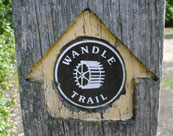 If you're ever in Wandsworth with five hours to spare, why wouldn't you walk to Croydon? The