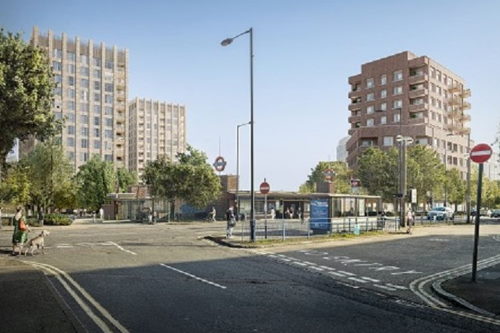
If you've ever been caught short on a bus, or nervously crossed your legs and wished your stop was closer, remember you have it easy. You can hop off if things get desperate and take your chances elsewhere but the bus driver has no choice, they have to rely on facilities provided at the terminus.
This can be awkward. Not all routes operate between locations with plumbing infrastructure like bus stations or depots - many stop in the middle of a housing estate or even in deep country. And while there might be a friendly business nearby willing to step in and help, that's not much good if they shut up shop at 6pm and drivers are still out past midnight. The locations of bus termini are determined by all sorts of factors, key amongst which are somewhere to park and somewhere to turn the vehicle round. Availability of decent toilet facilities is never top of the list.
In 2017 the London Assembly published a report called Driven to Distraction which asked, amongst several other welfare questions, whether bus drivers had access to sufficient toilet facilities. In particular committee members demanded "a commitment to deliver a toilet on each bus route (available at all times that the bus is in service) by the end of 2018". Within months every route had "some level of access to toilet facilities", although only 417 bus route termini had full time provision. The Mayor then pledged £6m of funding to deliver permanent toilets along the 40 routes which had only limited access or limited opening hours.
This meant plonking metal boxes on a convenient scrap of roadside in 40 disparate locations, a task which TfL undertook without always informing local residents of their plans. Many were then surprised, or even shocked, to discover drivers would be relieving themselves in toilets within sight of their front gardens. A particular cause célèbre was on Melody Road in Biggin Hill, the southern terminus of route R2, where the facility was vandalised in anger six hours after being installed. Residents nicknamed it the 'Turdis' and made sure to whinge about it loudly to the media. The BBC were told "I have never seen anything like that on a residential street before, it is just hideous," while the Evening Standard extracted this gem from a childcare provider.
"Everyone's been saying that house prices were going to go down. We had someone come to look at our house and it was the first thing she noticed and obviously she wasn't interested."
TfL relented within a month and withdrew the facility, which was excellent news for property values in TN16 3PL but less good for bus drivers who planned on drinking liquids. They've been a bit more careful since the Biggin Hill debacle but have still annoyed several householders elsewhere because there's often nowhere a box like this can hide.
The pandemic delayed the later stages of rollout but over 60 new roadside toilet facilities have been installed since 2018. This included a few long routes which previously had provision only at one end, and also sites which suddenly became critical when an existing route was amended or extended. This blog likes to bring you exciting London transport lists, so here's a cut and pasted version of the routes and bus stands where drivers can now find relief.
Bus routes with a toilet installed since 2018
42 Worship Street; 78 Nunhead, St Mary’s Road; 88 Clapham Common, Old Town; 96 Bluewater; 121 Enfield Lock; 124/126 Eltham High Street; 130 New Addington, Vulcan Way; 163 Morden station; 174 Harold Hill; 196 Norwood Junction; 214/271 Moorgate, Finsbury Square; 232 St Raphael’s Estate; 234 Barnet, The Spires; 263 Highbury and Islington station; 273 Petts Wood station; 274 Lancaster Gate; 281 Tolworth, Ewell Road; 287 Barking station; 288 Queensbury Morrison's; 290 Staines bus station; 291 Queen Elizabeth Hospital; 292 Colindale Asda; 321 Foots Cray Tesco; 343 South Kensington; 345 Natural History Museum; 368 Barking, Hart Estate; 370 Lakeside; 393 Clapton Pond; 414 Maida Hill; 415 Tulse Hill station; 430 Roehampton, Danbury Avenue; 455 Wallington station; 499 Gallows Corner Tesco; E5 Toplocks Estate; G1 Hermitage Lane, Norbury; H13 Ruislip Lido; H20 Hounslow Civic Centre; H28 Syon Lane Tesco, Osterley; K3 Roehampton Asda; K5 Ham, Dukes Avenue; N8 Hainault, the Lowe; R1 St Paul’s Cray; R7 Chelsfield; R68 Kew Retail Park; U7 Uxbridge station; W8 Chase Farm Hospital; W14 Woodford Bridge; W15 Cogan Avenue Estate
Toilets provided to facilitate bus service changes (since January 2019)
27 Glenthorne Road, Hammersmith; 33 Lonsdale Road, Richmond; 100 St Paul's station; 278 Ruislip station; 306 Acton Vale, Bromyard Avenue; 341 Waterloo Road, Lambeth; 386 Woolwich Arsenal DLR; 404 Cane Hill; 440 Wembley Eastern Lands; 483 Windmill Lane, Greenford; S1 Banstead High Street
Papers for a committee meeting this week confirm that at TfL's previous delivery rate it would have taken nine years to achieve this level of provision. The speed of rollout is evidently a success story... so long as you can get around the fact that toilet facilities were never standard in the first place. But we're not quite there just yet.
Several routes "with a round trip greater than 150 minutes with provision only at one end" remain outstanding, and these will be addressed in future as priority and funding allows. Meanwhile according to a recent Mayoral question London still has three bus routes where drivers can only use a toilet for part of a shift.
"There are currently three known routes – R2, 286 and 394 – where access to toilets is not available for all hours of the operating day. One of these (route 286) has a temporary toilet installed because access to the previously available facilities has not been possible due to pandemic restrictions. TfL will review access to staff facilities for route 286 when this changes. Facilities for routes R2 and 394 are currently in detailed design and, subject to funding and planning negotiations, will be built in 2022."
You may notice that one of these outstanding services is the R2, the route which caused all that consternation in deepest Biggin Hill. Its noisiest residents would no doubt be happier to lose their bus service than suffer the indignity of a turdis, because that's car-owning home-owners for you. They should be pleased that TfL's new plan appears to be to add a toilet at the other end of the route, which is round the back of the shops in Orpington where outcry should be less. But that'll still leave the R2's drivers susceptible to an 18 mile round trip on a potentially full bladder, while drivers on certain other routes already endure worse.
So next time you're on a bus remember there's a lot more to running a service than simply carrying passengers, and sometimes a lack of toilet facilities can be the greatest inconvenience.
• first Covid transmission in the Cook Islands
• Camilla tests +ve and self-isolates
• NI lifts remaining Covid restrictions
• Djokovic has no intention of getting jabbed
• 5-11 year-olds to be offered low-dose vaccines
• Germany to ease restrictions next month
• train services down 20% on pre-pandemic
• NHS bosses advise against scrapping free tests
• PM returns police questionnaire
• No 10 signals end to all remaining restrictions
Worldwide deaths: 5,800,000 → 5,880,000 Worldwide cases: 409,000,000 → 422,000,000 UK deaths: 159,518 → 160,521 UK cases: 18,266,015 → 18,585,423 1st/2nd/3rd vaccinations: 52.6m/48.9m/38.0m FTSE: down 2% (7661 → 7513)
One of the highest profile victims of Storm Eunice was the roof of the Millennium Dome, part of which failed to stand up to the gusty blast. Six of the panels ripped and tore, some flapping away across the Thames, leaving a large vertical gash on the northwestern flank. It's plainlyvisible from the river and from Blackwall on the opposite bank, but fortunately can't be seen from the main entrance because the hole is round the back. The affected section houses the outlet mall and leaves shoppers partly open to the elements, should there be any, whilst leaving the hospitality and entertainment sectors unaffected. It's a sorry sight.
The roof of the Dome is made of teflon-coated glass fibre and is just one millimetre thick. It was originally going to be flimsier PVC but the incoming Labour government decided the building needed a longer legacy, a change which delayed installation by three months. Altogether there are 144 linear panels, 72 of them in a ring around the base and another 72 above which converge at the top of the dome. All those that failed are from the lower half, which means they're 75m long and weigh a tonne. Construction required cranes and a team of abseilers and was halted if wind speeds ever went above 35mph. Alas Eunice's worst gusts were double that and so a structure that'd stood firm since June 1998 finally gave way.
When you see the damage in situ it's very apparent that the failed section is immediately alongside the only other nearby tall building, a 24 storey apartment block & hotel combo. This was completed in 2016 and created a deep notch which, unfortunately for the Dome, appears to have perfectly aligned with the direction of Eunice's southwesterly winds. I imagine a model in a wind tunnel would have demonstrated the potential risk in advance but the hotel wasn't there when the Dome was built so instead we've had to wait for the full-scale experiment. Prolonged gusty turbulence must have weakened first one panel and then its neighbours, with one of the 12 tall yellow masts providing the only significant resistance.
It's bad news for fans of Simply Red whose performance this evening has been postponed, and also for any families hoping to dine out in a chain restaurant because the entire O2 is closed for the day. It's not clear when it'll reopen, with reports in the media that employees have been told the venue may have to close "for a few months". However it remains possible to book a seat in the cinema tomorrow or to buy a £37 ticket to walk across the roof on Wednesday so the newspapers' bluster may have been an exaggeration. Indeed the gash may look bad but only one-twelfth of the Dome's circumference is affected so I suspect most activities will be able to continue unaffected.
Another of Storm Eunice's millennial casualties was thebandstand at the De La Warr Pavilion in Bexhill. Thisgorgeousstructure first appeared on the seafront terrace in 2001 to provide an outdoor performance focus, and resembled a whale's tail, a nun's wimple or a giant pair of white lips depending on your artistic interpretation. But in storm force winds it snapped and smashed beyond repair and now looks more like a broken seashell. Within hours the DLWP published what amounts to an In Memoriam post, an upbeat invitation for past visitors to share memories and remember the good times because it's not coming back. Neither the bandstand nor the Millennium Dome were built the last time winds of this strength hit southeast England, and sadly neither passed their sternest test unscathed.
It seems that liveblogs are really popular, so let's try again.
07:00 I am asleep. 07:30 I am drinking tea. 08:05 I have gone out for a walk. 08:30 It is cold. 09:10 I am looking at the gash in the Dome. 09:45 Several other people are too. 10:20 The tide is out. 11:00 I have opened a packet of Mini Cheddars. 11:35 I have not seen any fallen trees. 12:05 I am in the bath. 12:55 I am reading the newspaper. 14:30 A Saturday newspaper is good value. 14:50 I'm having tea and a scone. 16:00 This liveblogging experiment has not been a success.
Today the strongest storm in decades - Storm Eunice - is due to sweep across southern England. They endure worse up north but this one's closer to national media so is much more of an event. I'll be bringing you all the latest news as the gusty apocalypse unfolds, so stay tuned as my liveblog becomes your one-stop shop for all things cataclysmically meteorological.
07:00 Windy isn't it? 07:25 Actually no, it's just a bit wet, indeed you'd never know a fierce storm was barrelling in later this morning. But the Met Office has announced a red warning for exceptionally strong winds in London and the South East between 10am and 3pm, so brace yourselves. 07:38 Yellow, amber and red weather alerts were first introduced in 2011. There have only been 12 red alerts since, most of them in Scotland. England's only previous red alerts for wind were in February 2014, March 2018 (the Beast From The East) and November 2021 (Storm Arwen). London's never had a red alert before. 07:54 Overground services between Romford and Upminster have been withdrawn for the day, that's how serious this storm is.
08:11 The Met Office has been naming storms since 2015 because that makes us pay attention more. The winter of 2015/16 had the most named storms (11) and 2016/17 had the fewest (5). 08:30 Storms are named from an alphabetical list chosen at the start of the season. This year's list starts Arwen, Barra, Corrie, Dudley, Eunice, Franklin. If we get another after that it'll be Storm Gladys, and it's almost worth willing that to happen just for the LOLs. It's highly unlikely we'll reach Storm Olwen, let alone Ruby or Willemien. 08:36 The Dangleway is suspended, so that's a blow.
09:02 In specific hyperlocal news, Victoria Park is closed today. 09:07 Bins will not be collected in Devon and Cornwall, trains aren't running in Wales, Monkey World won't be opening in Dorset and buses aren't running in Cork. 09:23 Eight severe flood warnings are in force in the Severn estuary due to strong winds and a high tide. But the Thames Barrier won't be closing this afternoon because a large negative surge is expected "as the wind is effectively blowing the North Sea away from us". 09:33 It feels like the wind is starting to pick up. Branches are swaying. 09:57 Storm Eunice is an anagram of Rectum Noise.
10:00 RED ALERT now in effect. Sun's come out. 10:16 In an interesting juxtaposition of risks, all Covid-19 mobile testing and vaccination sites in London will be closed today. 10:32 Wind is strengthening. Spotted a leaf floating past. Looks quite nice out otherwise. 10:49 Also closed: the Isle of Wight ferry, the Severn Bridges, all the libraries in Southwark, Epping Forest District Museum, Bekonscot model village, public toilets in St Ives, Folkestone Town Hall, Harlow tip, the upper deck of the Asda car park in Edmonton Green. 10:55 History's most famous Eunice is singer Eunice Kathleen Waymon, who in 1954 changed her name to Nina Simone.
11:03 The first strong gust, thus far a one-off. Branches are rocking. 11:10 Balconywatch: I balanced four acorns on a chair first thing this morning, and one of them just fell off. 11:21 Reports of a 122mph gust at The Needles (which'd be a record for England). 11:30 The first noisy spell as the wind rushes, windows vibrate and a door rattles... then all goes quiet again. 11:32 Balconywatch: A second acorn has fallen. 11:53 It's getting a bit wilder out there, although because it's daylight I can see it's not as bad as it sounds.
12:04 The Manchester Evening News has cut and pasted the weather forecast as text and called it "Storm Eunice: Friday forecast for every borough in Greater Manchester hour-by-hour", and it's the second most-read article on their website #clickbait 12:17 Checking against the Beaufort Scale in my Ladybird Book of The Weather, I'd say it's more Force 7 than Force 8. 12:29 Over 150,000 people are watching planes trying to land at Heathrow on Big Jet TV (A380 incoming). 12:30 That Qatar Airways A380 has aborted at the last minute, again. 12:38 The Millennium Dome's roof is beingshredded by the wind. 12:58 Balconywatch: Remaining two acorns still in place.
13:00 A380 makes it down on third attempt. 13:09 It's officially now a big storm because a trampoline has been blown onto railway tracks in Norbiton. 13:11 Balconywatch: The last two acorns fall. 13:20 The tip of the spire at St Thomas church in Wells has broken off. 13:24 Balconywatch: Something fell over on the balcony above and splashed mine with water. 13:36 It's a good day not to own a fence. 13:47 It's still turbulent out there, but one of my neighbours just came home with a baguette so it can't be that bad. 13:59 The last ten minutes are as bad as it's got. A gust whipped up the alley. A window whistled. Two metal lids blew off. The trees in the park are flailing.
14:06 Balconywatch: I reset the acorns and they've all fallen off again. 14:08 Dome update - six panels missing, interior of shopping centre open to the elements. Tonight's Fugees concert is cancelled. Maximum gust recorded at the O2 was 87mph. 14:20 It feels like the worst has passed. 14:45 No trains out of Euston, Marylebone or Fenchurch Street. All Southeastern services cancelled. Bakerloo line suspended north of Queens Park, also Metropolitan line south of Wembley Park, also TfL Rail out of Paddington. Further trampolines reported in Herts. 14:53 Balconywatch: rosebush still intermittently quivering. 14:59 None of the trees I can see from my flat have broken, snapped or toppled over, so it can't have been that bad.
15:00 RED ALERT ends. Let's hope it's years until the next one.
Seven things I saw/received/thought/encountered over the last couple of days...
1) Down at Chrisp Street in Poplar the hit squad are busy. They've already demolished several buildings along Cordelia Street and on Tuesday morning I watched them knocking down another on Market Way. Yellow claws grabbed 1950s masonry and tugged, while a man with a big hose fired a jet of water from the first floor of a condemned block of flats, and down came a former resident's wall in irregular chunks. Everything except "the Festival of Britain buildings, Clock Tower and Idea Store" is due to be replaced by 2027. Meanwhile the big Co-Op closed last month and this week they sealed off its service road pending redevelopment. A replacement supermarket is promised for 'late 2024', and in the meantime residents will have to cope with the current Iceland and a new Spar.
2) BT have triggered the email confirming the imminent death of my landline. "We're moving you on to our Digital Voice service," they confirmed, before adding "It should start within 48 hours of 22 Feb 2022." As timings go, I find that unhelpfully vague. Most of their email waffles on about broadband speeds but eventually they mention the important thing which is that I'll need to plug my phone into a Smart Hub, not the wall. As for making phone calls during a power cut the advice is now that "you should always keep a fully charged mobile phone handy for emergencies", which is absurdly unrealistic. I have no intention of buying a spare mobile and leaving it plugged in just so that it's 'always fully charged'... although one day I may regret saying that.
3) What's London's lowest house number? It may well be this block of flats in Lyttelton Road, Leyton... Minus One House. Sadly it doesn't have a '-1' by the door which would be a clincher, but Minus One House is indeed the official address for the nine flats in the block. I think the anomaly happened because this was originally the back of 301 Leyton High Road, so when a new front door appeared nextdoor to 1 Lyttleton Road the weird numbering made some kind of sense. Elsewhere in London there's a Minus One on Kingsway in Orpington, but that's a cheat because nextdoor is number 3. There's also a Minus One on Cross Road in Romford, but that's a cheat too because the next house along is number 5. I strongly believe -1 Lyttelton Road is London's lowest (although the UK's most negative is Minus Two on Woodside in Cam near Stroud).
4) My local Tesco always sells its bunches of daffodils for £1. The first two bunches I bought this year had eight flowers each, which I thought was a bit stingy. This week's bunch has 17. I suspect it's a supply and demand thing because daffodils are more plentiful in February than in January. But the price of a single daffodil has dropped from 12½p to 6p while technically the price of a bunch has remained the same.
5) Crossrail may not yet have sprung forth but there's been an Elizabeth line van driving round my neck of the woods for the last couple of years. Here it is popping into the McDonalds drive-through by the Bow Roundabout... a juxtaposition which got me wondering who the new line's sponsors might be. Back in 2018 the plan was that Crossrail would launch with six 'exclusive brand partners' splashed across every aspect of the line. They'd feature in all the digital adverts across all the stations, promote themselves via collateral tie-ins and have their logos splashed across the tube map. But that was back when Crossrail was undamaged goods and TfL might've expected a multi-million pound windfall. I'm not sure if they're still planning a major brand blitz, and how sick we might get of the same six sponsors plastered everywhere, but steel yourself for marketing overload just in case.
6) Sky have sent me a mailshot urging me to buy one of their new all-in-one streaming TVs, aka Sky Glass, from only £39 a month. There's no need for a dish because everything comes via broadband, and no need for a separate box or soundbar because everything's built into the screen. I have no intention of buying one but I enjoyed reading the smallprint. The £39 a month consists of a £13 loan payment and a £26 Sky Ultimate TV subscription - that's the smallest sized screen with the most basic package. A 65 inch screen costs £8 a month more. It's obligatory to take Netflix but Sky Cinema is £11 extra and Sky Sports another £20. An additional feature is "Fast forward ads", which you get free for 12 months but would then be charged £5 a month for. That's £60 a year just to be able to skip the adverts on a service you're already forking out over £300 a year for! I did wonder if Sky Glass was a closed box system that only lets you watch Sky services but no, and I see it still has to show BBC/ITV/C4/C5 at the top of the TV Guide. I shall stick with my existing telly and paying one TV licence, not the equivalent of four.
7) Last year the London Blossom Garden opened in the Olympic Park as a place to remember all those in the capital who've died of Covid. Sadly it opened a month too late for any of the 33 trees to be in blossom which may be why it's never taken off as a place of commemoration. But this week two of the trees have burst forth with white flowers (and another is about to join them) so it looks like the intended spectacle is just kicking off. This trio won't still be in bloom in five weeks' time on the second anniversary of lockdown, which I suspect is when the garden will return to the news, but let's hope most of the other trees manage to put on a dazzling display at the right moment. A lot is riding on spring 2022, reputationally speaking.
If Cable Street raised your expectations then best drop them because this one's a dull walk. I've even walked it twice in the hope of spotting something notable but pretty much drawn a blank. Historywise there is a murderous cleric, so that's something, but one particular street corner will be doing a lot of heavy lifting here.
The B127 really shouldn't be a B Road, at least by national standards. It's a short cut through an estate at the southern end of Victoria Park, half of it one-way only. One end's by Cambridge Heath station, the other's where Old Ford Road crosses the Regent's Canal. What were they thinking?
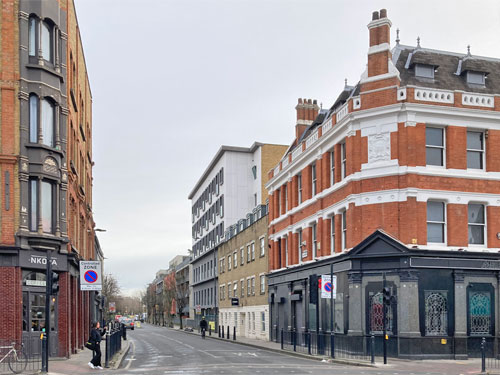
I'm starting at the busy crossroads on Cambridge Heath Road opposite the railway viaduct. The B127 is the narrowest and least used arm but normally has a stream of vehicles queueing to get out. 200 years ago this was Russia Lane, one of Bethnal Green's quieter sideroads, and the first terrace looks to be of that vintage. Its motley properties were once all shops but have since been converted to residential use with a certain lack of finesse. The minimalist coffee shop on the corner used to be the White Horse pub but has since swapped Whitbread Pale Ale for house espresso. The ex-pub opposite offers no clues across its jet black exterior but is in fact a former strip club called Metropolis which opens every Saturday night for a bop and a jiggle. Its official address however places it on the A107 rather than the B127 so it doesn't count.
Our road's now called Bishops Way and has been since at least the 1940s, so the two signs high up on the wall saying 'Formerly Bishops Road' must be at least 70 years old. Not much else along here is. The huge warehouse housing Bestway Cash & Carry exhibits strong 1980s vibes. Bethnal Student Academy offers English Language teaching in classrooms beneath microsized collective accommodation. Bishops Way Community Centre looks like somewhere you'd once have gone to play table tennis and now leads a new life as a mosque. The only shop on the B127 is a faded Nisa convenience store, except damn even that's officially on a sidestreet so doesn't count either. The telephone number of the dishevelled phone box outside Ponsonby House is (020) 8980 1067, and yes I am getting somewhat desperate for things to write about.
Here comes the posh bit. A splendid terrace of three-storey Victorian villas occupies the last block of Bishops Way, complete with sash windows, little steps up to the front door and chimneypots Mary Poppins could have flown past. The end that got bombed has been rebuilt in sympathetic but insufficiently identical style. By contrast the southern side of the road was less fortunate so is now mostly school playground or blocks of flats with external walkways. It's approximately here that the B127 becomes one-way only (in the opposite direction). This may explain why workmen are currently broadening the pavement to provide a curve suitable only for cyclists, and also the recent appearance of two metal benches more suitable for an unstaffed railway station than a conservation area. For those who like to know which bus routes we're following, sorry, the ubiquitous 309 just misses.
We've reached the interesting street corner, a six-way junction and the focal point of the entire estate. In Tudor times it was the site of the country home of the Bishops of London, the most infamous of whom was Edmund Bonner. Queen Mary charged him to persecute anti-Catholic heretics and he did a frighteningly good job, but Elizabeth I subsequently slung him in prison where he died ten years later. His former palace survived until 1655 and the cluster of buildings that replaced it became known as Bonner Hall. In 1820 the Regents Canal sliced across the estate, very close by, and in 1840 everything to the east of the canal was transformed into Victoria Park. The remainder became an upmarket housing development, one side of which we've just traversed, and the connection across the canal earned the name Bonner Hall Bridge.
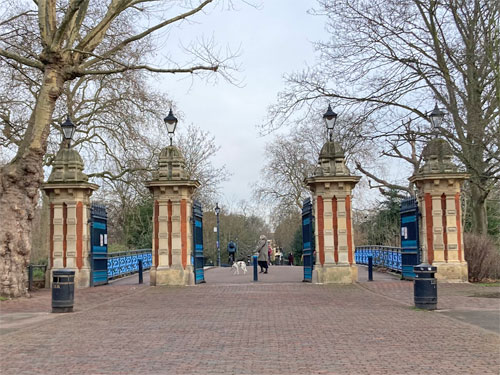
Parkgoers still flood across the cast iron bridge, most with bikes, dogs or running shoes. As they funnel through the piazza they entirely ignore the canalside benches optimistically provided down steps to either side, the parkside vista being much more pleasant. Alas all the nicest streets round here are just off the B127, including the one that currently has a heavy fall of cherry blossom across the pavement. I can however mention the former City of London Hospital for Diseases of the Chest whose triangular plot marginally abuts our road. It served as a key cardiac outpost until 2015 and would be 300 flats by now had developers not underestimated the rumpus moving a mulberry tree would cause. Legend says Bishop Bonner grew it, although if it were that ancient it'd be the East End's oldest tree.
And so to Sewardstone Road, the road that tracks the non-towpath side of the Regents Canal. It would've been attractive before it was bombed but is now council houses in a multiplicity of styles, some pretending to be Georgian on the cheap, others blocked as tall as parkside development allows. It's rare to find an independent school in Tower Hamlets but Gatehouse School is one such, having scarpered here from Smithfield in the 1970s. I doubt George Lansbury would be impressed to find the site of his youthful education taken over by an establishment that currently charges £13000 a year in fees (plus £7 extra for breakfast). The road descends gently to a final T-junction beside The Cricketers pub, now The Cricketers apartments, as you should remember from the B118 because we've been here before.
And if you found any of the B127 interesting then trust me, it's all in the research because it wasn't in the walk.
Numerically the next six B Roads were all in the City of London but no longer exist. One was bombed out of existence, one was upgraded to an A Road and the rest were declassified in the 1990s when the Ring Of Steel was introduced. Here are the extinct half dozen I no longer need to write about.
• B128Gresham Street (0.3 miles): This ancient street runs parallel to Cheapside and passes the Guildhall along the way. It linked the A1 to the A501 in a liverytastic way, and beats the B127 into a cocked hat.
• B129Fore Street/Red Cross Street (0.3 miles): The Blitz removed almost every building on these streets bar St Giles Church, in an area since entirely redeveloped as the Barbican estate. Some of Fore Street remains but Red Cross Street is now mostly lake, piazza and world-renowned auditorium.
• B130Old Broad Street (0.3 miles): Heaven knows why the backroad from Liverpool Street station to Threadneedle Street needed to be a B Road but that's what 1920s planners decided. Admittedly Broad Street station was a thing back then, but still no.
• B131Lombard Street (0.2 miles): Other roads which radiated from the Mansion House, now Bank junction, were the A3, A10, A11 and A40. I guess someone thought this minor exit needed its own B Road designation lest it felt left out.
• B132Lower Thames Street → Upper Thames Street (1.2 miles): This got lucky when the City decided to turn it into a major road - part dual carriageway, part tunnel - to connect Blackfriars to the Tower of London. Today it's the A3211 so a much higher number but a more significant letter.
• B133Arthur Street → Monument Street (0.2 miles): This was a brief curve off the B132, climbing from Upper Thames Street then crossing the line of London Bridge, passing the foot of the Monument and descending to Lower Thames Street. It's undriveable today.
B Road numbers sometimes get recycled but these six never have. They could be donated to much longer roads in the north of England as part of a levelling-up process, as befits their numerical significance, but best not give any politicians ideas. At least the B134 survives and is somewhere you'll actually have heard of, indeed may have eaten a curry on, so that'll be bloggage to look forward to.
TfL's annual fare rise was announced yesterday. It's extremely late, indeed this is the second time the increase that normally happens at the start of January has been delayed until the start of March, but that's government negotiations for you.
Sadiq froze fares for four years before the pandemic but has been forced to raise fares by 1% above inflation since, so that's 2.6% last year and 4.8% this.
To put that in context, fares rose 7% in 2011, 7% in 2012, 3% in 2014, 2.5% in 2015 and 1% in 2016, because some Mayors are happy to put fares up and some aren't.
Here are some of the new fares in historical perspective, with Boris's years in blue and Sadiq's in red.
Cost of a single central London tube journey
2012
2013
2014
2015
2016
2017
2018
2019
2020
2021
2022
PAYG
£2.00
£2.10
£2.20
£2.30
£2.40
£2.40
£2.40
£2.40
£2.40
£2.40
£2.50
After six years at £2.40 the Zone 1 PAYG tube fare rises by 10p. Last year it was deliberately left unchanged "to support the wider economic recovery of London", something that the centre of town still desperately needs, but a small increase this year shouldn't frighten too many away. Thanks to a longstanding quirk of the system peak and off-peak Z1 fares remain the same. Fare rise 2012→2022: 25% Fare rise 2021→2022: 4%
Cost of a tube journey from Green Park to Heathrow
2012
2013
2014
2015
2016
2017
2018
2019
2020
2021
2022
Peak
£4.80
£5.00
£5.00
£5.10
£5.10
£5.10
£5.10
£5.10
£5.10
£5.30
£5.50
Off peak
£2.90
£3.00
£3.00
£3.10
£3.10
£3.10
£3.10
£3.10
£3.10
£3.30
£3.50
The Z1-6 fare resumes its steady climb after seven years when it rose by only 10p. It means taking the Piccadilly line to Heathrow will cost £5.50 (peak) or £3.50 (offpeak), which is still a bargain given that TfL Rail/Crossrail fares will be £11.50 and £10.80 respectively. But ongoing negotiations with government might see peak fares imposed all day, the Mayor has signalled, reducing the price differential from ×3 to ×2. Tourists will pay the extra whatever, he reasons.
Fare rise 2012→2022: 21% Fare rise 2021→2022: 6%
For many years all off-peak tube journeys in Z2-6 cost £1.50. Last year the Mayor disrupted that by making longer journeys cost more, and this year he distorts the scale again.
Tube (off-peak), journey does not include Z1
1 zone
was £1.50, will be £1.60
2 zones
was £1.60, will be £1.70
3 zones
was £1.70, will be £1.80
4 or 5 zones
was £1.70, will be £1.90
The big hit is to those making a suburban journey across four or five zones who'll see a 12% increase on top of a 13% increase last year. The excuse given in the press release is to bring tube fares "in line with nearby National Rail fares", which I fear is a rationale we'll hear more often in the future. It's by far the largest percentage increase in the tube fares package and bad news for Londoners who make regular off-peak journeys across the suburbs, so not something the Mayor will be broadcasting loudly.
Cost of a single central London bus journey
2012
2013
2014
2015
2016
2017
2018
2019
2020
2021
2022
PAYG
£1.30
£1.35
£1.40
£1.45
£1.50
£1.50
£1.50
£1.50
£1.50
£1.55
£1.65
TfL are often kinder to bus passengers because they include the poorest amongst the electorate, but not this year. This is the first 10p fare hike since 2012, a 6½% increase which the Mayor is keen to blame on the government.
Basically the Mayor is saying "I have no control over rail fares, which are rising less than tube fares, so I need to screw bus users to balance the books." The Hopper fare remains, so chains of longer bus journeys will still cost the same as a single ride. Those impacted by the increase should note that a one zone tube ride (e.g Whitechapel to Stratford) continues to be 5p cheaper than taking the bus. Fare rise 2012→2022: 27% Fare rise 2021→2022: 6½%
Cost of an annual Z1-3 Travelcard
2012
2013
2014
2015
2016
2017
2018
2019
2020
2021
2022
£1368
£1424
£1472
£1508
£1520
£1548
£1600
£1648
£1696
£1740
£1808
No matter what the Mayor decides, Travelcards rise in price in line with National Rail fares which are set by the government, usually one percent ahead of inflation. But this year the government has scrapped the +1% to be kind to rail travellers, whilst simultaneously forcing TfL to add it on. That means this year's increase for Travelcards (and weekly capping) is 3.8%, i.e. a better deal than PAYG tube users are getting, although it only marginally makes up for previous disparities.
Fare rise 2012→2022: 32% Fare rise 2021→2022: 4%
Finally to the means of transport seeing the sharpest fare increase.
Cost of a single Dangle
2012
2013
2014
2015
2016
2017
2018
2019
2020
2021
2022
PAYG
£3.20
£3.20
£3.30
£3.40
£3.50
£3.50
£3.50
£3.50
£3.50
£4.00
£5.00
Walk-up
£4.30
£4.30
£4.00
£4.40
£4.50
£4.50
£4.50
£4.50
£4.50
£5.00
£6.00
Cablecar fares climbed only slowly until last year, at which point the current Mayor decided to milk his predecessor's project. A 50p increase last year has been followed by a £1 increase this, boosting a return fare to at least £10, a price more reminiscent of a tourist attraction than a key connection. In percentage terms it's an annual increase of 25% for PAYG users and 20% for those who insist on paying at the terminal. The press release mischievously describes the increase as "an overall average of 9.2%", having taken into account child fares and add-on fripperies, but really it's a massive hike. Fare rise 2012→2022: 43% Fare rise 2021→2022: 25%
...and it leads to the ridiculous situation whereby it'll now be cheaper to cross the Thames by boat than by cablecar. Thames Clipper fares have always been on the expensive side - currently £4.60 for a journey within the East zone and about to rise to £4.80. But from 1st March the £5 Dangleway fare will exceed it by 20p, which is well worth knowing if you've got a bike and can't use the Jubilee line for £1.60.
So brace yourself because all these daily increases soon add up, and be prepared for a further increase on select journeys once Sadiq's arm-wrestling bout with the government is finished. Then brace yourself for 2023 because next year's increases will be based on the inflation rate in July which may be as high as 7%. Balancing the books when fewer people are travelling is a tough ask, and if the government won't help foot the bill then you and I are going to have to.
It was a big weekend for Crossrail, the much-delayed megaproject, as ordinary humans arrived to test its safety procedures for the first time. Five major exercises are planned over consecutive weekends as part of Trial Operationsphase 2, their aim to check the robustness of the railway in a variety of challenging scenarios. 5000 volunteers have been signed up - generally TfL employees, their friends and family - so my very special thanks to the member of staff who offered me an invite. With all sorts of exciting evacuation scenarios to choose from, including "in Tunnel to Station" and "via Emergency Shaft", only a fool would have chosen the dull above-ground one. Except the dull above-ground one came first, which offered all sorts of bragging rights and smugness points in finally gaining access to the system, sowhywait?
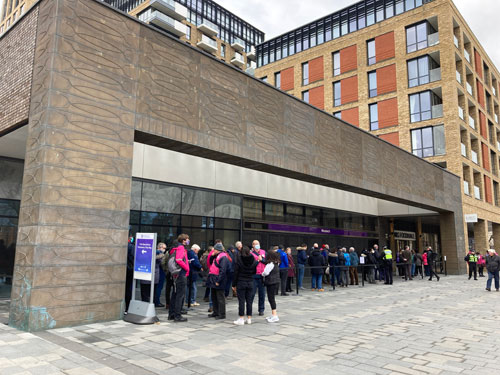
Departure point for Sunday's exercise was Woolwich station, a convenient launchpad because it's not shared with any operational railway. I was pleased to see the ticket hall primed and poised for launch, including this week's station closures poster and a rack plumped full of tube maps that don't have Woolwich station on them. On this occasion there were also check-in tables by the ticket machines for the handing out of 'Volunteer' lanyards and for making sure you hadn't just wandered in off the street. A separate table dispensed roundel-branded goodie bags, which were larger than they needed to be given their contents, plus a juice and croissant breakfast. Should have saved that for later. And with admin duly sorted it was time to venture down into the depths.
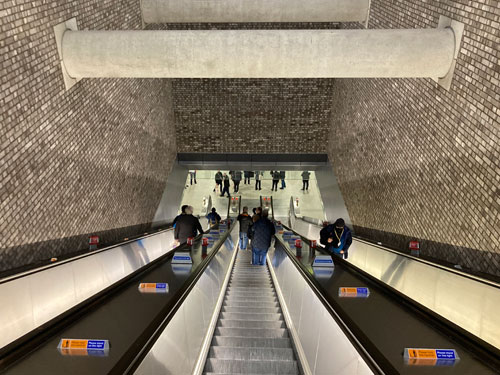
Woolwich is Crossrail's simplest subterranean station, accessed via a bank of three escalators at one end only. There are also lifts but on a day like this what you really want is the full Descent Into A Brick Void experience. At the foot of the escalators is a broad island platform with doors to either side, not the twin bores the central London stations have, plus a long line of concrete pillars down the centre and overhead lighting that resembles showerheads. The station's clean lines are aided by the Next Train Indicators being embedded in the glass above the doors, not hanging above. It wasn't long before 400-or-so volunteers were spread out to claim a seat aboard a knowingly faulty train, which I suspect was the largest crowd these platforms have yet seen. It won't surprise you to hear than the train departed later than the scheduled time... but this was fine, the longer to admire the architecture the better.
Fractionally after noon the doors beeped shut and the inaugural journey set off. Whoosh... into the tunnel under the Thames. It's a lot quieter than you might be imagining. Whoosh... briefly back up above the ground in North Woolwich. Don't expect to see much, they've built walls either side of the track to block the view. Whoosh... back down into the Connaught Tunnel under the Royal Docks. Was it dimly lit just for today or might that be the norm? And unwhoosh... the train gradually slowed to a halt during the climb on the far side. This was of course the plan - a simulated breakdown in the open air - but the journey had been much too brief, indeed hadn't even made it as far as the next station.
And now the sitting-around stage began. It was never going to be quick because everyone had to pretend the 'emergency' was unplanned, but there was a collective hope that the simulation might move swiftly. Not so. It took about half an hour before the driver flipped into evacuation mode, first with a loudspeakered request for "competent railway staff or police officers to assist with de-training". The train was plainly rammed with competent railway staff because that was the invite list, but they had to pretend not to be and sit tight. The driver's job was then to walk down the train and check everyone's mobility because not everyone can climb down from a stalled train, and you can imagine how long that took. The first hour ticked inexorably down.
I can't recommend spending Sunday lunchtime trapped with 400 other passengers in a nine-carriage train just short of Custom House station. It was all very well having a goodie bag to burrow into but there is a limit to how much fun you can have with a pencil, a souvenir brochure, a flimsy Oyster wallet and an enamel pin. Regular announcements kept spirits up, at least initially. These confirmed exit would be from the front of the train via steps and then along the tracks, which might've been exciting or unnerving had everyone not been expecting it. There were also repeated reminders to "please remember this is an operational railway", I suspect as a reminder not to smash the emergency button in bored frustration and flee onto the tracks.
Somewhere around the 70 minute mark it became apparent that the cavalry were coming, by which I mean an 'incident support team' of half a dozen staff in orange hi-vis approaching down the tracks. It had taken them a surprisingly long time to pretend to arrive, during which period the driver hadn't been able, or allowed, to detrain all by herself. And then they faffed, or rather they engaged in important safety protocols in conjunction with the driver, but from this awkward viewpoint they didn't seem to be hurrying. The lack of toilets about Crossrail rolling stock was starting to become an issue (which was why they'd urged everyone to go in the Dial Arch pub back in Woolwich).
At 90 minutes a man walked through the train clutching a ladder and a fresh voice came over the loudspeakers to say de-training would be starting soon, kicking off with the first carriage. You can probably guess what happened next which is that lots of people stood up and tried to shuffle towards the front of the train, much like when an InterCity approaches King's Cross, and everyone got absolutely nowhere. At least it made a change from sitting down, but it'd be well over the two hour mark before those in the rear coaches made it to the heart of the action. Two sets of doors had been opened in the front carriage, each with a narrow yellow ladder propped steeply down to track level. It was no hi-tech evacuation solution, requiring reversing oneself down eight rungs while being offered assistance from below, hence an inevitable bottleneck.
Somewhat perversely the front of the train had pulled up beside a gate into a work compound, potentially offering immediate escape to safety and the road beyond. But that was locked because the point of the exercise was to evacuate via the nearest station and this required a trackside walk. Ideally the walk would have been between the rails for a little added frisson, but alas this was the point where the marked yellow path left the tracks and crossed to a separate walkway alongside. I should point out that it'd started raining by this point, which wouldn't have been the case had disembarkation been quicker, so everyone got wet before reaching the tip of Custom House station. Total journey time from Woolwich, the best part of three hours.
I imagine station staff must have been thrilled to finally have some real members of the public to engage with after weeks of hanging around with annoyingly little to do. At this point everyone should have been thinking "woo, I'm standing on the platform of my second new Crossrail station of the day", but the long wait and damp conditions merely encouraged swift departure. A media type with a very big lens was waiting on the mezzanine at the top of the stairs, which is as close as those reporting the exercise had been allowed to get. I had no intention of catching the train on Platform A back to Woolwich, not least because after all that waiting around even exclusive access to unopened megaprojects can start to pale.
It was a peculiar experience, all glitz and balloons at the start and a barely a whimper at the end. The total time aboard a moving train had been approximately three minutes, this massively outnumbered by a lengthy wait stuck in a cutting staring at a wall. What's more these are trains I and hundreds of thousands of Londoners have been on before - they've been in service since 2017 - so the novelty came only at the bookends of the journey. Hopefully you'll never have to haul yourself off a Class 345 down a ladder onto the tracks, but at least this collective sacrifice of 400 Sunday lunchtimes helped test what'd happen were it necessary. The day when you can board a train that goes further than one station draws ever closer, but bragging rights and smugness points have already been awarded.
There are now more Starbucks in the suburbs, particularly out east (and up Harrow way).
The glut in the West End and the City has thinned out a bit, which may be pandemic-related.
West and southwest London residents continue to have the most disposable income.
There are still some huge Starbuckless voids, like Tottenham/Walthamstow and Woolwich/Eltham.
But I confess I thought the maps would be more different than that.
• Australia to reopen border to vaccinated
• exams will go ahead this year
• anti-vax truckers block roads in Ottawa
• NHS waiting lists will take years to clear
• self-isolation rule may be scrapped soon
• Prince Charles tests +ve and self-isolates
• Wales to slowly relax most restrictions
• Hong Kong worried by surge of 1000 cases
• Spain allows unvaccinated teenage visitors
• police send PM questionnaire about parties
Worldwide deaths: 5,730,000 → 5,800,000 Worldwide cases: 392,000,000 → 409,000,000 UK deaths: 158,243 → 159,518 UK cases: 17,749,999 → 18,266,015 1st/2nd/3rd vaccinations: 52.5m/48.7m/37.7m FTSE: up 2% (7516 → 7661)
Between 1986 and 1994 the borough of Tower Hamlets was divided into seven neighbourhoods, each administered separately and each of which had its own branding. These neighbourhoods were introduced by the Liberal/SDP Alliance with the aim of enhancing local accountability, but proved a little too parochial and were ditched as soon as Labour returned to power.
Signs produced during this eight year period were designed in the colour and style of the local neighbourhood. Over the subsequent three decades most traces have been wiped away, especially as street signs around the borough have been replaced and updated to new templates. But look carefully and the neighbourhoods linger on, particularly on hard-to-reach walls and the occasional fingerpost. I have indeed been looking carefully over several months and these are some of the best examples I've come across.
Bethnal Green is green because whoever allocated colours to neighbourhoods was being literal. The logo is a mulberry leaf with berries, presumably as a nod to the silk industry once prevalent in these parts. I did wonder if it specifically referenced the mulberry tree in the grounds of the former London Chest Hospital but that would have been in Globe Town neighbourhood so probably not. Bethnal Green logos aren't commonplace, but keep walking and they're not too hard to find.
Globe Town is black and white, or maybe black and silver. The logo is a globe because it couldn't have been anything else, and references the pub on Mile End Road which gave its name to the area.
Globe Town is unusual in having two very different types of street sign. Most are this heavily moulded style with raised black lettering on a white background. A walk along the western end of Roman Road should reveal plenty of these. The normal-looking logo I showed you first is something I've only found on Cephas Street.
Bow has the best colour which is Oxford blue. Its logo is St Mary's church, the 14th century place of worship which lies on the southern edge of the neighbourhood. Blue signs remain plentiful across Bow, not least because they're really smart and add a bit of class, even in a conservation area like Tredegar Square. They're also the least likely of the seven to have faded over the last three decades, so a proper pigmented success story.
Wapping is red, or rather was red because almost every example has faded away. Its logo is a reef knot as a nod to the maritime tradition which dominated the Thames riverside for centuries. Wapping branding is hard to find, and generally quite bleached even if you do strike lucky. The example above is from Salter Street near Limehouse Police Station.
Stepney is a royal purple. Its logo is a bell, which could be because the Whitechapel Bell Foundry was in the neighbourhood but more likely references St Dunstan's, one of the bells featured in the nursery rhyme Oranges and Lemons. In my experience, which has involved lot of street-plodding over lockdown, Stepney signs are some of the hardest to track down.
Poplar is also green but a lighter shade than Bethnal Green. Its logo is a poplar tree, which would have been a slamdunk choice in the 1980s council branding department. Heritagewise it ought to be a black poplar, a species once commonly found in the area but now nationally rare (and perhaps locally extinct). Poplar branding is quite easy to find and in quite good nick, indeed some of it looks to be less than 28 years old.
The Isle of Dogs is orange. You can't easily tell it's orange here because the sign has faded really badly, but a mucky example at Robin Hood Gardens confirms the original shade. The logo is a dockside crane, as would still have been commonplace in 1986, and (uniquely) appears in its correct geographical location inside the big Thames meander. Isle of Dogs branding is very hard to find, as befits a neighbourhood that's been substantially redeveloped, and hard to distinguish even where it survives.
For further background information on the Tower Hamlets neighbourhoods, check out this 2017 post on the LCCmunicipal website. They had more luck finding signs in better condition than I did, but that's the damage five subsequent years can do.
This week Enfield Council approved plans to build flats across Cockfosters station car park. Currently it has 336 parking spaces but within five years it should have 351 flats. This means that even the northern end of the Piccadilly line can now look like everywhere else.
TfL like building flats on car parks. This is because...
a) car parks are a valuable source of developable land
b) the Mayor runs TfL and wants to build a lot more housing
c) the Mayor and TfL are essentially skint
It's easy to argue in favour because...
d) Londoners really need somewhere affordable to live
e) cars are evil pollution-belchers so readily dismissed
f) most of the car parks' current users don't live in London
g) people who drive cars ought to be using other public transport instead
The Cockfosters scheme delivers 351 homes for rent, not outright sale. 40% of these will be 'affordable', at least to some, and the other 60% as unaffordable as everywhere else is. Most will have one or two bedrooms, a handful three.
Not all of the parking spaces are going. Following consultation 47 publicly available spaces will remain, including 12 Blue Badge spaces, but essentially that's a 90% reduction. It means Cockfosters will change from being a useful bridgehead for out-of-town commuters to somewhere even local drivers wouldn't risk in case it was full.
It's not quite selling off the family silver for a one-off funding windfall because these'll be rented properties, but it is abandoning years of revenue from car parking charges and onward travel. I wondered potentially how much.
» To park at Cockfosters costs £6 a day (unless it's Sunday when it's half price). Regular parkers can get a weekly season ticket for £28.80, which if you travel five days a week is a measly £1.20 discount. Each parking space is worth a potential £39 a week and there are 336 of them which makes a total of £13,104. In real life they wouldn't be that full and some would have season ticket discounts so let's call it £10,000. That's half a million pounds a year which isn't a bad income from an empty patch of land, but Covid will have knocked it back so maybe quarter of a million pounds is a better estimate. You couldn't buy a flat for that.
» As for onward travel, that's potentially 336 passengers unable to park so no longer paying up. If they all had Z1-5 annual travelcards that'd be a yearly loss of £840,000... except they'd probably end up travelling another way and still contributing to fares revenue. A handful of car-driving Herts daytrippers deciding not to travel via Cockfosters isn't going to break the bank.
I also wondered how many car parks TfL still have, i.e. how much scope there is to keep doing this. It's a lot more than I was expecting. Here's a list, courtesy of NCP who operate them, ordered by number of parking spaces.
541 Epping
509 North Greenwich
499 Chalfont & Latimer
458 Newbury Park
447 Stanmore
419 Hounslow West
336 Cockfosters
308 Arnos Grove
290 Loughton
282 Hillingdon
273 East Finchley
269 Finchley Central
244 Rayners Lane
241 Chorleywood
206 Debden
187 Northwood
181 Chesham
173 Ickenham
173 Woodford
165 Walthamstow Central
159 High Barnet
156 Canons Park
154 Ruislip
152 Redbridge
145 Oakwood
139 Woodside Park
134 Osterley
116 Snaresbrook
106 Hatton Cross
106 Moor Park
94 North Ealing
93 Croxley
91 Totteridge & Whetstone
90 South Woodford
82 Sudbury Town
82 Wembley Park
79 Hainault
77 Harrow on the Hill
76 South Harrow
74 Queensbury
71 Morden
70 Watford
68 Hornchurch
68 Leytonstone
68 Theydon Bois
56 Hounslow East
49 Eastcote
45 Barkingside
43 Buckhurst Hill
40 Mill Hill East
36 South Ruislip
32 Fairlop
30 Highgate
27 Perivale
23 Colindale
22 Brent Cross
19 Wanstead
14 Greenford
14 Ruislip Gardens
In total that's over 9200 parking spaces (of which Cockfosters is less than 4%). Certain outlying stations are very much seen as park and rides, with Epping leading the charge for Essex, North Greenwich for southeast London and Chalfont & Latimer for Bucks.
You can see why the Mayor might look at a map of TfL assets and wonder "why are we helping out-of-towners to park when we could be housing Londoners?"
So Cockfosters isn't the only car park lined up in his sights. A Mayoral question in 2019 revealed that 15 station car parks had been identified for redevelopment, namely...
Arnos Grove, Blackhorse Road, Canons Park, Cockfosters, Colindale, Finchley Central, Harrow-on-the-Hill, High Barnet, Hounslow West, Northwood Town, Rayners Lane, Stanmore, Sudbury Town, Wembley Park and Woodside Park.
Of these Blackhorse Road's car park is already 350 flats, while the rest remain open while plans are advanced. That's 3000 parking spaces which could soon be lost to housing (or much better used for living on, depending).
And that long list above was just for the tube. Here are TfL's car parks on the Overground and Crossrail.
116 Harrow & Wealdstone
94 Theobalds Grove
79 Bushey
37 Bush Hill Park
29 Hatch End
26 Highams Park
19 Forest Hill
18 Chingford
11 Crystal Palace
11 Norwood Junction
10 Turkey Street
6 Penge West
504 Brentwood
124 Hayes and Harlington
85 Harold Wood
83 Langley
81 Gidea Park
59 Burnham
43 Taplow
15 West Drayton
I don't believe these are in danger (for which the good people of Brentwood are especially thankful), but they too could make their contribution. They also push TfL's current tally of car parking spaces over 10,000.
It's an interesting balancing act trying to maximise accessibility and housing capacity. Those who can no longer park at their favourite station tend to get very cross and those who end up living beside a transport node tend to be very grateful. But you can only build on car parks once, and who's to decide when that should be?
Walking Britain's B Roads: the B126 Cable Street
[Tower Hamlets] [1.4 miles]
The B126 is one of the longer B Roads, at least compared to what's gone before. It's also one you should have heard of, having gained notoriety in 1936 when a fascist march met its match amid East End defiance. It's Cable Street, an east-west backroad running roughly parallel to the DLR viaduct either side of Shadwell. It's all one-way if you're in a car but two-way if you ride a bike, which is by far the most common way to experience it. Only the very western end was originally called Cable Street, but that's for reasons we'll discover in the last paragraph because I'm kicking off out east.
The B126 starts in Ratcliff, a historic maritime settlement whose name has long been extinguished, close to the northern entrance to the Rotherhithe Tunnel. At the start of the 18th century this end was known as Back Lane, being two roads back from the wharfside, and later as Brook Street. Today it bears off from the hurlyburly of Butcher Row behind an array of planters designed to let bikes in but cars only out. The striking Art Deco building on the corner with the copper-domed clocktower used to be the confectionery works of Batger and Co, longstanding purveyors of jam and Chinese figs. Today it's called Thames House and exhibits strong arts collective/independent workspace vibes, so it probably won't surprise you to learn there are plans to bolt 200 flats onto the back.
The segregated cycle lane which starts here will be with us all the way to the other end of the street, having swallowed up one lane of traffic long before Cycle Superhighways were a thing. It doesn't always stick to the same side of the road but it is safe, convenient, well-used and very blue. Just don't expect exhilarating views because redevelopment came to Cable Street early and most of what lies ahead is resolutely social housing. It never gets too repetitive because the council never seemed to build more than two blocks the same, but it does feel like all aspects of postwar 20th century design are on display. A graffitied phone box and a bleak basketball cage do little to lift the mood, but better these than the brothels, slums and opium dens that characterised the area previously.
It's still not well-to-do round here and feels much more backwater than B road. The local convenience store is unbranded and prominently features lottery tickets and stacked cans of Red Bull in its window display. At Brodlove Lane (formerly Love Lane, formerly Cut-Throat Lane) the one-way-ness of the B126 suddenly switches direction which certainly keeps traffic levels down. Seven pristine terraced properties have somehow survived the maelstrom and are thus way out of most neighbours' price range. The land behind was originally known as Sun Tavern Fields, where in the 1740s a mineral spring rich in "sulphur, vitriol, steel and antimony" was discovered, but despite much medicinal drumbanging the idea of Shadwell Spa never really caught on.
The church with the spire is St Mary's, a Victorian benevolence to serve the surrounding slum streets. Ian Visits has been inside for a look and can confirm it's not as Catholic as it looks. The adjacent pub surrendered to the inevitable 20 years ago and is now The Ship Apartments. Beyond this brief heritage bubble the cityscape reverts to a surfeit of council blocks, the next few being particularly substantial. A blue plaque on the wall of Gosling House confirms this as the site of a pioneering chemical discovery in 1856. William Henry Perkin had been trying to synthesise quinine in his home lab but serendipitously invented the first cheap artificial purple dye instead, which he called mauvine and which revolutionised the clothing industry.
The local primary school is named after Blue Gate Fields, a blackspot where off-duty sailors did their wickedest and which Dickens knew as one of the East End's worst slums. It's followed by Shadwell Fire Station, a modern box which flies its red flag high. For those who like to know which bus routes we're following it's both the 100 and the D3, but only through this central bit and only in one direction. Of significantly more transportational importance is Shadwell station whose Overground portal faces Cable Street (and whose separate DLR outpost is visible up Watney Street). And still the Cycle Superhighway ploughs on... n.b. also suitable for those on one-wheel electric skateboards.
At last we've reached the worth-seeing bit. St George's Town Hall used to be Stepney Council's administrative base, and since last year has started a new life as Tower Hamlets Register Office. Its most noticeable feature is a colourfulmural which covers one end of the building and includes, amongst much other detail, a chucked bottle, riot police on horseback and Adolf Hitler in his underwear. It took seven years to paint and commemorates the infamous Battle of Cable Street on Saturday 4th October 1936. Sir Oswald Mosley had hoped to march his blackshirt supporters to a rally in Victoria Park but 250,000 East Enders thought otherwise and blocked their way. The barricades weren't here - we'll get to those - but this mighty painting counts as both a celebration and a warning.
The finest houses on Cable Street follow, courtesy of an unbombed three-storey terrace, before the Legobuild flats recommence. The orange block on the corner of Cannon Street Road is particularly visually offensive (and if this crossroads seems familiar it's because we've already been here on the B108). Cable Street has been shadowing the DLR for the last mile but only now does it nudge over to run alongside, which means we're about to be walking past a lot of businesses that like lurking under viaducts. That's either a builders yard or a building site, that's a stash of black cabs and that's nominally a courier company. Today the turn-off for Christian Street is in no way evocative but in 1936 Mosley's mob got no further, blocked by whatever materials the angry crowd could find. For a fuller account try this 80th anniversary website and take comfort that They Did Not Pass.
The B126's last few hundred metres are the oldest and the only section originally christened Cable Street. That's because it started out as a ropewalk, a path where hemp was twisted to make ship's cables, which again confirms the importance of shipping to this edge of East London. The backdrop of drab flats and railway viaduct continues, this the point where trains to Bank start to make their descent. Alas the marvellous Wilton's Music Hall is just out of sight or I'd have mentioned that. Instead the final parade of shops includes a minimarket, a Papa Johns and a Filipino restaurant. It also hosts the dubious Jack The RipperMuseum whose reputation never recovered after promising to open as "Museum of Women's History". It still has international custom willing to pay £10 to see a few floors of stuff, but I say never trust a building decorated with two blue plaques commemorating events that happened elsewhere.
Ahead lies Royal Mint Street, a short connection to the City, but that somehow has A Road status so I have to leave things here. Shame because it actually has a pub... which somehow lowly Cable Street, former backdrop to Sailortown, no longer has.