Hurricanefacts • Tropical cyclones are called hurricanes in the Atlantic and typhoons in the Pacific. • Hurricanes rotate anti-clockwise in the northern hemisphere, and clockwise in the southern hemisphere. • For a hurricane to form, ocean temperature must be at least 26½°C down to a depth of at least 50m. • One third of Atlantic hurricanes form in September, and three quarters between August and October.
Hurricane force: Force 1 (minimal): 74-95mph [110 have hit the US since 1851, 1 of them this year] Force 2 (moderate): 96-110mph [72 have hit the US since 1851] Force 3 (extensive): 111-130mph [73 have hit the US since 1851, 2 of them this year] Force 4 (extreme): 131-155mph [19 have hit the US since 1851, 1 of them this year] Force 5 (catastrophic): 156+mph [3 have hit the US since 1851 - in 1935, 1969 and 1992]
• Hurricane Able was the first named hurricane, in 1950. • Only female names were used from 1953 until 1979 - now hurricanes alternate in gender. • A list of 21 names is picked for each hurricane season. Lists repeat every 6 years. • This year's list will be reused in 2011, but Katrina and Rita will almost certainly be retired. • There are only four names left on this year's list. If the names run out (which would be the first time ever) then Greek letters will be used instead.
While I've been writing about Open House and ITV's 50th, a number of other notable events and anniversaries have slipped under the radar. Here's a few that I missed...
Sunday, 18 September, 2005 Fifty years ago Britain officially annexed the tiny islet of Rockall, a remote rocky outcrop located 287 miles west of mainland Scotland. Back in 1955 a Royal Navy helicopter lowered two sailors onto the island's only narrow ledge where the Union flag was raised in a shamelessly political attempt to extend British territorial waters. And then they left. An SAS chappie lasted five weeks on Rockall back in 1985, but the only current inhabitants are a few squawking seabirds. When listening to the shipping forecast I've always wondered... (etc etc)
Monday, 19 September, 2005Dr Thomas Barnado died 100yearsago today. He's famous for his pioneering children's homes, the first of which opened in 1870 just down the road from me in Stepney. When I was a kid living in cosy suburbia I had a Barnardo's collecting box shaped like a little cottage, in which I (occasionally) used to collect a piddling amount of small change. Every year all of the cottage-fillers in my village were invited to a big garden party at which our boxes were ritually opened and copious thanks showered upon us. Unjustly, in my case, I suspect. I threw a pound coin into a Barnardo's collecting bucket at my local tube station tonight, and I had a nasty feeling that this single donation was larger than everything I'd ever managed to contribute to this fine charity in the past. Next year maybe I should... (etc etc)
Monday, 19 September, 2005 Everybody's favourite sitcom Fawlty Towers was first broadcast thirty years ago tonight. I remember sitting down and watching it as a curious ten year old, and loving it. Not that the case of Lord Melbury's mistaken identity was the best of the twelve episodes ever made, but all that farcical class snobbery we grew to adore was present right from the very start. John Cleese probably never topped... (etc etc)
Thursday, 22 September, 2005 We don't have libraries in Tower Hamlets any more. Libraries are old hat. Not even historic WhitechapelLibrary, the famous intellectual refuge which opened back in 1892 bringing books and culture to the poor undereducated masses of the East End. A huge collection of Jewish texts was built up, overtaken more recently by an even larger set of Bengali books, inspiring several generations to academic greatness. But 21st century locals don't want musty shelves any more, they want internet terminals and beanbags, so this remarkable building finally closed to the public last month. Its replacement is a shiny glass 'IdeaStore', up the road next to Sainsbury's, and it opens today. It's the only way to inspire the borough's youth, I know, but I can't help feeling that the Whitechapel Idea Store won't have anywhere near as significant a legacy as its eradicated counterpart... (etc etc)
Thursday, 22 September, 2005 The London Olympics open in precisely 2500 days time. Not long when there's a stadium or seven to build and an industrial wasteland to eradicate. So far almost nothing tangible has changed on the Stratford Olympic site, but what has changed is that even the tiniest non-event around here is now news. Potential killer turtle spotted; mini nuclear reactor uncovered; giant hogweed on the loose - everything hits the headlines now, however minor. But there's still approximately 500 days to go until the media can report the rather more newsworthy headline 'Olympic demolition starts'. Come visit while you still can... (etc etc)
7.15pm Opening night - live on air from The Guildhall
7.30pm The Hallé Orchestra perform Cockaigne (In London Town) by Sir Edward Elgar
7.45pm Inaugural speeches
8.00pm A sparkling Variety Show from ABC's Television Theatre
[8.12pm Britain's first TV advert, for Gibbs SR toothpaste]
8.40pm Robert Morley introduces excerpts from The Importance of Being Earnest, (starring Dame Edith Evans and Sir John Gielgud), Baker's Dozen (starring Pamela Brown and Alec Guinness) and Private Lives (starring Kay Hammond and John Clements)
9.10pm Professional Boxing - Terrence Murphy v Lew Lazar for the Southern Area Middleweight Championship.
10.00pm News and Newsreel
10.15pm Gala Night at the Mayfair - Leslie Mitchell introduces some of the guests.
10.30pm Star Cabaret with Music by Billy Ternant and his Orchestra.
10.50pm Preview - a glimpse of some of the programmes to come on Independent Television during the coming months.
London Open House: It's four years ago this week since I first moved to London, and events like Open House remind me just how little of the capital I've so far seen. It's always a joy to discover a new treat, and thankfully there must many more delights I have yet to experience. Here are details of the final three of the nine visits I crammed in this weekend [and my photos are here]
Crossness Pumping Station: There are always queues on Open House weekend, but I wasn't expecting to find them at an old sewage works on the Thames marshes in deepest Bexley. The old dear driving the ageing minibus from Abbey Wood station had never seen the like either. We'd endured a rattly journey past Thamesmead and down a godforsaken approach road, before being dropped off outside an unexpectedly ornate brick building in the middle of almost nowhere. The smell of effluent filled the air, which made the snaking queue of locals and curious centre-of-towners all the more surprising. The stench was coming from the modern sewage works just along the river but we were here to see its Victorian predecessor - the pioneering and palatial Crossness Pumping Station.
You'll remember from last month's journey down the River Fleet that London's sewage problem was finally solved in the 1860s by master engineer Joseph Bazalgette. Crossness was his crowning glory, the ultimate destination of all the icky brown waste in South London which was piped here so that it could could be stored in huge subterranean reservoirs before being pumped out into the Thames on the ebb tide. And to do the pumping Bazalgette constructed four huge beam engines, each able to lift more than a thousand gallons of sewage in one stroke. The scale of the operation is phenomenal, with 47 ton iron beams rising and falling with the rotation of enormous flywheels spinning beneath. Only one engine has so far been restored, by a group of willing volunteers who clearly love nothing more than the allure of steam and sooty hands. They've done a particularly good job on the decorative ironwork around the central 'Octagon', although even the rustiest corners of the building still retain a genuine industrial charm.
Crossness proved a fascinating building to explore, not just the main hall but also down into the dark pipe-filled bowels and up the winding staircase to the broad ironwork floor at beam level. We were only afforded a glimpse of the dilapidated Triple Expansion Engine House nextdoor, which still waits for an injection of Heritage Lottery Fund cash and for restoration. Meanwhile outside in the old boiler room (safety helmets off) a Museum of Sanitation is being established. Look - a row of old porcelain toilet pedestals! See - a collection of 19th century bedpans! Lo - a roll of Izal medicated toilet tissue! All a little twee perhaps, but the importance of this building to the long-term health of South London should not be overestimated. (full details on the highly informative and well-illustrated Crossness website)
TrinityBuoyWharf: It may sound ludicrous but London does indeed have its own lighthouse, situated on the thin strip of land where the river Lea enters the Thames, just to the north of the Millennium Dome. The lighthouse was never used to warn of underwater hazards but was instead kitted out by Trinity House back in Victorian times as a testing ground for their latest lighthouse technology. The site today is surprisingly inaccessible given its proximity to Docklands, with road access hidden away down a shabby industrial backstreet in the southeast corner of Tower Hamlets. There are great views of the Dome and the Thames from the top of the lighthouse, the interior artily filled by the computer generated ringing of Tibetan 'singing bowls' performing a 1000-year sound symphony (honest).
The rest of the wharf site is a strange mix of old and new, and oddly enchanting. An old red lightship is tied up a few yards from a genuine aluminium American diner. Brightly coloured metal containers have been piled up to create low cost office and studio space in a pioneering (keyword: sustainable) project called Container City, which us weekend visitors got to peer inside. Few central London office blocks can beat its low cost riverside panorama. And out at the end of Jubilee Pier I was surprised to be allowed access to the Vic 56 - an 85 foot long WW2 steamboat. There was no gangplank so I had to clamber aboard over the side of both the pier and the boat - rather inexpertly and inelegantly I thought. But it was a treat to wander the decks of this partly restored ship, clambering over ropes and climbing to the wheelhouse, and to meet and talk to the present owners. Seaworthy at least as far as Harwich, apparently, and no shortage of volunteers wanting to hide themselves away in the grimy engine room and stoke the steam engines.
Bank of England: There's only one bank to which we all belong but from which we can never draw money. All the more strange then to be allowed access to the Bank of England first thing on a Sunday morning. I had my rucksack searched by a top hatted security gent in a pink frock coat, and was then taken on a tour of (some of) this mighty fortress's interior by a softly spoken bank worker. As you'd expect the decor is magnificent, from fine crafted Derbyshire limestone walls to painstakingly beautiful mosaics underfoot. Corridors stretch off into the distance, a cantilever staircase rises seven storeys into the sky, and three floors of basement and vaults are hidden underfoot. We trudged through the Governor's office (he has a cheap black plastic government-issue pencil stand on his desk containing just one yellow highlighter pen) and on up the stairs to the room where the Bank of England decide the UK interest rate each month. Every wall and ceiling screamed opulence, especially in the facsimile Court Room, although we were assured that most of the bank's offices were rather more utilitarian. Our tour ended in the Bank of England's mini museum, where I took the opportunity to handle a genuine (and surprisingly heavy) gold bar - worth either 28 pounds or a hundred thousand pounds depending on whether you're weighing it or buying it. The queue was at least two hours long by the time I got back outside - bloody typical even for a top bank, I thought.
London Open House: Details below of three more properties I visited over the weekend. Still to come tomorrow, the room where they decide UK interest rates, a Victorian sewage cathedral and London's only lighthouse. [and see my photos here]
BBC Broadcasting House: The original BBC Broadcasting House was built in 1932, an Art Deco masterpiece at the top of Regent Street [explore the interior here]. Wartime news broadcasts, Listen with Mother and Desert Island Discs - they all came from here, as have millions more hours of BBC radio broadcasts. Now the building is undergoing refurbishment as part of a multi-million pound construction project (don't worry, none of it is coming out of the licence fee), due for final completion in 2010. To the east of old Broadcasting House a new building is being erected on the ruins of Egton House, and between the two there'll be a new public piazza where it's hoped concerts will be staged. On the roof of the east wing a glass cone sculpture [photo] has just been erected as a memorial to journalists and crew killed while on assignment. A laser beam installed inside will fire a beam of light high into the London sky at key moments of national importance (such as the death of a monarch or the start of the Ten O'Clock News). It's like the Batsignal made real, and it's due to be switched on for the first time next year.
As part of London Open House I was lucky enough to get a space on one of the very limited tours that took place this weekend, so I've been inside to see the old and the new. The Art Deco entrance foyer has been sympathetically restored, complete with Latin inscription to "the temple of the arts and muses" and a glowing white reception desk. We were taken inside up a narrow utilitarian 1932 staircase to the BBC Board of Governors' council chamber which, like the whole of the building, had been gutted and restored (now with sprung wood floor to conceal multimedia cabling). On the floor above we entered the holy of public broadcasting holies - the Director General's Office. It's empty at the moment, and will be until the whole building project is complete, but I felt quite at home in the DG's lair. On to a more modern facilty in the heart of the building - the new Radio 4 drama studio. The original studio suffered from vibrations every time a Bakerloo line train passed underneath, so the new facility has been very carefully sprung and soundproofed. There are front doors with knockers and bells for that authentic radio sound effect, as well as two sets of stairs, a bedroom and even a kitchen sink. Finally on to the new open-plan offices on the top floor and out onto the balcony at the front of Broadcasting House. We stood beside the big clock beneath the tall white 'radio mast' and enjoyed a most impressive view south over All Souls' church towards Regent Street [photo]. The whole tour, though brief, was a fascinating insight behind the scenes of a national landmark just before the broadcasters move back in. And I'm sure it'll be lovely when it's finished. (full details on the BBC's very detailed New Broadcasting House website)
Alexandra Palace: The BBC's other key acquisition in the 1930s was a failed amusement centre located high atop Muswell Hill in North London. Alexandra Palace had first opened to the public in 1873, and then promptly burnt to the ground 16 days later. The replacement building wasn't much more successful, long term, and so was vacant when the BBC came looking for a base for their inaugural high-definition television service. A competition was held between John Logie Baird and Marconi-EMI to see who had the better broadcasting technology, so two studios were built at either end of the building to give them both an equal chance. The world's first public television broadcast was made from the Baird studios on 2nd November 1936. Programmes were shown for just two hours a day (except on Sundays) and could only be received by the very few with appropriate receiving equipment living within 25 miles or so of the site. Eventually the 405-line EMI system won out, until the service was interrupted for six years by World War Two during which time the TV mast was used to jam German navigation signals instead. BBC TV production moved to Lime Grove in the Fifties but television news continued here until the Seventies at which point those bearded Open University types moved in. Then in 1980 Alexandra Palace was hit by another catastrophic fire, the BBC cancelled its lease and the studios fell into disrepair. (highly recommended histories of Ally Pally here, here and here)
Saturday's studio tour was hosted by the Alexandra Palace Television Society, whose dream it is to restore this unique slice of broadcasting heritage to some sort of working operation. These very keen amateurs have assembled a fine collection of historical televisual ephemera, from an old BBC television camera to 70-years worth of old TV sets. As part of their presentation we got to watch a video of the cinema newsreel that reported the opening transmission of the new television service in 1936. A Thirties glamourpuss sang a scarily over-the-top song in praise of television (X-Factor it wasn't), and the realisation that she had sung on the very spot where we were sitting sent a chill down my spine.
After an all-too-brief a look round the exhibits our next stop was back in the main building. Here the main attraction is now a municipal ice rink, and I don't think I've ever seen quite so many cocky adolescent girls in fluffy hooded jackets and snarling sportswear-attired boys as I did in the lengthy snaking queue. We headed instead to the old Victorian Theatre. Nothing quite prepared us for the experience as we emerged from the foyer into a cavernous dark space that had once been an auditorium. The theatre had never quite been a success, not least because acoustics and lines of sight were poor, and several decades of neglect made for a very sorry sight indeed. Naturally there's a charitable band of volunteers dedicated to restoring the rotting boards and crumbling ceiling, although I couldn't help thinking they were in danger of spending several years and several hundreds of thousands of pounds on rescuing a theatre that couldn't possibly stand on its own two feet financially. Still, good luck to them, and if you ever get the opportunity to peer inside, do.
19 Princelet Street: Tucked away in a quiet street between Spitalfields and Brick Lane lies a unique 18th century silk weaver's house, now an extraordinary museum. Over the years this house has been occupied by generations of immigrants, first Huguenots fleeing from France and later Jews who built a Victorian synagogue in the back garden. Astonishingly the house and synagogue still stand - but only just, and £3 million is needed to stave off the threat of decay and possible collapse. The exhibition inside depicts the history of East End immigration, right up to modern Bangladeshi and Somali arrivals, using the symbolism of piled-up suitcases. Impressively the majority of the displays throughout have been contributed by local Tower Hamlets schoolchildren, most of whom are immigrants themselves. It's genuinely inspiring stuff, putting across powerful messages with simplicity and clarity. No wonder there were queues outside all weekend (thanks for keeping me company, Ben). Due to the house's fragile nature the museum is only open for a handful of days each year, but I'd urge you to visit this hidden treasure at the next available opportunity. (make a virtual visit to 19 Princelet Street here)
London Open House: It's that weekend again, the one where hundreds of London properties open their normally-closed doors to the public (but no Gherkin this year). There are probably too many buildings open, to be honest, because you'd need more than one lifetime to get round them all. But I managed five yesterday from across the capital, and I'm off out again today to visit some more (so I'm in a bit of a rush). Here's where I've been so far, and I'll come back tomorrow and tell you a bit more about the top two.
• BBC Broadcasting House: currently closed during a hu-uuge rebuilding project. I've stood on the roof, I've stood in the new Radio 4 drama studio, and I've even stood in the DG's office. Which was kind of appropriate. (more tomorrow)
• AlexandraPalace: I can't tell you how spooky it was to watch a video of the world's very first television programme in the same studio (on the very spot) where that broadcast was recorded. (more tomorrow)
• Wellcome Trust, Gibbs Building: This year-old office space on the Euston Road won the RIBA 2005 Prize for its architecture, and from the inside you can see why. There's a huge central atrium, there are several floors of glass-walled open workspaces and, most impressively, there's a stunning seven-storey sculpture (called Bleigiessen) made from a hundred thousand glass beads threaded on thin wires in a sort of danglyglobbyshape that glows and shimmers. See photo left. Lovely.
• Kingsley Hall: A few hundred yards down the road from me, in Bromley-by-Bow, there's a community centre with a unique history. I've written about the place before (full history here) but I'd never previously ventured inside. Mahatma Gandhi stayed here for several weeks in 1931 on his only visit to London, advancing the case for Indian home rule (and meeting local people), while psychologist RD Laing took over the centre in the 60s for a not terribly successful schizophrenia project. The current beardy centre manager showed a leftish group of us around, from the pool tables on the first floor to Gandhi's tiny cell on the roof. I was most impressed by the commitment of all those here to peace and to the community, and it's a place I'm proud to have as a neighbour. (more information here)
• A13 Artscape: Of all the things I could have done yesterday afternoon, I chose to take a minibus tour down the A13 through Barking and Dagenham. You might think that I was mad. I was certainly the only person on the tour (although I was told that the noon tour had been packed). But I wanted to see a pioneering urban art project which has engineered new landscapes and landmarks alongside what it has to be said is one of London's dreariest arterial roads. My guide in the minibus was the borough's Head of Arts Services, so she was duly passionate about a couple of subways, a lot of fencing and some lights on sticks. And, by the end of the tour, so was I. The various projects along the road are both innovative and functional, from the airport-style lights of Holding Pattern to the towering tarmac cones on the Goresbrook roundabout. The upgraded subways heal the scar cut across underprivileged communities by the A13, and carefully chosen fencing and tree-planting will give the road a new kind of rhythm. Four million quid has transformed dreary and unsafe locations into welcoming public spaces of which the borough are rightly enormously proud. The rest of London would do well to follow their lead. (official website here)
The Friday puzzle (easy): Place a coin in each box (or leave it empty) so that the totals across and down are correct.
3p
5p
10p
8p
6p
4p
The Friday puzzle (harder): Place a digit from 1 to 9 in each box so that the totals across and down are correct. Numbers may not be used more than once in each row or column.
30
10
20
10
20
17
13
(In Japan this sort of thing is called Kakro, in the Guardian Kakuro and in the US Cross Sums. Play online here)
(And did you try my 3-dimensional Sudoku last Friday?)
Don't you just hate Fridays? Number of days until Christmas: 100 Number of shopping days until Christmas: 100 Number of days until next bank holiday: 101 Number of days until next vaguely warm bank holiday: 210 Number of days until the sun next rises before 6:30am: 174 Number of days until the sun next sets after 8pm: 213 Number of days until next summer: 278 Number of days until next August: 319 Number of days until t-shirt weather returns: too many
A sponsored walk through 21st century London (St Paul's Cathedral - Dr Johnson's House, < ½ mile, 4 hours) [map]
Stage 1 (75 metres): Our walk starts outside St Paul's Cathedral, which is a big old nipple-domed temple or something. They serve wine (and mini bagels) here on Sundays, but that's no good to a thirsty tourist like you so let's move on quickly. Wander north into Paternoster Square, a collection of modern concrete buildings much admired by architects and the public alike. Soulless - that's how we like our religious experiences these days. Time for that coffee you've been promising yourself. Nip into the Starbucks on the corner of the square and treat yourself to a grande Cappuccino and a shrink-wrapped blueberry muffin. Perfect. [Starbucks, 1 Paternoster Sq, London, EC4M 9AD]
Stage 2 (75 metres): When you're relaxed and ready it's onward through the alleyway to Ludgate Hill. This is one of the most historic roads in London, but that's not important when there's shopping to be done! Thankfully the street also boasts a bijou-sizedStarbucks where you can sit down and plan your next pampering purchases. Accompany your deliberations with a refreshing Frappuccino Light and a slice of blueberry swirl cheesecake for good measure. Perfect. [Starbucks, 30-32 Ludgate Hill, London, EC4M 7DR]
Stage 3 (50 metres): After a short rest it's time to continue your strenuous walk across London. Or just across the road in this case, where another familiar green Starbucks logo beckons. It's the ideal spot to pause and reflect while staring out through the long glass window at the hustle and bustle of the street outside. And there's plenty of time for a classic Caffè Latte, and maybe a luxury almond croissant too. Perfect. [Starbucks, 57 Ludgate Hill, London, EC4V 6DR]
Stage 4 (150 metres): This next stretch of the walk is rather on the long side, but take heart because it's all down hill. Take care to maintain your haughty cosmopolitan aura as you tackle the busy pedestrian crossing at Ludgate Circus. Designer retail outlets abound, but head instead for the welcoming comfy sofas of the Starbucks at the bottom of Fleet Street. A handcrafted Caramel Macchiato makes for heaven in a mug, with a Prawn Caesar Wrap to quell those lunchtime hunger pangs. Perfect. [Starbucks, 32 Fleet Street, London, EC4Y 1AA]
Stage 5 (75 metres): Fleet Street was once the haunt of alcoholic journalists. Clearly they didn't have coffee available in quite such abundance in those days. Mmm, caffeine, it's so addictive isn't it? Don't worry - you can get your next fix at another Starbucks just a few metres up the road. Quick, before you start to get withdrawal symptoms. A Caffè Americano should calm your nerves, with a slab of Marshmallow Twizzle for that rapid sugar high. Perfect. [Starbucks, 90-91 Fleet Street, London, EC4Y 1DH]
Stage 6 (125 metres): Coffee. Need coffee. Now. Stumble further up street. Head buzzing. Locate Starbucks. Push open door. Demand triple espresso from barista. Wait. Wait longer. Oh come ON! Grab mug of steaming brown liquid. Gulp down sweet sweet caffeine. Aaaah!! And how about a frosted orange cake to clear the palate? Perfect. [Starbucks, 151-152 Fleet Street, London, EC4A 2BU]
Stage 7 (50 metres): Dr Johnson wrote a big dictionary 250 years ago and his house is now open to the public. But who cares? The curators don't serve drinks, so why bother going? Go home instead. And take some Fairtrade Blend beans with you, because you're not getting any sleep tonight. It's the future, you know. [Starbucks, everybloodywhere within 5 years]
Cricket quiz: Quick, while everybody's still interested, here's a cricket quiz. Below are clues to the names of the 18 firstclass English County Championship counties. Some are clues to the recognised abbreviation (eg Herts), some to the name with 'shire' omitted (eg Hertford) and some to the complete county name (eg Hertfordshire). (Not that Hertfordshire is a first class cricket county, you understand). How many cricketing counties can you identify?
1) brown sauce 2) Corrie's Raquel 3) batter pudding 4) Arctic termites 5) magician Geoffrey 6) local grudge match 7) celebrity body part
12) mix paint (not matt) 13) Heartbreaker Dionne 14) Mr Christian Andersen 15) sus sus sus sus sus sus 16) reef, sheepshank, granny 17) the 19th and 24th letters 18) Superman's secret identity
8) what a sheep with a thin fleece has 9) halfway between foreplay and orgasm 10) most of these jellies are still watery but... 11) "Chicks and ducks and geese better scurry"
Wasn't the cricket amazing yesterday? Not the game, or even the result, but watching other people in the office's reactions to it...
Some people were finding it very difficult to concentrate on work yesterday. Come 10:30 and they started looking distracted, even disturbed, as they came to terms with not being able to watch the conclusion of England's Ashes challenge. Typical - a fortnight ago they were all ready to spend their bank holiday watching the end of the Fourth Test but it finished a day early, and today they were trapped at work when the Fifth dragged on to the final Monday. Thank goodness for the internet. Before long they were suffering from Repetitive Refresh Syndrome, checking up on the latest score at increasingly frequent intervals, just in case. Would the next online update reveal sought-after runs or a fallen wicket? A depressed murmur spread around the office upon each dismissal, led by the surfer monitoring the most on-the-ball website, and the outlook blackened as consecutive wickets began a rapid tumble. To some of my more pessimistic colleagues this was surefire evidence that our national team was about to snatch defeat from the jaws of victory, again.
After lunch the armchair pontification continued. Discussion concentrated on leg spin bowling, over rates, the probability of rain, the consequences of a lower order batting collapse, and oh bugger we've just lost another one. Some newly-converted fans began to display their lack of in-depth knowledge of the game (erm, exactly when is tea, actually?). And even those with no previous interest whatsoever felt compelled to enquire how the game was proceeding, not that an answer of '206 for 7' meant anything to them because cricket isn't a game you can explain in a couple of minutes. One particularly unfortunate manager, a true Test addict, was gutted to discover that a particularly important meeting had been scheduled during the late afternoon, severing his online lifeline to the developing pitched battle. For others the tension was all too much and they scuttled off home during the tea break to soak up the tension of the closing overs in front of a television screen.
I hope they made the most of tonight's final on-screen experience because watching live test cricket on television is about to become a restricted practice, exclusive only to those signed up with Rupert Murdoch's premium satellite services. When the Ashes are next fought on home soil the majority of supporters will have to content themselves with the radio commentary, or ball-by-ball web updates, or even watching the numbers change on Ceefax. Sure there'll be some delayed terrestrial TV highlights in the early evening, but where's the tension in that? My congratulations to the English Cricket Board on their recent multi-million pound broadcasting deal, which I'm sure will boost the coffers of a beleaguered sporting organisation. But I hope the ECB won't despair when a new generation of children grow up never having watched a test match and choose instead to become fans of football, athletics or even baseball.
Oh and we drew, by the way, so we won some crematedwood. I think. It's all so bloody complicated.
I visited a tourist attraction on the outskirts of London over the weekend. I don't need to tell you which one (because I'm saving it for a feature I have planned for November) but I will tell you the one thing that struck me most about my visit - the lack of other visitors. Not that the site was in any way empty. The attraction was staffed by an army of volunteers: collecting the entrance money, selling souvenirs, stewarding in the car park, leading guided tours around the site or just wandering around and keeping the few visitors happy. Some volunteers stood waiting beside their displays in case anybody wandered up and wanted to ask a question. Some prepared sandwiches in case a hungry diner had failed to bring their own. And a large group of weekend-only soldiers recreated a pitched historical battle, complete with real guns and explosions, to an audience considerably smaller than their own regiment. The whole day out was professionally executed to a very high standard, but I couldn't help thinking that all this effort was somehow wasted on the few of us who'd actually bothered to turn up.
There are hundreds if not thousands of tourist attractions in the London area, each with a potential audience within travelling distance of more than ten million. And yet half of a thousandth of one percent of them had bothered to share my day out with me. Presumably the rest were out shopping, or were watching the cricket, or were visiting somewhere else, or were too poor, or were just wholly disinterested. It's much easier somewhere like Ipswich, where the number of visitor attractions barely scrapes into double figures and is easily assembled into one manageable list. But try searching for somewhere to go in London and it's much harder to pick out the tiny gems amongst the big name attractions, and the smaller sites often drown in relative obscurity. So the volunteers turn up, unlock the gates, hang around for almost nobody to turn up, wait all day, then go home ready to repeat the whole process again and again. Why do they bother?
I expect it'll be even worse at London Open House weekend next week, not least because of a wholly unwieldy search engine. A few big name projects in the centre of town will have queues stretching round the block, while special one-day openings at tiny properties in Upminster, Croydon or Ruislip will go unnoticed. And it all comes down to choice. The public like a wide choice so they can select where they want to go, but for such a choice to be available every option has to be fully staffed even if it's a choice nobody chooses to make. It's the same reason why buses run empty, why attendants in art galleries spend hours alone with their paintings and why charity shop workers wait hours for one potential purchaser who may never arrive. On another level it's why volunteers repair dry stone walls that only a few sheep will ever see, why neighbours pop nextdoor to talk to old people for whom they have no responsibility and why lifeboat crews ready themselves for incidents they hope will never happen. And, you could argue, it's why millions of bloggers bother to blog, even when virtually nobody else will ever stumble upon what they have to say.
If you think about it too hard, much of life is a complete waste of human time and resources. So much of what we all do goes unnoticed, overlooked and underappreciated. But thank goodness for volunteers, because society would be far less diverse and far more commercial without them. And a special thank you to the good people of north London who allowed me a fascinating glimpse back into the past over the weekend. I now have no need to go back, but I'm glad to know that you'll be there for the few that follow me. Thank you all for bothering.
(If theGuardian can switch to 'narrower and shorter', so can I)
Here's a six-month-old photograph of Mam's Fish Bar, BowRoad's premier takeaway establishment, with Mam herself staring out through the glass from behind her deep fat fryer. She ruled over an unfeasibly salmon-hued takeaway, in name a fish shop but in practice a kebab dispensary. If you wanted slightly charred flesh or a tray of grease-dripped chips, Mam was your woman. Her warm and genuine smile beamed out from beneath a shock of red wiry hair, swept back and piled high on top of her head. You could sit and eat her fatty produce while sat at one of the cheap and nasty tables bolted to the floor along the far wall, perhaps sprinkling each trayful with thin weak condiment dripped from non-brandname bottles. I never went in myself, not since her battered cod disagreed catastrophically with my digestive system, but the local teenagers and the minimum waged worshipped daily at her temple.
And then two months ago, without warning, Mam's Fish Bar closed down. It wasn't long before the old shop was hidden behind shiny new black shutters, and workmen could sometimes be seen inside installing gleaming new cooking equipment beneath big metal extractor fans. But there was no food on sale, until yesterday. Where once was Mam's shabby sign, now shines a startling illuminated slogan declaring The Thrill of the Grill. The fish and kebab silhouettes have been replaced by four gleaming red chilis, and two big red posters scream 'Now Open' to slightly more upmarket passers by. Everything's seems just too clean, and much less amateur. You just know that the previous owner would have written 'nOW OpEN' in thin red marker pen instead, probably on a page ripped out from a faded notepad, and spelt at least one of the words wrong. The new menu also looks much more professional and has substantially 'upgraded' in content - with codand chips replaced by jumbo king prawnsand chickpeas, for example, and steak and kidney pie vanishing altogether. But the biggest change of all is behind the counter. The new staff all look as if they're fresh out of school, standing there in a row beneath corporate red baseball caps, eagerly doling out grilled meat to the weak-willed consumers of Bow. But of Mam herself there is no sign. She's sold out to a Kebabish franchise, presumably in lieu of early retirement, and her presence has completely vanished off the face of E3. I shall miss her siren smile staring out from behind the glass, attempting to lure me in from the pavement for a 90p bag of chips. But I won't miss her fish.
Silver discs(September 1980)
A monthly look back at the top singles of 25 years ago
The three best records from the Top 10 (9th September 1980) TheJam - Start: The second chart-topper for the Woking threesome, smashing in at number three in an era when records just didn't do that. The mid-sixties Mod influence had never been quite so obvious, and the jolting bassline owed more than a passing nod to the Beatles' Taxman, but it didn't matter because this was a mighty fine pop snapshot.
"It doesn't matter if we never meet again. What we have said will always remain. If we get through for two minutes only, it will be a start. For knowing that someone in this life loves with a passion called hate, and what you give is what you get." David Bowie - Ashes To Ashes: I bet you can't think about this single without immediately picturing the accompanying video in which a pierrot-hatted Bowie walked on a purple lake followed by a group of weirdly dressed acolytes and a bulldozer. You could indeed argue that this three minute epic marked the dawn of video as a promotional art form, and certainly this perfect combination of sound and vision reignited Bowie's flagging career. Just for a bit, anyway.
"Ashes to ashes, funk to funky, we know Major Tom's a junkie, strung out on heaven's high hitting an all time low. My mama said to get things done, you better not mess with Major Tom" Hazel O'Connor - Eighth Day: Debut single from the Breaking Glass LP, the soundtrack to the film that sprung feisty Ms O'Connor onto an unsuspecting world. This was loud, this was angry and this was exciting (even if the sax break in the middle of Will You was even better). It's great to see Hazel's still recording (new album here) and touring (she played Stroud last night) although with Celtic soul now replacing 80s punk she's mellowed a little too.
"On the eighth day machines just got upset, a problem man had not foreseen as yet. No time for flight, a blinding light, then nothing but a void, forever night. He said: Behold what man has done, there's not a world for anyone"
The best five Top 40 new entries from this week 25 years ago [18] Queen - Another One Bites The Dust: John Deacon and the boys dipped their toes into deep dirty funk with this deviously simple guitar anthem, and also launched a new cliché into the English vernacular. [30] Stevie Wonder - Masterblaster (Jammin'): This single heralded the dawn of Stevie's commercial golden age, lifted from the seminal Hotter Than July album - the perfect accompaniment to many an early 80s fondue party. [36] Madness - Baggy Trousers: Here's where Madness hit the big time with their trademark nutty sound (and that great video with saxophonist Lee Thompson floating through the North London sky). SchoolDisco.com could never have happened without them.
[That's three utterly classic new entries in one week - would never happen these days, would it?] [39] XTC - Generals and Majors: A typically clever anti-military track from one of England's most criminally underrated bands. Andy Partridge & Co's understated brilliance is easily the best thing ever to have come out of Swindon. [40] Splodgenessabounds - Two Little Boys: The Two Pints of Lager punk boys continued their 'two' theme with this aural assault on Rolf's most famous single. The 7 inch single came complete with free cardboard boomerang - which didn't come back.
10 other hits from 25 years ago: Feels Like I'm In Love (Kelly Marie), I Got You (Split Enz), One Day I'll Fly Away (Randy Crawford), I Owe You One (Shalamar), United (Judas Priest), Searching (Change), Three Little Birds (Bob Marley & The Wailers), You Shook Me All Night Long (AC/DC), Magic (Olivia Newton John), I Want To Be Straight (Ian Dury & The Blockheads)...which one would you pick?
3 dimensional Sudoku: Just to show I wasn't completely wasting my time during the two day residential conference I've just arrived home from, here's a 3D Sudoku-type puzzle I doodled on the back of the agenda during this morning's oh-so-thrilling session.
The diagram below shows a 3x3 cube chopped up into three layers - top, middle and bottom. Can you fill in the cube so that every layer and every 3x3 slice across and down contains all the numbers from 1 to 9?

Sunday, 18 September, 2005 Fifty years ago Britain officially annexed the tiny islet of Rockall, a remote rocky outcrop located 287 miles west of mainland Scotland. Back in 1955 a Royal Navy helicopter lowered two sailors onto the island's only narrow ledge where the Union flag was raised in a shamelessly political attempt to extend British territorial waters. And then they left. An SAS chappie lasted five weeks on Rockall back in 1985, but the only current inhabitants are a few squawking seabirds. When listening to the shipping forecast I've always wondered... (etc etc)
Thursday, 22 September, 2005 The London Olympics open in precisely 2500 days time. Not long when there's a stadium or seven to build and an industrial wasteland to eradicate. So far almost nothing tangible has changed on the Stratford Olympic site, but what has changed is that even the tiniest non-event around here is now news. Potential killer turtle spotted; mini nuclear reactor uncovered; giant hogweed on the loose - everything hits the headlines now, however minor. But there's still approximately 500 days to go until the media can report the rather more newsworthy headline 'Olympic demolition starts'. Come visit while you still can... (etc etc)
Crossness Pumping Station: There are always queues on Open House weekend, but I wasn't expecting to find them at an old sewage works on the Thames marshes in deepest Bexley. The old dear driving the ageing minibus from Abbey Wood station had never seen the like either. We'd endured a rattly journey past Thamesmead and down a godforsaken approach road, before being dropped off outside an unexpectedly ornate brick building in the middle of almost nowhere. The smell of effluent filled the air, which made the snaking queue of locals and curious centre-of-towners all the more surprising. The stench was coming from the modern sewage works just along the river but we were here to see its Victorian predecessor - the pioneering and palatial Crossness Pumping Station.
The scale of the operation is phenomenal, with 47 ton iron beams rising and falling with the rotation of enormous flywheels spinning beneath. Only one engine has so far been restored, by a group of willing volunteers who clearly love nothing more than the allure of steam and sooty hands. They've done a particularly good job on the decorative ironwork around the central 'Octagon', although even the rustiest corners of the building still retain a genuine industrial charm.
Trinity Buoy Wharf: It may sound ludicrous but London does indeed have its own lighthouse, situated on the thin strip of land where the river Lea enters the Thames, just to the north of the Millennium Dome. The lighthouse was never used to warn of underwater hazards but was instead kitted out by Trinity House back in Victorian times as a testing ground for their latest lighthouse technology. The site today is surprisingly inaccessible given its proximity to Docklands, with road access hidden away down a shabby industrial backstreet in the southeast corner of Tower Hamlets. There are great views of the Dome and the Thames from the top of the lighthouse, the interior artily filled by the computer generated ringing of Tibetan 'singing bowls' performing a 1000-year sound symphony (honest).
The rest of the wharf site is a strange mix of old and new, and oddly enchanting. An old red lightship is tied up a few yards from a genuine aluminium American diner. Brightly coloured metal containers have been piled up to create low cost office and studio space in a pioneering (keyword: sustainable) project called Container City, which us weekend visitors got to peer inside. Few central London office blocks can beat its low cost riverside panorama. And out at the end of Jubilee Pier I was surprised to be allowed access to the Vic 56 - an 85 foot long WW2 steamboat. There was no gangplank so I had to clamber aboard over the side of both the pier and the boat - rather inexpertly and inelegantly I thought. But it was a treat to wander the decks of this partly restored ship, clambering over ropes and climbing to the wheelhouse, and to meet and talk to the present owners. Seaworthy at least as far as Harwich, apparently, and no shortage of volunteers wanting to hide themselves away in the grimy engine room and stoke the steam engines.
BBC Broadcasting House: The original BBC Broadcasting House was built in 1932, an Art Deco masterpiece at the top of Regent Street [explore the interior here]. Wartime news broadcasts, Listen with Mother and Desert Island Discs - they all came from here, as have millions more hours of BBC radio broadcasts. Now the building is undergoing refurbishment as part of a multi-million pound construction project (don't worry, none of it is coming out of the licence fee), due for final completion in 2010. To the east of old Broadcasting House a new building is being erected on the ruins of Egton House, and between the two there'll be a new public piazza where it's hoped concerts will be staged. On the roof of the east wing a glass cone sculpture [photo] has just been erected as a memorial to journalists and crew killed while on assignment. A laser beam installed inside will fire a beam of light high into the London sky at key moments of national importance (such as the death of a monarch or the start of the Ten O'Clock News). It's like the Batsignal made real, and it's due to be switched on for the first time next year.
Alexandra Palace: The BBC's other key acquisition in the 1930s was a failed amusement centre located high atop Muswell Hill in North London. Alexandra Palace had first opened to the public in 1873, and then promptly burnt to the ground 16 days later. The replacement building wasn't much more successful, long term, and so was vacant when the BBC came looking for a base for their inaugural high-definition television service. A competition was held between John Logie Baird and Marconi-EMI to see who had the better broadcasting technology, so two studios were built at either end of the building to give them both an equal chance. The world's first public television broadcast was made from the Baird studios on 2nd November 1936. Programmes were shown for just two hours a day (except on Sundays) and could only be received by the very few with appropriate receiving equipment living within 25 miles or so of the site. Eventually the 405-line EMI system won out, until the service was interrupted for six years by World War Two during which time the TV mast was used to jam German navigation signals instead. BBC TV production moved to Lime Grove in the Fifties but television news continued here until the Seventies at which point those bearded Open University types moved in. Then in 1980 Alexandra Palace was hit by another catastrophic fire, the BBC cancelled its lease and the studios fell into disrepair.
• Wellcome Trust, Gibbs Building: This year-old office space on the Euston Road won the RIBA 2005 Prize for its architecture, and from the inside you can see why. There's a huge central atrium, there are several floors of glass-walled open workspaces and, most impressively, there's a stunning seven-storey sculpture (called Bleigiessen) made from a hundred thousand glass beads threaded on thin wires in a sort of dangly globby shape that glows and shimmers. See photo left. Lovely.
The Friday puzzle (easy): Place a coin in each box (or leave it empty) so that the totals across and down are correct.
Stage 2 (75 metres): When you're relaxed and ready it's onward through the alleyway to Ludgate Hill. This is one of the most historic roads in London, but that's not important when there's shopping to be done! Thankfully the street also boasts a bijou-sized Starbucks where you can sit down and plan your next pampering purchases. Accompany your deliberations with a refreshing Frappuccino Light and a slice of blueberry swirl cheesecake for good measure. Perfect.
Designer retail outlets abound, but head instead for the welcoming comfy sofas of the Starbucks at the bottom of Fleet Street. A handcrafted Caramel Macchiato makes for heaven in a mug, with a Prawn Caesar Wrap to quell those lunchtime hunger pangs. Perfect.
Cricket quiz: Quick, while everybody's still interested, here's a cricket quiz. Below are clues to the names of the 18 first class English County Championship counties. Some are clues to the recognised abbreviation (eg Herts), some to the name with 'shire' omitted (eg Hertford) and some to the complete county name (eg Hertfordshire). (Not that Hertfordshire is a first class cricket county, you understand). How many cricketing counties can you identify?
Here's a six-month-old photograph of Mam's Fish Bar, Bow Road's premier takeaway establishment, with Mam herself staring out through the glass from behind her deep fat fryer. She ruled over an unfeasibly salmon-hued takeaway, in name a fish shop but in practice a kebab dispensary. If you wanted slightly charred flesh or a tray of grease-dripped chips, Mam was your woman. Her warm and genuine smile beamed out from beneath a shock of red wiry hair, swept back and piled high on top of her head. You could sit and eat her fatty produce while sat at one of the cheap and nasty tables bolted to the floor along the far wall, perhaps sprinkling each trayful with thin weak condiment dripped from non-brandname bottles. I never went in myself, not since her battered cod disagreed catastrophically with my digestive system, but the local teenagers and the minimum waged worshipped daily at her temple.
And then two months ago, without warning, Mam's Fish Bar closed down. It wasn't long before the old shop was hidden behind shiny new black shutters, and workmen could sometimes be seen inside installing gleaming new cooking equipment beneath big metal extractor fans. But there was no food on sale, until yesterday. Where once was Mam's shabby sign, now shines a startling illuminated slogan declaring The Thrill of the Grill. The fish and kebab silhouettes have been replaced by four gleaming red chilis, and two big red posters scream 'Now Open' to slightly more upmarket passers by. Everything's seems just too clean, and much less amateur. You just know that the previous owner would have written 'nOW OpEN' in thin red marker pen instead, probably on a page ripped out from a faded notepad, and spelt at least one of the words wrong. The new menu also looks much more professional and has substantially 'upgraded' in content - with cod and chips replaced by jumbo king prawns and chickpeas, for example, and steak and kidney pie vanishing altogether. But the biggest change of all is behind the counter. The new staff all look as if they're fresh out of school, standing there in a row beneath corporate red baseball caps, eagerly doling out grilled meat to the weak-willed consumers of Bow. But of Mam herself there is no sign. She's sold out to a Kebabish franchise, presumably in lieu of early retirement, and her presence has completely vanished off the face of E3. I shall miss her siren smile staring out from behind the glass, attempting to lure me in from the pavement for a 90p bag of chips. But I won't miss her fish.
Silver discs (September 1980)
The Jam - Start: The second chart-topper for the Woking threesome, smashing in at number three in an era when records just didn't do that. The mid-sixties Mod influence had never been quite so obvious, and the jolting bassline owed more than a passing nod to the Beatles' Taxman, but it didn't matter because this was a mighty fine pop snapshot.


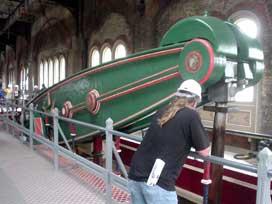 The scale of the operation is phenomenal, with 47 ton

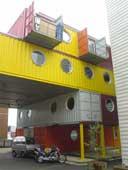 The rest of the wharf site is a strange mix of old and new, and oddly enchanting. An old red


 Stage 2 (75 metres): When you're relaxed and ready it's onward through the alleyway to
 And then two months ago, without warning, Mam's Fish Bar closed down. It wasn't long before the old shop was hidden behind shiny new black shutters, and workmen could sometimes be seen inside installing gleaming new cooking equipment beneath big metal extractor fans. But there was no food on sale, until yesterday. Where once was Mam's shabby sign, now shines a startling illuminated slogan declaring The Thrill of the Grill. The fish and kebab silhouettes have been replaced by four gleaming red chilis, and two big red posters scream 'Now Open' to slightly more upmarket passers by. Everything's seems just too clean, and much less amateur. You just know that the previous owner would have written 'nOW OpEN' in thin red marker pen instead, probably on a page ripped out from a faded notepad, and spelt at least one of the words wrong. The new menu also looks much more professional and has substantially 'upgraded' in content - with